


You’re walking down a busy street, maybe on your way to meet a friend, maybe just lost in your own thoughts. A passerby lifts their sunglasses to adjust them, and you don’t think twice. But those glasses might be recording you—your face, your body, your movements—without your knowledge or consent. And later, that footage could end up online for strangers to watch, mock, or worse. It sounds like something from a dystopian thriller, but with smart glasses like Meta Ray-Bans becoming increasingly popular, it’s a real and growing worry. That’s why the Liberal Democrats are now calling for convicted sex offenders to be banned from buying these devices. They’re also demanding that the government crack down on people who tamper with the glasses to disable the flashing light that’s supposed to show when a camera is recording. The party says this isn’t about being paranoid about technology—it’s about basic safety, privacy, and the right to move through public spaces without feeling like you’re being watched. As one MP put it, nobody should have to wake up and discover that a private moment was captured and shared with thousands, or even millions, of people without them ever knowing.
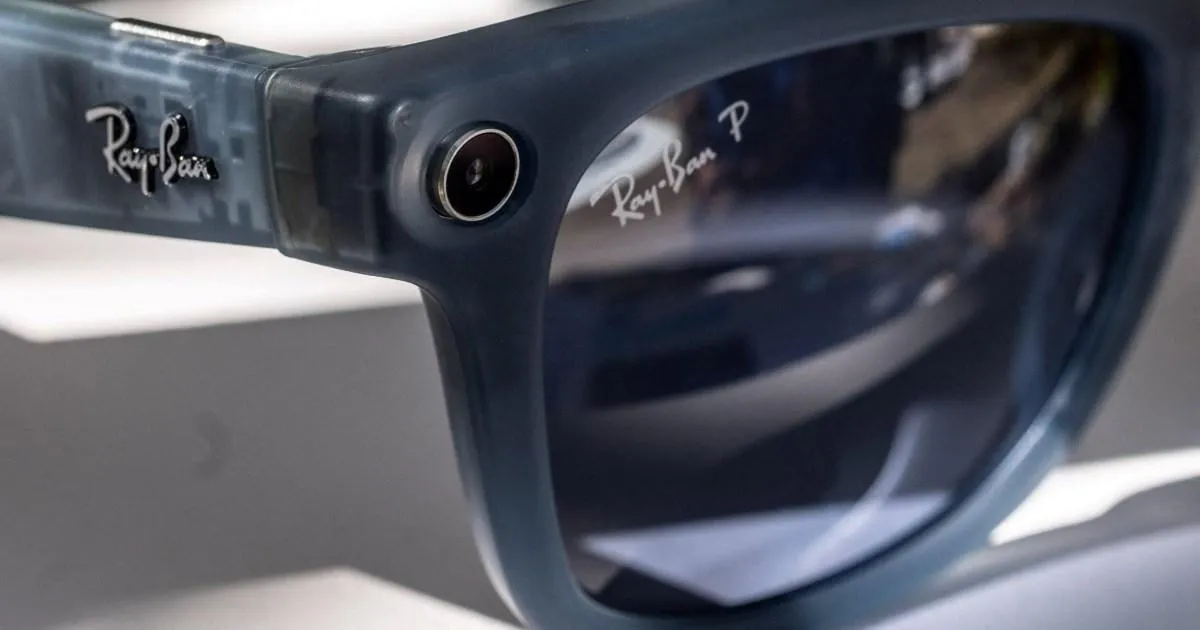
The concerns are not hypothetical. These glasses look like ordinary eyewear, but they can take photos, record videos, and capture audio just like a smartphone. That makes them incredibly useful for hands-free calls, navigation, or taking quick snapshots. But they also make it frighteningly easy to film people without their knowledge. In recent months, women have come forward describing how they were secretly filmed in public places, only to later find the footage posted online. The danger is made worse by the fact that some people have figured out how to get around the built-in safety feature. Meta Ray-Bans, for example, have a small LED light that blinks when the wearer is capturing photos or videos. It’s designed to let people around the user know that recording is happening. But vendors online have openly bragged about modifying the glasses so the light never flashes, making the recording completely invisible. It’s a deeply unsettling thought: you could be filmed in a café, on a train, or at the supermarket, and you would have no idea. You wouldn’t know to feel uncomfortable, because nothing seems out of the ordinary. The technology has simply become a hidden eye, and for many women especially, that feeling of being watched—or not knowing if you’re being watched—can change how they live their lives.
The Liberal Democrats are pushing for strong action. Anna Sabine, the party’s spokesperson for Culture, Media and Sport, has written to the government urging ministers to take the threat seriously. In a letter shared with the press, she calls for a complete ban on the sale of smart glasses to convicted sex offenders, arguing that these individuals should not have access to tools that could be used to target women or girls. She also wants a ban on any modifications that disable or remove the recording indicator light, because that light is often the only way to tell if someone is filming. Sabine’s message is blunt: “Nobody should wake up to discover that a video of them has been filmed without their knowledge and shared with thousands or even millions of people online. This is an issue of safety and privacy.” She points out that the government has promised to halve violence against women and girls, but that promise rings hollow if the state allows people to become unknowing victims of what she calls “Spex Offenders.” The party’s proposals are not a total rejection of smart glasses—they’re an attempt to put guardrails around a technology that is moving faster than the law. But Sabine insists that the fundamental right is simple: “Everyone deserves to feel safe in public.” Whether the government will adopt these measures remains to be seen, but the pressure is mounting.
Experts and campaigners say the issue goes even deeper than privacy. Professor Clare McGynn, a leading academic on violence against women and girls, supports the call for robust anti-tampering protections that “cannot be disabled or circumvented.” She argues that this problem is not just about individual privacy—it’s about freedom. She uses the term “freedom-based harms” to describe what happens when women feel watched, recorded, or targeted in public spaces. This feeling doesn’t just cause momentary anxiety; it can restrict where they go, what they do, and how freely they move through the world. If a woman avoids a park after dark because she worries someone might be filming her, or chooses a longer route to avoid a man with suspicious glasses, that’s a form of harm. McGynn says we need to anticipate and prevent these harms now, before they become normalised. Rape Crisis, the charity that supports survivors of sexual violence, is even more direct. They say smart glasses should be “removed off the market wholesale,” arguing that the lack of safeguards for such products shows contempt for the safety of women and girls. They believe tech companies like Meta are fully aware that sexualised and sexually violent material is widespread online, and so there is no excuse for creating products that can easily be used to facilitate it. The End Violence Against Women Coalition also voiced concern, saying that current online safety laws do not go far enough to protect women from this emerging threat. Their interim director, Janaya Walker, pointed out that the risk isn’t only from strangers—it can also come from friends, colleagues, or partners, which makes the problem even more difficult to address.
Meta, for its part, says it is taking the issue seriously. The company reportedly sold seven million pairs of its smart glasses last year, so the stakes are high. In a recent update, Meta announced new safeguards designed to stop people from bypassing the LED light. If the camera is about to record but the capture LED is covered, it will simply refuse to start filming. If the glasses detect physical tampering with the camera or the light system, the camera will be disabled entirely. The company says it had noticed that some users were starting to film and then quickly covering the LED before the camera continued recording. Now, if that happens, the camera will stop. Meta claims these measures are already having a deterrent effect, with companies that once offered LED-tampering services shutting down because the glasses now deactivate automatically when interference is detected. One such business, Ghost Meta, told reporters that they had paused their modification services as a direct result of these updates. A Meta spokesperson emphasised that the glasses were designed with privacy in mind from the beginning. They described the capture LED as a bright white light that blinks whenever someone takes a photo or video that can be saved or shared, and insisted that this light has no off switch. “If people tamper with the LED light, including placing blockers over it, the camera will not work,” the spokesperson said. It’s a strong statement, but campaigners remain sceptical. They argue that as long as there is financial incentive, determined people will keep trying to find ways around even the best safety features.
The government has responded by pointing to existing laws. A spokesperson said that recording someone in public to cause alarm or distress could already constitute offences such as harassment or stalking. They also highlighted the Crime and Policing Act, which introduces new offences related to intimate image abuse, meaning there are increasingly serious legal consequences for sharing private footage without consent. The government says it will continue to work with the Information Commissioner’s Office to make sure regulations stay effective as technology evolves and that people’s information rights are protected. But for many, that isn’t enough. The pace of technological change is relentless, and laws often lag far behind. By the time a new problem is fully understood and addressed in legislation, the next gadget has already hit the shelves. That’s why the Liberal Democrats, alongside experts and charities, are calling for proactive measures—not just reactive rules. They want restrictions in place before more people become victims, not after. They want ethical design principles that put safety at the core of new products, not as an afterthought. And they want a clear message that convenience and innovation should never come at the cost of women’s safety. Smart glasses are a remarkable piece of technology; they can help people capture memories, navigate unfamiliar places, and stay connected in ways that once seemed impossible. But they also carry a responsibility. The question is whether governments, tech companies, and society as a whole can rise to that responsibility before the dark side becomes impossible to ignore. Because at the heart of this debate is a very human fear: the fear of being watched, recorded, and exposed without your consent. And everyone, regardless of gender, deserves to walk through life without that shadow hanging over them.