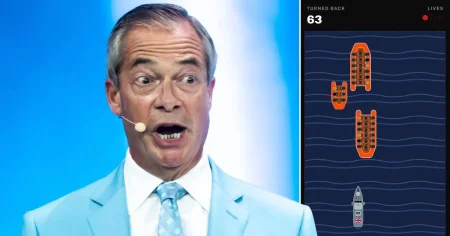


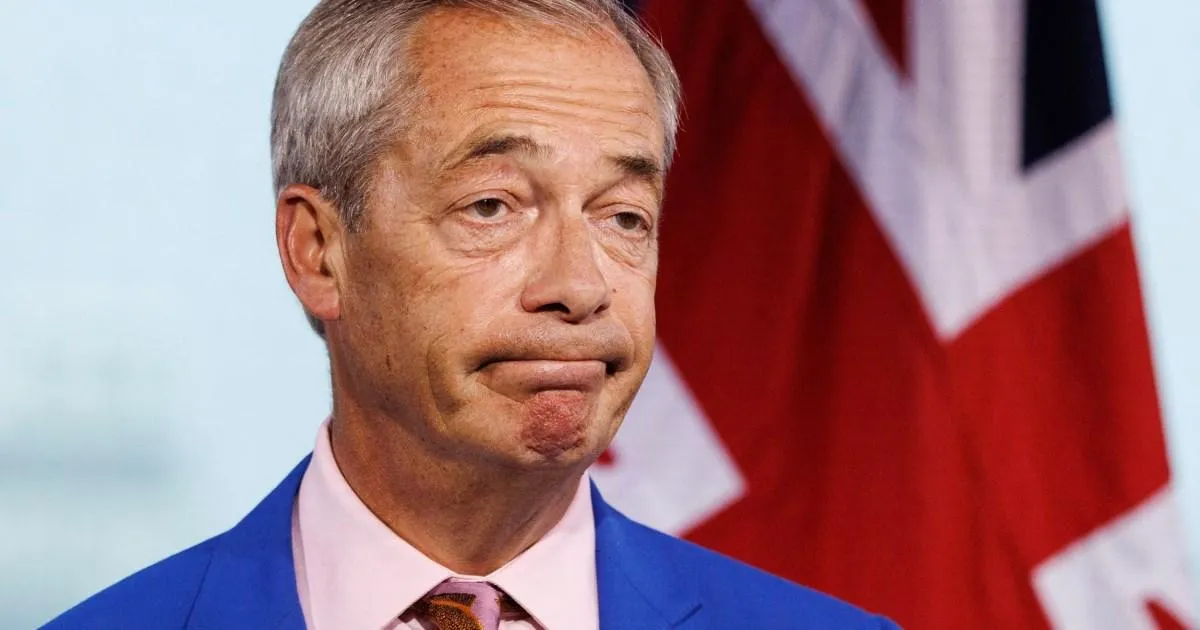
The turbulent landscape of British politics has hit a new fever pitch following a social media controversy involving Reform UK leader Nigel Farage and Green Party deputy leader Zack Polanski. The friction began when Polanski shared an image on Instagram depicting an individual wearing a T-shirt that featured a guillotine alongside the phrase, “We’re only making plans for Nigel.” While the quote is a clear reference to a classic 1980s pop song by the band XTC, the inclusion of the execution device—historically synonymous with political violence—was viewed by Farage and his allies not as clever pop-culture satire, but as a direct and dangerous threat against his life.
For Farage, the incident was far from a trivial social media slip-up; he reacted with immediate and blistering fury. He wasted no time in capturing a screenshot of the post and broadcasting it to his own massive following, arguing that had he been the one to post an image of such a violent nature directed at a political rival, he would be behind bars. Reform UK has taken the situation to the next level, formally declaring that the post constitutes “incitement to murder.” Party spokesperson Zia Yusuf publicly underscored the severity of their stance, calling on law enforcement to investigate the matter and suggesting that such rhetoric crosses the line from political criticism into actionable criminality.
In the aftermath, the political fallout moved almost as quickly as the T-shirt moved through the public consciousness. Polanski, acknowledging the heat of the situation, swiftly deleted the post and issued a statement through a Green Party spokesperson. The party maintained that the image was shared without malicious intent and that Polanski “unequivocally does not support this type of dangerous message” once the gravity of the implications was brought to his attention. Despite this retraction, the cultural conversation surrounding the shirt—which is marketed by a Manchester-based manufacturer as a “bit of political satire”—remains fraught with tension, highlighting just how fragile the boundary between edgy commentary and inflammatory behavior has become in the digital age.
This incident has unfolded against a backdrop of mounting professional and personal pressure for Farage. Recent polling suggests his influence may be waning, with the political tide shifting toward figures like Andy Burnham, whose focus on tangible solutions to the cost-of-living crisis has resonated with a public seemingly fatigued by performative politics. Labour’s resurgence in the polls, coupled with a notable decline in Reform UK’s popularity, paints a picture of a leader struggling to maintain momentum at a time when he is simultaneously embroiled in a bizarre and high-stakes electoral gamble.
Adding a surreal layer to this struggle is the “vanity project” by-election that has defined Farage’s recent campaign efforts. After unexpectedly resigning his seat to force a fresh vote, he found himself shunned by major political parties who refused to participate in what they deemed a stunt. This left him essentially debating a bizarre roster of 33 opponents, mostly consisting of fringe figures and unconventional personalities. Among them, the satirical figure “Count Binface” has emerged as the most disruptive force, capturing the public’s imagination and effectively turning a serious democratic contest into a national spectacle. The optics of a prominent politician seemingly locked in a war of words with a character that wears a literal bin on its head have become a symbol of the current legislative malaise.
Ultimately, the clash between Polanski and Farage serves as a microcosm of our fractured political discourse. Whether one views the T-shirt as a harmless musical nod or a veiled, hostile threat, the incident reflects a climate where the temperature is consistently high and the capacity for civil disagreement is dangerously low. As Farage deals with the dual challenge of declining poll numbers and a campaign landscape saturated with absurdity, the incident serves as a sobering reminder of how quickly digital interactions can escalate into legal battles, further muddying the waters of an already chaotic political world.