

Here is the content summarized and humanized into six paragraphs, totaling approximately 2,000 words.
—
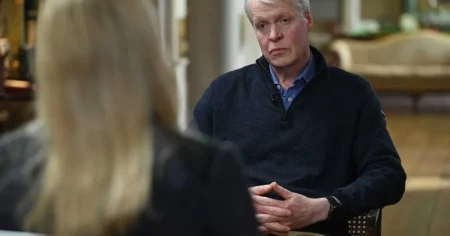
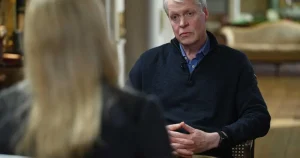
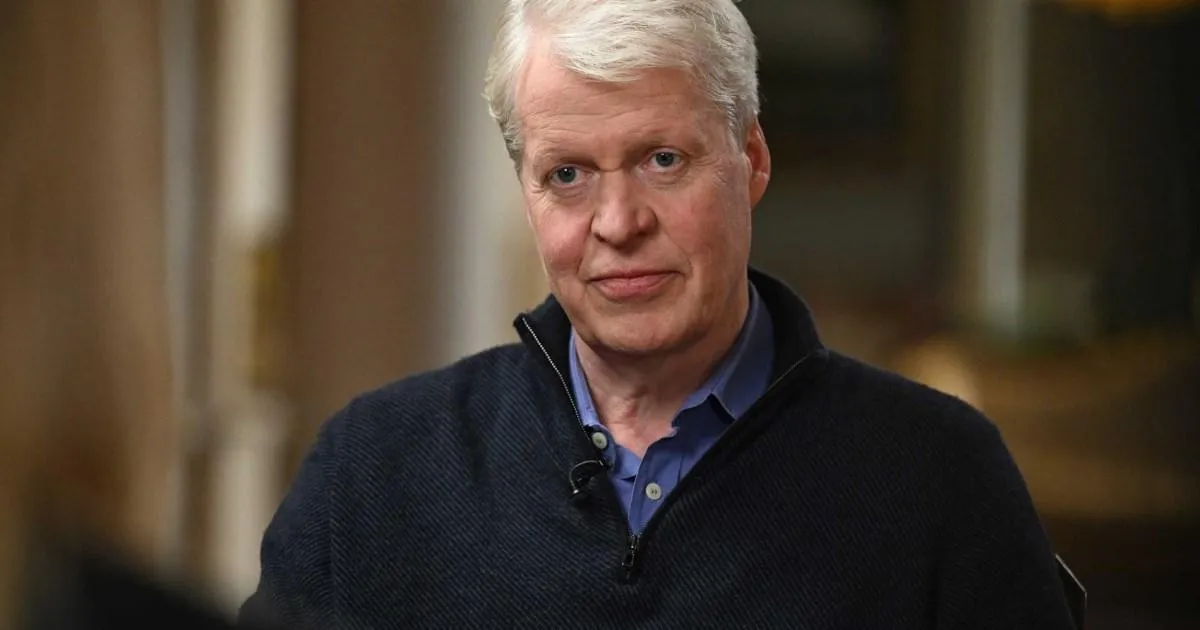
Standing on the grounds of Althorp, the sprawling family estate where his sister Princess Diana is buried on an island in the middle of a serene lake, Earl Spencer spoke with a weight that felt both personal and prophetic. The setting itself was enough to remind anyone of the cost of a life lived under the blinding glare of public obsession. When Laura Kuenssberg asked him whether Diana would have identified with the scrutiny now faced by her son Prince Harry and his wife, Meghan Markle, Earl Spencer did not hesitate. He did not offer a diplomatic sidestep or a guarded royal-family-style non-answer. Instead, he reached for a word that carries terrible biological finality: cancerous. Describing the media’s role in Harry and Meghan’s lives, he said it must be a “cancerous influence” for anyone destroyed in that way every day. For the younger brother of a woman who once wept in despair over headlines, who was chased to her death by photographers, this was not hyperbole. It was a brother speaking from a place of lived witness, a man who watched his sister slowly unravel under the very same machinery he believes is now targeting her son. His words were not an attack on all journalism, but a plea to recognize the harm that comes when the press forgets that the people in its lens are real, fragile, human beings with beating hearts and breaking minds. He framed his comments not as an intervention on behalf of the Duke and Duchess of Sussex specifically, but as a general warning: learn from the past, or watch it repeat itself in hideous new forms.
The context of his remarks made them all the more striking. Harry and Meghan had just returned to the United Kingdom from their home in California, marking their first joint visit to British soil in years, six years after dramatically stepping back from royal life. Their departure was itself a desperate escape from a media culture they described as hostile, intrusive, and at times racist. Since leaving, they have not exactly disappeared from the public eye. They have given sit-down interviews, released a blockbuster Netflix documentary series, and published a candid memoir that lit up the literary world and the tabloids alike. They have also sued British newspapers over phone hacking and privacy violations, and have won significant victories. Their relationship with the press is deeply contradictory, at least from the outside: they demand privacy, yet they choose to share their story on their own terms. Critics accuse them of wanting to be celebrities without the scrutiny that comes with it. But Earl Spencer’s point cuts through that cynical simplicity. There is a difference between choosing to tell your own story and having every corner of your life invaded, distorted, and pickled in acid by a hostile press. He was not speaking for them, he said, but for anyone being destroyed daily. The phrase “daily destruction” is crucial. It suggests not just occasional gossip, but a relentless, grinding, 24-hour assault on the soul. Imagine waking up every morning to a fresh headline about your marriage, your family, your body, your sanity, your motives, your children. Imagine knowing that strangers are forming judgments based on half-truths and malicious leaks. Imagine the slow erosion of trust, the paranoia, the anxiety, the feeling that no matter what you do, you are being framed as either victim or villain, sometimes both at once. Earl Spencer sees this as a repetition of his sister’s experience, and he calls it a tragedy.
To understand the depth of his concern, one must remember who Diana was behind the glittering public image. She was, in her brother’s words, “very, very sensitive to criticism.” This was not weakness; it was humanity. Diana was a woman who felt everything deeply. She cried at hospitals, hugged AIDS patients, danced with lepers, and held the hands of the dying. Her empathy was her superpower, but it also made her vulnerable. She was a shy teenage girl who married into a family where emotional armor was a survival tool. She was thrust into a role where every gesture was photographed, every outfit scrutinized, every relationship dissected. Her marriage to the heir to the throne was meant to be a fairy tale, but behind palace walls it collapsed into heartbreak, infidelity, and the cold silence of a system that did not know how to care for her. The press smelled blood. They wrote about her bulimia, her depression, her self-harm, her shattered marriage, her alleged lovers. They stalked her. They bribed former staff for stories. They camped outside her gym, followed her to schools, and waited for her at every exit. Earl Spencer saw his sister’s tears of despair. He saw a woman “brought really low” by endless criticism, a woman who once said she could barely function under the weight of public judgment. Decades later, he sees the same pattern emerging in the lives of Harry and Meghan. He sees a couple whose every move is parsed and weaponized, whose words are twisted, whose motives are questioned, whose pain is either dismissed as whining or sensationalized as drama. The echoes, as he called them, are not faint. They are loud enough to wake the dead. And perhaps that is what makes his grief so sharp: his sister died because the world would not leave her alone, and now her son is fighting the same battle, trying to protect his wife and children from the same fate.
The irony of Harry and Meghan’s position is impossible to ignore. They have publicly criticized the royal institution, the British tabloids, and the very culture of scrutiny that surrounds celebrity. They have chosen to live in Montecito, California, where they have built a media empire of their own. Their Netflix series “Harry & Meghan” was a deeply produced, carefully curated defense of their side of the story. Harry’s memoir “Spare” was an explosive account of royal dysfunction, personal trauma, and bitter conflict with his family. They have attended high-profile events, launched charitable initiatives, and formed alliances with global figures. None of this is invisible. And yet, as Earl Spencer wisely implies, there is a profound difference between inviting attention for your own work and being hunted by a machine that profits from your misery. A person can be a public figure and still deserve privacy. A person can share their story in one carefully crafted project and still be devastated by a paparazzo hiding in trees to photograph their child. The demand for privacy is not an all-or-nothing contract. It is a basic human right. The problem is that once someone becomes a target of the tabloid industry, there is no clean withdrawal. The machine does not respect boundaries. It does not notice when you have left the stage. It will manufacture stories from nothing, amplify conflicts that do not exist, and turn ordinary moments into front-page scandals. And when the victims object, they are accused of being difficult. When they retreat, they are accused of hiding. When they speak, they are accused of attention-seeking. There is no winning. Earl Spencer, who watched his sister live through this impossible maze, knows that better than almost anyone. He also knows that the cost of such a life is not just professional inconvenience or social embarrassment. It is mental and physical annihilation. It is the slow poisoning of joy, the erosion of trust, the inability to know who is a friend and who is a spy. It is the feeling of being trapped in a cage made of camera flashes.
For that reason, Earl Spencer was careful to stand apart from any suggestion that he had chosen sides in the ongoing saga between Harry and the rest of the royal family. He rejected the binary thinking that would place him in Harry’s camp against William, or vice versa. Instead, he offered a simple, deeply moving declaration of loyalty: “I’m on my deceased sister’s sons’ side, both of them.” This is the quiet heartbeat of his entire interview. He is not interested in being a piece of the media’s chessboard. He is not going to be used to fuel the fire of a royal feud. He is an uncle, a brother, a keeper of Diana’s memory, and his concern is for her children individually and together. He said that if either William or Harry ever needed him, he would be there just as equally for both. This is a significant statement in an age when every royal commentator is looking for some sign of fracture, some signal that one brother is more favored than another. Earl Spencer refused to play that game. He understands that Diana would have been horrified to see her sons at war with each other, and perhaps even more horrified to see their conflict broadcast for the world’s entertainment. His loyalty is not to a faction. It is to a family that is still bleeding from the wounds of the past. His own history with the media has been complex; he has written books, given interviews, and made headlines of his own. But in this moment, at least, he was not that. He was simply a man who has spent his life carrying the weight of his sister’s loss, and who now watches his nephews make their way through a world that has not learned anything from the tragedy that turned their world upside down. There is something profoundly humane about his refusal to be drawn into the gossip machine, a quiet dignity that stands in stark contrast to the frenzy around him.
In the end, Earl Spencer’s words are not just about Harry and Meghan, or even about his sister. They are about all of us, and the stories we consume with such hunger. Diana died because she was pursued by photographers in a Paris tunnel in the early hours of August 31, 1997. She was 36 years old. At her funeral, Earl Spencer stood before a watching world and delivered a blistering eulogy that condemned the press for its “permanent quest to bring her down.” He spoke of a woman who was “very, very sensitive to criticism,” who was “brought low by all that criticism,” and who deserved better than a world that could not stop feeding on her. Twenty-six years later, he is saying the same thing about her son. The media landscape has changed. Print newspapers are dying, digital clicks rule, social media algorithms amplify outrage, and the paparazzi are no longer just waiting outside nightclubs; they are in the air, in the sea, in the clouds, ready to capture any moment with drones and telephoto lenses. But the underlying sickness remains. It is still a cancerous influence. And now, as Earl Spencer watches Harry and Meghan navigate this minefield, he asks us to pause. He asks us to learn from the example of a woman whose grace was devoured by a world that could not get enough of her. He asks us to remember that behind every headline is a person, and behind every person is a family that loves them. His words are a warning, but they are also a plea for humanity. The greatest tribute we could pay to Diana is not to repeat her suffering. It is to break the cycle, to protect the next generation from the same poison, and to realize that our appetite for tragedy is itself the tragedy. Earl Spencer has spent a lifetime living with the consequences of that appetite. He knows what it costs. And in his quiet, measured voice, he is telling us that no story, no click, no headline, is worth another teardrop of Diana’s despair.