



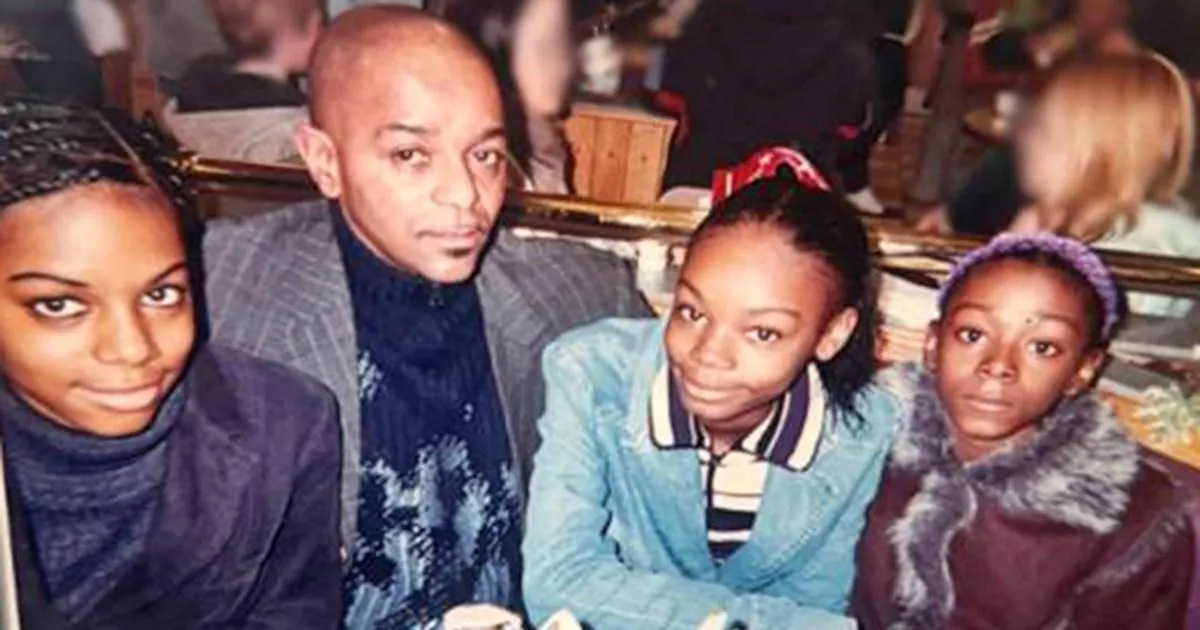
On the morning of 13 May, the sea at Brighton gave back something that no parent should ever have to receive. Three sisters — Jane Adetoro, 36, Christina Walters, 32, and Rebecca Walters, 31 — were found in the water. Their father, Joseph, received the news with a shock so deep that language could not hold it. Three daughters. Three lives. Three endings at once. It is difficult to imagine the weight of that moment, and even more difficult to imagine the days that followed: waking up, making calls, walking through the motions of a world that had suddenly lost all colour. In the weeks that followed, strangers would leave flowers near the place where the sisters were found, small gestures of sympathy for a family whose grief was so enormous it could not be contained in a single home. Yet even before that May morning, the Adetoro and Walters family had known tragedy. The sisters had not come to Brighton as strangers to loss. They had travelled there from their lives, carrying a history that had already taught them how much a sudden death can hurt. Some years earlier, their mother, Janice Adetoro, had drowned in a lake near the family’s home in Birmingham. She had disappeared in December, without taking the medication she relied on, and her body was found three months later. The sisters were young when their mother left them, and they spent the years that followed trying to make sense of a tragedy that never quite made sense. In the days before their own deaths, they returned to Birmingham, to the very lake where their mother had drowned. They visited the place of their deepest sorrow. Then they came back to the coast, and within a day or two, the sea took them too. The proximity of those events — the visit to their mother’s lake, their own deaths in the water — feels either like a cruel coincidence or a haunting echo. The family does not know which. What they know is that their daughters are gone, and the questions will remain.
To understand Jane, Christina and Rebecca, one must understand the bond that held them together. They were not just sisters; they were each other’s witnesses, each other’s memories, each other’s closest remaining family after their mother died. Their cousin, Natalie Walters-Daniel, 33, remembers them as girls who had to grow up quickly under the shadow of an unbearable loss. Janice was not an old woman when she disappeared; she was a mother leaving behind daughters at the very stages of life when a mother’s presence matters most. Jane was 20, Christina was 16, and Rebecca was 15. “To lose their mum at the ages that they were, it was the crucial stages of growing up and becoming young women,” Natalie said. “The years where a mother’s presence and guidance and reassurance and love should be, they didn’t receive that.” There is a strange kind of grief in those words. It is not just the grief of losing someone; it is the grief of missing all the moments that would have come after. Natalie’s voice in the interview is the voice of someone who watched her cousins navigate those years without their mother, who saw them at family gatherings, who knew that they were still carrying the wound. After Janice’s death, the sisters eventually left Birmingham and moved back to London. There, they lived quietly — so quietly that neighbours described them as private and unsociable. They kept to themselves, perhaps because their shared grief was too heavy for outsiders. They did not want to explain themselves. They did not want to answer questions about their mother. They had each other, and that was enough. In a world that had once felt safe, they had learned that the people you love can vanish without warning. The only way to protect themselves was to pull inward. Their father, Joseph, was there, and he loved them deeply, but no love can erase a mother’s absence. The sisters carried their mother with them, even as they tried to build lives that had nothing to do with the past. They worked, they lived, they tried. And then, in the spring, they went back to Birmingham.
The story of Janice Adetoro is a story that never quite found a clean resolution. In the months before her death, she had been suffering from stress-related mental health issues. At one point, according to an inquest, she attended a police station with what were described as “paranoid delusions.” She was in crisis, and the system that was supposed to help her did not catch her in time. When she disappeared in December, she left without taking her medication. Her family did not know whether she had simply needed space or whether something far worse had happened. Janice’s brother, Lincoln, made a desperate public appeal. Addressing Janice directly, he said: “The girls are so upset and can’t stop thinking about you and for their sake we need you to make contact.” Those words — “the girls are so upset” — are almost unbearable to read now, because those same girls would one day be lost in water themselves. Lincoln’s plea was not just an attempt to bring his sister home; it was an attempt to give her daughters a reason to hope. But there would be no phone call, no reunion. Three months after she vanished, Janice’s body was found in the lake near the house in Birmingham where the family had been living. The cause of death was drowning. An inquest recorded the circumstances, but as with so many deaths connected to mental illness, the full texture of her final days remained hidden. The girls were left with a story that had no happy ending: a mother who had been struggling, a mother who had asked for help, a mother who had vanished. They were not given the chance to say goodbye. They were not given the chance to understand. They had to absorb the loss at an age when their own identities were still forming. Jane, the oldest, had always taken on a maternal role. Christina and Rebecca looked to her and to each other. The death hardened something in them. They did not learn to talk openly about their feelings; they learned to protect their grief. And so when they made the journey to Birmingham as adults, they were not going as three women who had processed their mother’s death. They were going as three women who had carried it inside them for years, unspoken and unresolved.
Two days before the sisters’ bodies were found in the sea, they had travelled to Birmingham to stand beside the lake where Janice had drowned. It is impossible to know how long they stood there, what they said to one another, or what they felt. Their cousin Natalie called the visit a trip with “deeper meaning” — a phrase that seems to acknowledge the enormous weight of what they were doing. This was not a casual road trip or a nostalgic visit to a childhood home. It was an act of memory, a return to the place where their lives were changed forever. Natalie said: “And for them to come to Birmingham, to take that moment that they did within the lake and also to see their mother, I think that there is definitely a connection there.” Her words are careful, gentle. She does not want to impose an interpretation on something so private. But the connection is difficult to ignore. The lake was where Janice’s body had been found after three months of searching. It was the place that represented their deepest fear and their greatest loss. To stand beside the same water, as adults, may have been a way of saying words that had been left unsaid for years. Perhaps they hoped to find peace. Perhaps they wanted to lay down a burden. Perhaps they wanted to show their mother that they had not forgotten her, that they had brought her flowers and tears and memories. Maybe it was simply an act of love. But the trip also carried a strange pull toward water, and the family cannot help but wonder whether something darker was at work. There was no note, no explanation, no final message to their father. They went to the lake and returned to the coast, and then they were gone. The sea at Brighton does not give up its secrets easily. Neither does grief. The sisters’ final days will never be fully reconstructed. Their cousin is left with a handful of fragments, a memory of a visit that may have been a farewell.
All the while, Joseph has been trying to find a way to breathe. In a tribute published by the BBC, he spoke with a tenderness that escapes most people in times of unimaginable pain. “You were more than my daughters: you were my joy, my strength and the beautiful light that filled my life with love,” he said. The words are addressed directly to Jane, Christina and Rebecca, as if he is still speaking to them, as if love can cross the boundary between life and death. He continued: “There are moments when it feels unbearable, but I hold tightly to the memories we shared, the love we knew and the bond that nothing can ever take away.” This is a man who has lost, in one sudden stroke, the three people who gave his life shape and meaning. Yet he speaks not of anger, but of love. He speaks of holding on. Joseph is also facing the practical realities of a tragedy that no parent should ever face. Three daughters mean three funerals, three sets of arrangements, three goodbyes. To help with the financial burden, the sisters’ uncle Adesoji Adetoro set up a GoFundMe page. It has so far raised more than £45,000, the money going toward funeral costs. In an appeal that has touched thousands of strangers, Adesoji wrote: “As a family, we are still struggling to come to terms with what has happened. The girls had so much life ahead of them, and their loss has left a pain and emptiness in our hearts that words cannot describe. No parent should ever have to bury their child, let alone all three.” That final sentence has been shared and repeated because it expresses something universal. The fundraiser is not only about money; it is about community taking some of the weight, allowing the family to grieve without the added anxiety of bills and obligations. Flowers are slowly appearing at the site in Brighton, small monuments to three women who loved, and were loved, and who are no longer here. Joseph has asked for dignity for his daughters, and the response of the public has been to honour that request.
Sussex Police have closed their investigation into the sisters’ deaths. They found no evidence of third-party involvement. On one level, that is a relief. No one harmed Jane, Christina or Rebecca. But on another level, it closes the door on the possibility of a reassuring explanation. There was no attacker, no accident, no single moment that can be blamed. There is only a story of three women who went into the water and did not come back. An inquest is expected to take place next month, and the family hopes it will provide at least some additional information. But Natalie Walters-Daniel has already prepared herself for the possibility that the full truth will never be known. “We are not going to get the full answers to this,” she said. That is one of the hardest things about grief: the mind keeps circling, looking for an explanation, trying to find a shape in chaos. The sisters’ story has a cruel symmetry — their mother died in the water, and they died in the water too. There is no way to ignore that, and no way to fully understand it. Perhaps their visit to the lake was an attempt to make peace with the past; perhaps it reopened a wound that never truly healed. The family is left with the silence of the sea. Yet even in silence, love persists. Joseph’s words have become a kind of truth for everyone who knew the sisters: “the bond that nothing can ever take away.” That bond is not visible to the police, not measurable by an inquest, not explainable by the movements of the tide. But it is real. Jane, Christina and Rebecca were more than the way they died. They were daughters, sisters, nieces, cousins, friends. They were women who laughed and worried and dreamed, who loved their father and remembered their mother. They are gone now, but the people who loved them will carry them forward. The funerals will take place. The flowers will wilt. The questions may never be answered. But the love will remain, a quiet light along the edge of that dark water.