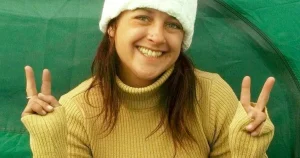



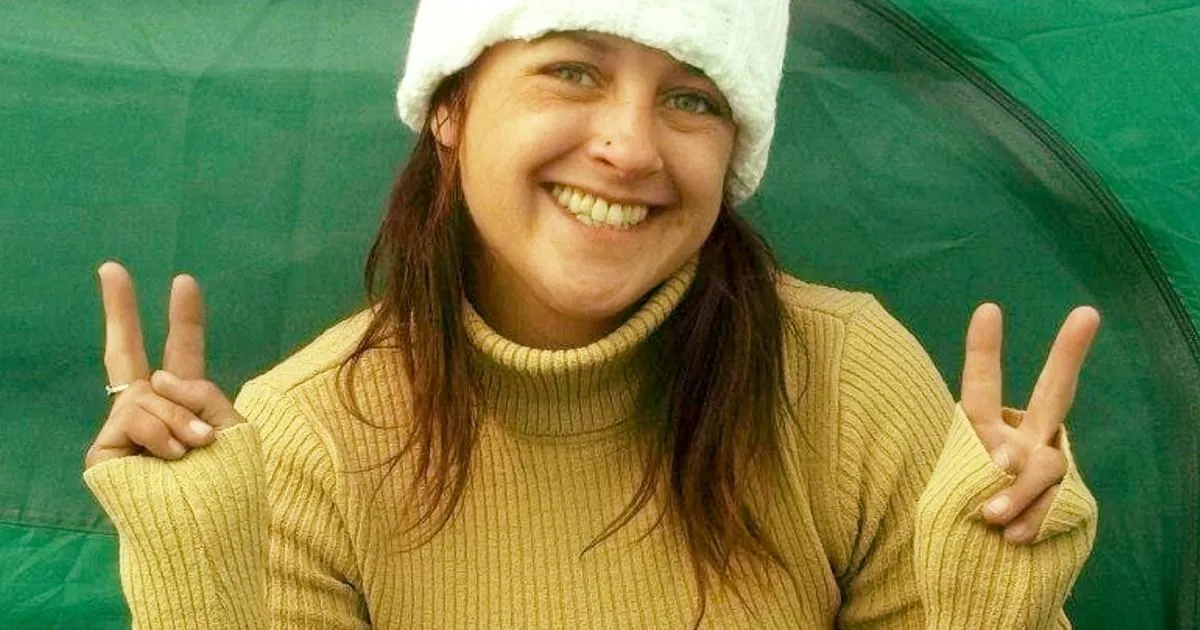
For nearly seven years, the question of what happened to Joanne Sheen has hung over her family like an unrelenting shadow. A mother of three, she was 44 years old when she vanished from her familiar routines in December 2019, leaving behind a life that would never be the same. The pain of a missing loved one is indescribable; it is a strange, suspended grief, neither hope nor closure. Joanne’s family had to endure birthdays, holidays, and ordinary days without knowing whether she was alive or dead. They reported her missing in February 2020, about two months after she was last seen alive. In those first weeks and months, they must have clung to the possibility that she would walk through the door again. Instead, time stretched on, and the silence became more unbearable. The police launched a major investigation, and there were arrests, but still no Joanne. Her photograph would appear in appeals, her name repeated in hopeful statements, but the answers remained frustratingly out of reach. To the outside world, she was a missing person, a headline, a case number. To her children, she was simply their mother, and her absence was a wound that could not heal. This is the human reality behind the news: a family left in limbo, unable to mourn properly because there was no body, no certainty, no final goodbye. They had to hold onto the fragile hope that somewhere, somehow, she was still alive. But that hope, like all hope, could only survive so long without evidence. And then, in a cruel twist of nature, the truth emerged from the ashes.
The last known chapter of Joanne’s life began on an ordinary journey. She traveled from Fareham to Southampton with a friend, a trip that should not have been remarkable. Perhaps she was running errands, visiting someone, or simply spending time with a companion. What is certain is that she was never seen alive again. In the aftermath, detectives worked tirelessly to piece together her movements. They spoke to witnesses, gathered CCTV footage, and followed countless leads. But despite their efforts, Joanne’s disappearance remained a mystery. At the time, several people were arrested, and the case drew significant attention from the press and the public. Yet each arrest seemed to lead nowhere, and the investigation slowly cooled, though the pain of her family did not. The fact that she had been missing for so long without any trace suggested something deeply wrong, but without evidence, there was little anyone could do. For her family, every passing day must have felt like a betrayal by time itself. They had to watch as the years slipped away, wondering if they would ever know the truth. The police did not close the case, but the lack of progress must have been agonizing. Friends and neighbors in the Fareham and Southampton communities likely whispered about her fate, but no one knew. It would take an extraordinary and tragic event to finally bring Joanne’s remains out of hiding, and even then, it would only be the beginning of a new ordeal.
The discovery came not through a painstaking search, but through a wildfire. In the dry shrubland of Feltham, flames swept through the undergrowth, revealing something hidden from the world for years: human remains. It is a profoundly unsettling thought that Joanne may have lain there, forgotten, while the seasons changed and life went on around her. The wildfire, a force of destruction, inadvertently became the instrument of truth. For her family, the news that remains had been found must have been devastating, even before the official identification. There is a peculiar cruelty in hoping that a body is not your loved one, while simultaneously needing to know. When the remains were identified as Joanne Sheen, the last fragile thread of hope was severed. She was gone, and now the world knew it. The identification transformed the investigation. No longer a missing persons case, it became a murder inquiry. Hampshire and Isle of Wight Constabulary, working with the Metropolitan Police, pledged to find out exactly what happened to Joanne. The phrase “murder probe” is cold, but behind it lies a promise to a grieving family that their mother would not be forgotten, that her death would not go unanswered. The discovery of her remains in Feltham, far from where she was last seen in Southampton, raised difficult questions. How did she get there? Who was responsible? And why did it take so long for the truth to surface? These are the questions that now drive the investigation, and they are the questions that Joanne’s family desperately need answered.
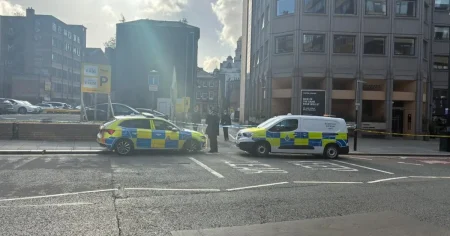
In the wake of the identification, police moved quickly. On Thursday, a 56-year-old man from Southampton was arrested on suspicion of conspiracy to commit murder. He was held in custody as detectives continued their inquiries. Then, the case took another significant turn: the same man was rearrested on suspicion of conspiracy to commit murder and also on suspicion of murder itself. The upgrade from conspiracy to murder is a powerful indication that investigators believe they have enough evidence to consider him a principal offender, not merely a participant in a plot. At the same time, another man, also 56 and from Southampton, was arrested on suspicion of conspiracy to commit murder. Both men were later released on bail with conditions, pending further enquiries. That means they are not free to go about their lives without restrictions; bail conditions can include reporting to police, staying away from certain places or people, or other measures designed to protect the integrity of the investigation. The arrests sent a clear signal that the authorities are determined to bring those responsible to justice. But they also brought a fresh wave of emotion for Joanne’s family, who must now confront the possibility that the person or people responsible for her death were, at some point, close to home. The arrests in Southampton, where Joanne was last seen, suggest that the truth may be found in the very community where her life unraveled. Police have not named the two men, and they are presumed innocent until proven otherwise. But their arrests mark a crucial step in a case that has haunted the region for years.
The scale of the investigation is staggering. More than 4,000 lines of enquiry have been raised, a number that speaks to the complexity of the case and the determination of the detectives involved. Over 300 statements have been taken from witnesses, friends, family members, and anyone who might have information about Joanne’s movements or the events that led to her death. Detailed searches have been carried out at more than ten addresses and on numerous vessels, suggesting that police are exploring every possible avenue, including the possibility that a boat was involved in moving or disposing of evidence. Specialist teams have also searched waterways and woodland around Southampton, the city where Joanne was last seen. These searches are painstaking and methodical, often yielding little but always necessary in the pursuit of justice. The involvement of the Metropolitan Police, with jurisdiction over Feltham where the remains were found, underscores the cross-county nature of the investigation. Joanne’s life ended somewhere, and her body was found somewhere else; the distance between those two places is a gap that detectives are determined to close. Every piece of evidence, no matter how small, could be the key to unlocking the mystery. The sheer number of enquiries also reflects the reality that cold cases, even after years, can be solved with new technology, new witnesses, and new determination. Joanne’s family have waited nearly seven years for answers. They deserve a full account of what happened to her, and the police are clearly committed to providing it. The investigation is not just about securing a conviction; it is about restoring dignity to a woman whose life was taken from her and whose body was hidden in the wilderness.
At its heart, this is not just a story about a police investigation; it is a story about loss and the search for justice. Joanne Sheen was a mother of three, a woman with a name, a face, and a life that mattered. She was taken from her children in a way that no family should ever have to endure, and the years of uncertainty only deepened the tragedy. Now that her remains have been found and identified, her family can begin the painful process of grieving properly, but they cannot fully move forward until they know who is responsible and why. The arrests of two men, both from Southampton, offer a glimmer of hope that the truth will finally come to light. But the road ahead is long. The legal process will be slow, and there may be more twists to come. The police have asked for patience and have pledged to continue their work with the same thoroughness they have shown from the beginning. For the community, the case is a reminder that violence can lurk beneath the surface of ordinary life. For Joanne’s family, it is a reminder that they are not alone, that the world has not forgotten their mother, and that there are people who will not rest until justice is done. The wildfire that uncovered her remains may have been an accident, but the truth it exposed was no accident. It was the result of nature’s cruel hand and the dogged persistence of those who refused to let Joanne Sheen become a forgotten statistic. As the investigation continues, one thing is certain: Joanne will not be forgotten. Her name will be spoken in courtrooms, her story will be told in the news, and her memory will live on in the hearts of those who loved her. The answers may take time, but they are coming. And when they do, Joanne’s family can finally begin to close the chapter that began on a quiet day in December 2019, when their mother, their friend, their Joanne, disappeared into the unknown.