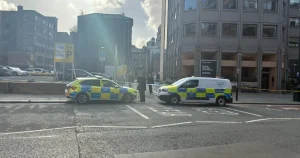

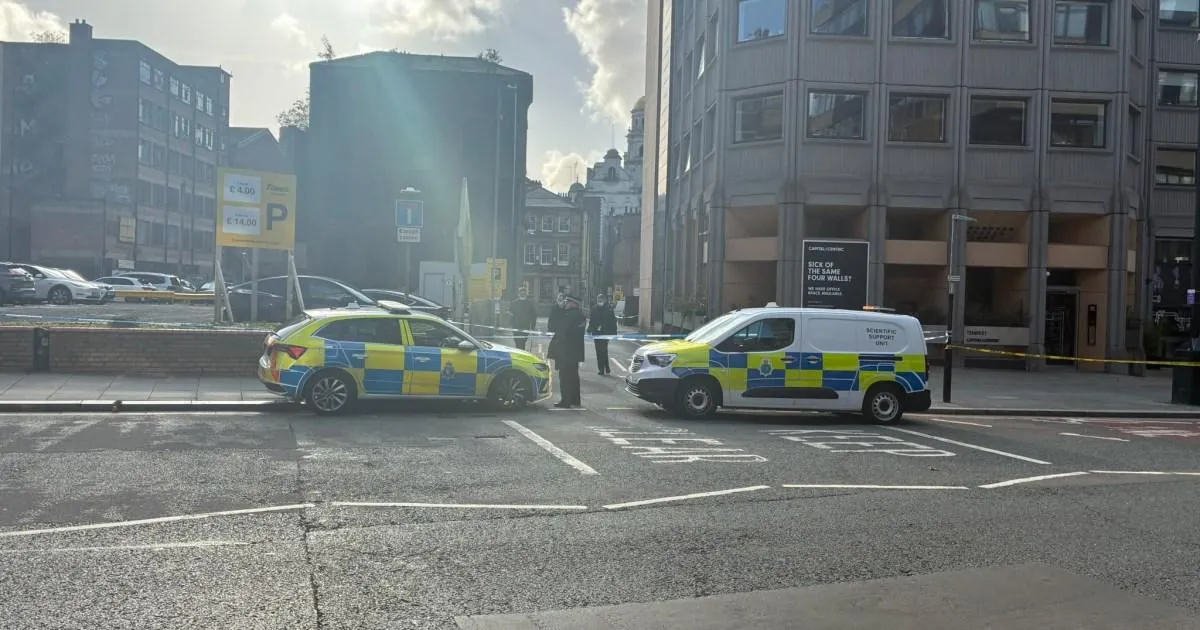
On a quiet Sunday morning in Liverpool city centre, before the bells of nearby churches had rung and before most people had even opened their curtains, the stillness was broken by a sound nobody should ever have to hear. Screams. High, desperate and raw, they cut through the sleeping streets near Tithebarn Street and Eberle Street, pulling residents from their dreams and into the cold, pale light of dawn. By the time the emergency services arrived and the full extent of the situation became clear, the area outside G-Bar, an iconic LGBT+ nightclub, had been transformed into a scene of devastating urgency. Merseyside Police have confirmed that three men were stabbed in what they described as an altercation near the venue, and all three were taken to hospital. Two of the men are now said to be in a stable condition, while the third suffered minor injuries. The suspected weapon has already been recovered and will now be subjected to forensic examination, while a manhunt for the person responsible is underway. For the residents who live in those narrow, red-brick streets, the morning became something else entirely: a strange and unsettling mixture of fear, confusion and sorrow. The screams they heard were not a dream, and the flashing blue lights were not a film. Something terrible had happened just steps from their front doors, outside a place that for decades has been one of the most beloved spaces in Liverpool’s LGBT+ community. Police officers began knocking on doors, asking questions, and sealing off the pavement with tape. Forensic teams arrived and began their slow, methodical work. Yet even as the investigation began, the emotional imprint of the attack lingered in the winter air. People stood behind the police lines, wrapping their arms around themselves, trying to make sense of what had unfolded. Some held phones, waiting for official updates. Others simply stared at the scene, unable to look away. What had been a night out, a celebration, or simply a late wander home had ended in bloodshed. And for the wider city, the news landed like a hard and unwelcome reminder that even the most familiar streets can suddenly become the setting for tragedy.
Among those who experienced the shock firsthand was Blake Chen, a 30-year-old resident who lives within hearing distance of the scene. Chen said he was woken up at around 5.30am by screaming — screaming so loud and so raw that it lifted him out of sleep before he could even make sense of what was happening. He rushed to his window and looked down at the street. There were already police cars, their lights washing the buildings in blue and red, and the first ambulances were arriving. Officers were beginning to put a cordon in place, stretching tape across the pavement and road to keep people back. It was a scene of controlled chaos, but for Chen, the sound of those screams stayed with him long after the street went quiet again. For the rest of the morning, that memory would replay in his mind, a haunting reminder that violence can happen anywhere and at any time, even in a part of the city that feels familiar and safe. His account echoed the feelings of many residents who emerged after the emergency services had arrived, wrapped in coats and dressing gowns, trying to work out what had happened. Some had heard shouting in the early hours; others had seen a group of people near the bar. Few had anything concrete to tell the officers, but the atmosphere was heavy with uncertainty. By mid-morning, the cordon was still in place. Forensic teams in white suits moved methodically through the area, bending down to inspect the pavement and photographing the scene from every angle. Officers stood at every approach, asking people to take alternative routes and keeping the area clear. The light over the city was pale and grey, and it seemed to make the scene even more sombre. For Blake Chen and his neighbours, the day had started with a terrifying question: what is happening outside? That question was soon answered by the news that three men had been stabbed. But the fuller question, the one that would not be answered so quickly, was who had done this and why.
The police response was swift, and by Sunday morning Merseyside Police had confirmed that a manhunt was underway. Detective Chief Inspector Lisa McNaughton, who is leading the investigation, spoke directly to the community in an appeal for information. She acknowledged that a serious incident like this would naturally cause anxiety and concern, and she stressed how vital it was for anyone with information to come forward as a matter of urgency. McNaughton said it appeared that some form of altercation had broken out near G-Bar, and that the altercation had resulted in three victims sustaining injuries. The suspected weapon, she confirmed, had been recovered and would now be forensically examined. In her statement, she made clear that officers would do everything in their power to identify the person responsible and to support the victims as the investigation progressed. She also warned that the consequences of this incident could have been even worse, a chilling thought that underscored the seriousness of the violence. “We will relentlessly pursue the offender,” she said, before asking anyone who saw or captured any part of the incident to contact the police. The appeal was direct and urgent. Detectives were eager to obtain CCTV footage, mobile phone video, dashcam footage, or any testimony from witnesses who might have seen something, even something that at first seemed insignificant. At the same time, the force announced an increased police presence in the area, a move designed both to reassure the public and to track down the suspect. Officers were carrying out enquiries, and members of the public were encouraged to approach them with any information or concerns. For the city, the sight of additional officers on the streets was a visible reminder that the investigation was very much alive. For the victims and their families, it was a sign that the authorities were taking the attack with the utmost seriousness. But for the police, the message was simple: a crime had taken place in a public space, in the early hours of the morning, and someone in the city knew something that could help. The search was continuing, and every hour that passed made the need for answers more urgent.
To understand why this stabbing has struck such a nerve, it is necessary to understand what G-Bar means to the people who love it. The venue has been open since 1996 and describes itself as one of Liverpool’s most iconic and enduring LGBT+ venues. It is not merely a place to drink or dance; it is a space where generations of LGBT+ people have gathered to be themselves, to meet friends, to fall in love, to celebrate who they are, and to feel safe while doing so. For many, such venues are havens, especially for those who may not feel accepted or safe in other parts of their lives. The doors of G-Bar have welcomed countless people over the years, offering music, laughter, drag shows, friendship and a profound sense of belonging in a world that can still be hostile to the LGBT+ community. That is why the sight of police tape outside its doors felt so jarring. A venue associated with joy and liberation, with nights spent dancing and mornings spent laughing, was suddenly a crime scene. The area around the bar, usually full of energy and life on a weekend night, was now silent and sealed. The nature of the attack, a stabbing that sent three men to hospital, has inevitably raised questions about safety, and about whether the incident was motivated by hatred. The police have described the stabbing as having followed an altercation, and at this stage it is not known whether homophobia played any role. But the fear is there, unspoken but present, because the line between a random act of violence and a targeted attack on the LGBT+ community is one that many people think about, especially after an incident outside a gay venue. The fact that the attack happened at dawn, when the bar was likely winding down and patrons were beginning to make their way home, has only added to the sense of vulnerability. Bars and clubs have long been central to LGBT+ culture because they have historically been some of the few places where people can be open and free without fear. To see one of those sacred spaces touched by violence is a reminder that safety cannot be taken for granted. It is also a reminder of the courage of communities that continue to gather, continue to celebrate, and continue to exist even in the face of danger.
In the hours after the attack, the mood in Liverpool’s LGBT+ community and beyond was one of shock, sadness and solidarity. The three men who were injured had not just been walking down the street; they had been outside a venue that holds a special place in the hearts of so many. Their injuries, while reportedly not life-threatening, may leave deeper scars, both physical and emotional. The journey to recovery will not be simple. It will involve hospital treatment, time spent with detectives, difficult conversations with family and friends, and the slow process of trying to make sense of what happened. For the wider community, there is a collective grieving and a collective resolve. Messages of support began to circulate, with people using social media to send love to the victims and to express anger that such violence could take place near a safe space. Others spoke of their own experiences of being out in Liverpool, of the freedom they have felt in venues like G-Bar, and of the fear they now feel knowing that a stabbing took place just a few feet from its door. Community leaders, activists and local politicians were quick to condemn the attack and to offer support to those affected. The police, for their part, reiterated that they would not tolerate violence and that they were committed to protecting the public. In the meantime, officers were going through hours of CCTV, speaking to witnesses, and examining the weapon that had been recovered. Every piece of evidence brought them a step closer to identifying the person responsible. But they could not do it alone. They needed the public’s help. Anyone who had been in the area on Sunday morning, anyone who had seen an argument escalate, anyone who had recorded the incident on their phone, was urged to come forward. The message was clear: no piece of information was too small. In a city that prides itself on its warmth and resilience, the hope was that the community would rally around the injured men and help the police bring the offender to justice.
As the investigation continues, the physical evidence will be examined, witness statements will be taken, and CCTV will be reviewed frame by frame. The manhunt will go on, with officers following every lead and knocking on every relevant door. But in the quiet moments after the police tape is removed and the streets return to normal, the meaning of this event will remain. It will remain for the three victims, who will carry the memory of that early morning with them for the rest of their lives. It will remain for Blake Chen, who will never forget the sound of screams outside his window. It will remain for the staff and patrons of G-Bar, who have lost a little of the innocence that once made their venue feel untouchable. And it will remain for the wider public, who must now ask themselves what kind of city they want to live in. The answer, perhaps, is already being written by the response to the attack. Neighbours came out to see what had happened. Police officers worked through the morning to gather evidence. Community members reached out to one another in shock and sympathy. The person responsible is still at large, and the need for information remains urgent. But moments like this also reveal the strength of a community. Liverpool has long been known for its spirit, and that spirit will not be broken by an act of violence. The best response to hatred, if hatred is what this was, is love and resolve. The best response to fear is to refuse to hide. The best response to a stabbing outside an LGBT+ bar is to stand with the victims, to support the police, and to keep fighting for a world where everyone can live and love without fear. No one can undo what happened on Sunday morning. But everyone can play a part in ensuring that it does not define the future. As the search for the suspect enters its next stage, the message from the police, the community, and the friends of G-Bar is simple: come forward if you know something, hold the victims in your thoughts, and do not let violence win.