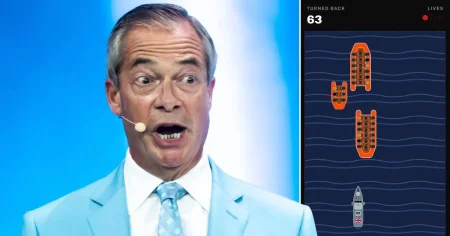



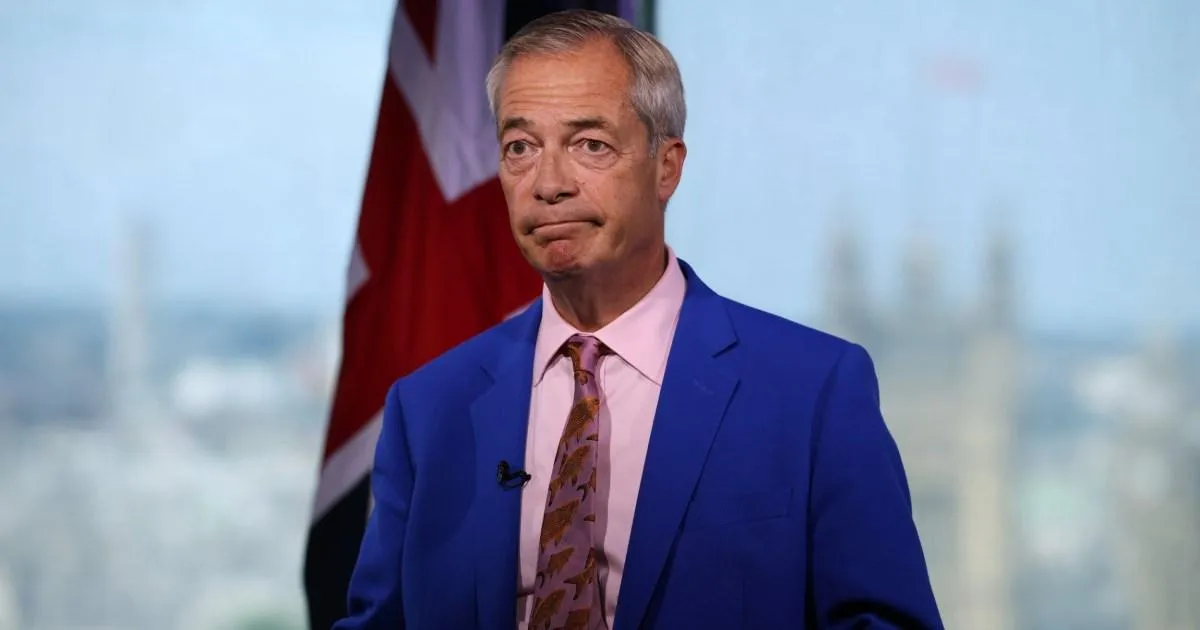
Nigel Farage is currently embroiled in a very public display of indignation, claiming he has been unfairly excluded from a high-stakes cross-party discussion concerning the future of adult social care. Orchestrated by Andy Burnham, these talks have brought together leaders like Kemi Badenoch and Ed Davey, leaving the Reform UK leader on the outside looking in. Farage has responded with characteristic fire, accusing the participants of conspiring behind closed doors to impose new taxes on the public. Yet, there is a biting irony to his protest: Farage is effectively banging on a door that he himself kicked open and stormed through, only to slam it shut behind him when the pressure of real parliamentary accountability became inconvenient.
The reality of the situation is that Farage’s exclusion is a direct consequence of his own choices. After winning his seat in Clacton, he abruptly resigned from Parliament in July, reportedly to avoid scrutiny over his complex financial and commercial interests. By walking away from the responsibilities of being an MP, he stripped himself of the standing that typically grants a politician a seat at these collaborative tables. While he frames this departure as a bold act of defiance against the “establishment,” many see it as a strategic retreat from the boring, difficult, and transparent work of governance. He is now focused on a performative, uncontested by-election—a situation so detached from standard democratic reality that even his opponents are refusing to participate in it.
This spectacle reveals a fundamental disconnect in Farage’s political brand. He thrives on the identity of the “perpetual outsider,” yet he clearly resents the lack of influence that accompanies that status. Compare his reaction to that of the Green Party, who were also not invited to the table. Rather than staging an ego-driven tantrum, they responded with constructive criticism and a genuine offer to assist with the policy, highlighting that the urgency of the social care crisis far outweighs personal grievances. Farage, however, seems to find more political value in being a victim of the process than in being a participant in a solution. For him, the “establishment” is a convenient villain, and the prospect of actually sharing the blame for the difficult trade-offs required in social care is something his populist rhetoric simply cannot withstand.
The irony deepens when we examine his track record. Whether it was his post-referendum exit from the Brexit movement or his current complaints about the status quo, Farage has made a career out of igniting a crisis, claiming a moral victory, and then distancing himself from the messy, long-term consequences of his actions. By demanding an invitation to a meeting he has spent weeks rhetorically sabotaging, he isn’t seeking to contribute; he is seeking to create chaos. As his own party’s spokesperson pointed out, Reform has no interest in the actual policy proposals being discussed. They would rather fight a vacuum than engage in the grueling, incremental work of fixing a broken system that has frustrated governments for decades.
In contrast, the leaders currently in the room—most notably Ed Davey, whose own life is deeply impacted by the realities of care—are doing the “un-glamorous” work of governance. Social care is a uniquely difficult issue because it lacks a punchable villain. It is a massive, complex logistical and financial puzzle involving millions of workers, patients, and families. It requires a willingness to propose unpopular solutions—taxes or policy shifts that will inevitably draw criticism. Farage’s brand of politics, which relies on simple solutions and external scapegoats, is fundamentally incompatible with a problem that is universal, bipartisan, and deeply human. Because he refuses to own the reality of governing, he is rightfully excluded from the planning phase.
Ultimately, Nigel Farage has spent thirty years assuring the British public that he wants nothing to do with the “political club.” Now that he has finally been taken at his word, he is furious that the door has been locked. He is free to continue his performative fights in Clacton and his media campaigns against the establishment, but he cannot have it both ways. The room where history is made is reserved for those willing to do the work, share the responsibility, and face the scrutiny. By choosing to walk away from his duties, Farage ensured he would no longer have a seat at the table, leaving him on the outside, shouting at a building he no longer has the standing to enter.