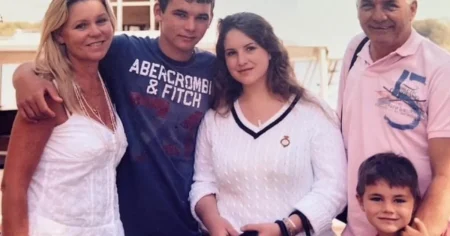




The landscape of British social care, long considered a poisoned chalice by successive administrations, is currently undergoing a moment of profound personal reflection. As Prime Minister Andy Burnham pivots his attention toward fixing a system that has historically defied all attempts at reform, he has found a powerful ally in Housing Secretary Angela Rayner. Sharing a poignant photograph from her past, Rayner reminded the country that before the high-stakes world of Westminster, she spent half a decade as a home carer for Stockport Council. This transition—from the frontlines of domestic assistance in the early 2000s to the heart of government—provides a rare, grounded perspective on the systemic exhaustion and financial precariousness that define the current care crisis.
For Rayner, the conversation isn’t centered on spreadsheets or abstract policy, but on the visceral memory of the “ticking clock.” She has spoken candidly about the indignity of having to rush intimate tasks—such as washing and feeding vulnerable individuals—because the schedule allowed for no human connection. This lived experience with low wages and physical toil has effectively branded her political identity; she is a leader who knows exactly what it feels like to struggle to make ends meet while performing a service that society deems essential yet fails to value. Her story serves as a stark reminder that behind every policy failure is a carer battling burnout and a user needing more than just basic survival.
Prime Minister Burnham, likewise, is framing his crusade as a deeply personal mission rather than a professional whim. With the public and the political establishment noting his pledge to finally solve the “unsolvable” crisis, he has brought a rare vulnerability to the role. Opening up about his father’s struggle with Alzheimer’s, the Prime Minister’s voice famously cracked during a recent speech—a moment of raw emotion that appeared to humanize a debate usually dominated by sterile economic jargon. By declaring his intent to spend his political capital on this issue, Burnham is positioning the reform of social care as a moral debt he owes to his own family and the millions of British families currently caught in a fragmented, demoralizing system.
The scale of the challenge remains, however, as sobering as ever. Currently, the system is essentially a financial gauntlet where those with modest savings above £23,250 are forced to deplete their life’s hard work to cover care costs, a reality that feels increasingly unjust in the modern age. While there is a broad, cross-party consensus that the status quo is broken, previous attempts at reform have crumbled under the weight of implementation and funding disputes. To break this cycle, Burnham has opted for a strategy of radical transparency, ordering Baroness Louise Casey to accelerate the release of her commission’s report. By inviting discussions with Conservative and Liberal Democrat counterparts, he is signaling that this cannot be a partisan boxing match—it must be a national project of integration and dignity.
Advocacy groups like the Alzheimer’s Society have responded to this shift in tone with a mix of cautious optimism and sharp, necessary skepticism. CEO Michelle Dyson highlighted that while the Prime Minister’s “clarity and conviction” are a welcome departure from the obfuscation of the past, passion alone will not build a new infrastructure. The real work is yet to come: the hard questions about how to fund a system that is currently buckling, how to professionalize a workforce that has been historically underpaid, and how to create a care delivery model that actually works for the elderly. The sector is waiting to see if these high-level pledges can be translated into a tangible, properly financed offer for the British public.
Ultimately, this latest push for reform feels different because of the fingerprints left on it by those who have been in the trenches. When a Prime Minister and a Cabinet Minister speak from a place of genuine, painful experience, it elevates the discourse from the cold calculations of civil service to the urgent needs of the human condition. While the road ahead is fraught with the perennial obstacles of tax thresholds, funding mechanisms, and competing political priorities, the current leadership is betting that the public is ready for an honest conversation. They are demanding a system that offers more than just the basics—one that affords every person during their twilight years the dignity and security that should be the hallmark of a compassionate society.