



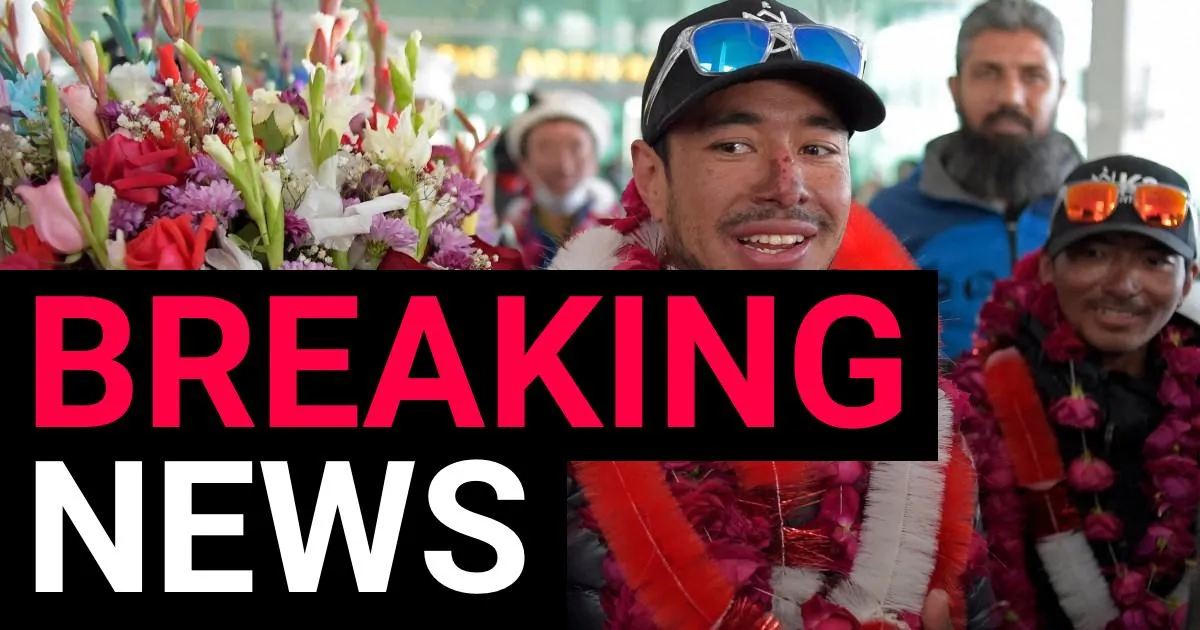
The world of mountaineering is in mourning today following a devastating tragedy on Pakistan’s Broad Peak, where a massive avalanche claimed the lives of several elite climbers, including the legendary British-Nepali mountaineer, Nirmal “Nimsdai” Purja. The incident occurred this past Thursday, turning what was supposed to be a triumphant ascent of the world’s 12th-highest mountain into a scene of unimaginable sorrow. As news broke, the global climbing community—and those who came to know Purja through his inspiring feats—grappled with the sudden silence of a man who once seemed invincible against the elements.
Nirmal Purja, a former soldier in the British Royal Marines, was more than just an athlete; he was a pioneer who redefined the limits of human endurance. In 2019, he captured the world’s imagination by summiting all 14 of the planet’s “8,000-meter peaks” in record time, a journey chronicled in the Netflix documentary 14 Peaks: Nothing Is Impossible. His ability to navigate the “death zone”—the high-altitude regions where oxygen is too thin for the human body to sustain itself—was legendary. Even in his final days, he remained driven, aiming to conquer those same peaks once again without the use of supplemental oxygen, a testament to his relentless pursuit of personal and professional excellence.
The tragedy unfolded when a group of ten climbers, organized into four separate teams, attempted to navigate the unforgiving terrain of the Karakoram range. Around 9:00 a.m. on Thursday, communication with the group abruptly vanished. It was later determined that a massive avalanche had struck them at an altitude of approximately 6,600 meters. The remoteness of the site and rapidly deteriorating weather conditions hampered initial search and rescue efforts, casting a pall of anxiety over the mountaineering world as families and colleagues waited for word from the mountain.
As search teams began to reach the site, the heartbreaking reality of the scale of the loss became clear. The recovery of the bodies—including those of Nadhira Alharthy, the first Omani woman to scale Everest; American climber Sarah Mallory Geis; and Purja’s trusted guide, Pur Bahadur Gurung—confirmed the worst fears of the international community. Elite Exped, the company founded by Purja, issued a poignant statement expressing profound sadness for the loss of their leader and his fellow climbers, including Nima Sherpa, urging the public to respect the privacy of the families who are now navigating the raw, immediate aftermath of this catastrophe.
The loss of these individuals is felt deeply across cultures and borders, leaving behind a void that reflects the immense bravery required to live life at such extremes. Tributes have poured in from all corners of the globe, with figures like TV survivalist Bear Grylls describing Purja as a “remarkable and unique man.” These sentiments reflect a shared respect for the sheer force of will that brought these individuals to Broad Peak. Even in his final public comments on social media, Purja expressed a grounded, almost spiritual humility toward the mountains, stating that he took “zero mountains for granted” and approached every step with his full heart and soul.
As of now, the recovery efforts continue, with officials reporting that several additional bodies have been located via aerial surveillance, though the difficult terrain makes ground-level identification a slow and painful process. The list of the missing includes renowned Pakistani alpinist Sohail Sakhi, Chinese climber Wang Zhong, and guide Kili Pema Sherpa. The tragedy serves as a harrowing reminder of the inherent dangers that define the world of high-altitude mountaineering. While we honor the technical skills and records of those who were lost, we remember them most for their courage and the enduring spirit that drove them to reach for the sky, even when the mountains demanded the ultimate sacrifice.