

-
For John and Edward, the promise of Britain was supposed to be a life raft. When the UK launched the British National Overseas (BNO) visa route in 2021, it was sold as a safe and legal pathway for Hong Kongers fleeing political repression—a way for a former colonial power to honour its moral responsibility to a people whose freedoms were being crushed. The two young men believed in that promise. They had stood on the front lines of Hong Kong’s pro-democracy movement in 2019, risking their safety and their futures to raise their voices against laws they saw as unjust. Now, years after those protests, after arrests, beatings, and prison sentences handed down by courts they describe as political tools, they have been told by the Home Office that Britain does not want them. Their visa applications have been rejected. Their families—parents and siblings who already made it to the UK—are separated from them by thousands of miles and a bureaucratic wall that feels, to John and Edward, like a betrayal of everything the BNO scheme was meant to stand for. The two men are not their real names. They are speaking anonymously because they fear for their safety in Hong Kong, where democracy activists say the political climate has grown ever more dangerous. But their voices carry a clear and painful message: the country that once promised them sanctuary is now, in their eyes, treating them as criminals for fighting for justice and democracy. Their stories, told to Metro by their lawyers and through documents, lay bare a disturbing pattern that has campaigners and politicians alike asking whether the UK is turning its back on the very people its flagship visa policy was designed to protect.
-
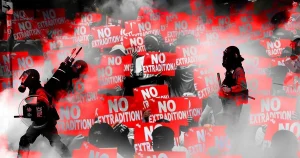
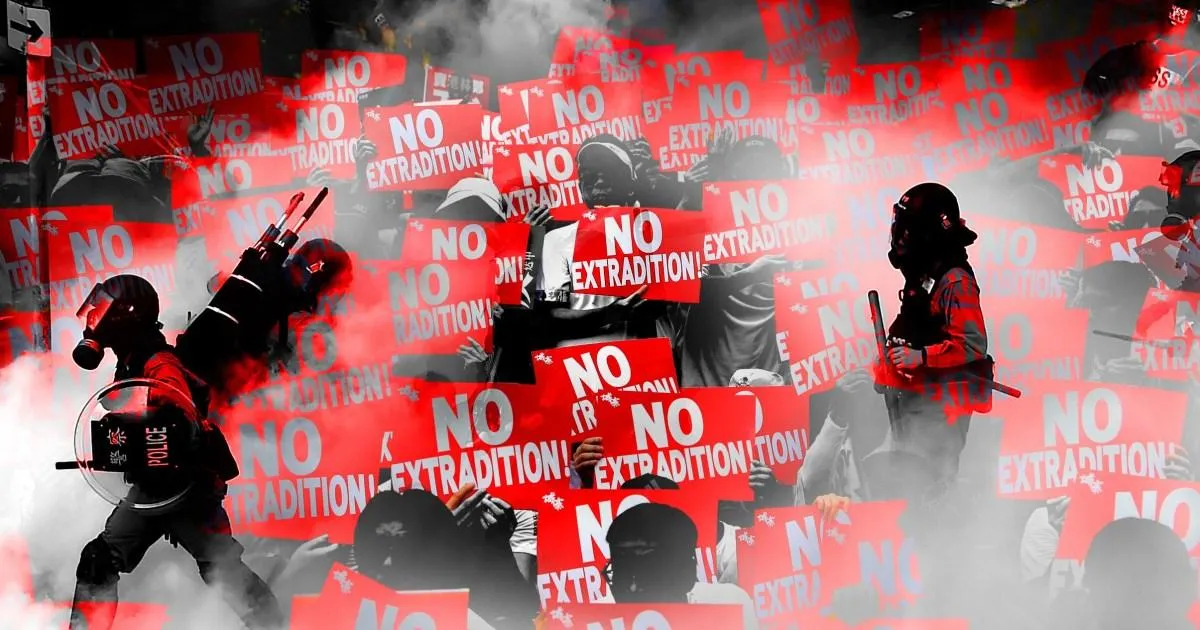
Edward’s story begins like many others in Hong Kong’s turbulent 2019 protest movement. He was a student when the government proposed an extradition bill that many believed would expose citizens to the Chinese mainland’s legal system. Hundreds of thousands of people poured into the streets in opposition, and Edward became deeply involved. On July 28, 2019, he joined a demonstration in Yuen Long against police violence—a protest that erupted after attacks in the community and in the midst of a broader crackdown. Edward stood near the front of the crowd, holding an umbrella, trying to shield himself. When police moved in to clear demonstrators, he says he was beaten with a baton and arrested on the spot. He was initially held on a charge of unlawful assembly, but while in prison, the charge was upgraded to rioting. He pleaded not guilty, insisting that he had been engaged in peaceful protest, but in January 2022 he was convicted and sentenced to three and a half years in prison. He was released in March 2024, only to find his education cut short and his job prospects destroyed by a criminal record he still insists was politically manufactured. His parents and brother had already moved to the UK, part of the more than 170,000 BNO arrivals. Edward applied for his own visa in October 2025, hoping to join them and care for his father, who is in poor health. But on July 21, the Home Office rejected him. The refusal letter quoted extensively from the Hong Kong court’s judgment, noting that Edward had been at the front of protesters confronting police and had not dispersed when ordered. It acknowledged he was not accused of any violent act, yet still concluded that his conduct would be considered criminal in the UK. For Edward, the decision was absurd and heartbreaking. He was not a violent protestor, he says—but the Home Office chose to agree with a court he believes exists to silence dissent. The BNO visa, he argues, was supposed to help people persecuted by the government. Instead, it has left him trapped in a place where he feels increasingly unsafe, separated from the family he loves.
-
John’s case is almost painfully similar, separated by only a day in the Home Office’s decision letters. John was among thousands who gathered on November 19, 2019, to support student demonstrators trapped inside Hong Kong Polytechnic University. The university had become a dramatic flashpoint, with police surrounding the campus and intense clashes raging for days. John says he was shot with a rubber bullet and arrested, then taken to hospital before being charged with rioting. He pleaded guilty, as many protestors did at the time, hoping that an admission would lead to a lighter sentence. It did, in part—he served two years and one month and was released early on good behaviour in November 2025. But before he was released, he was already worrying about what would happen next. Police, he claims, threatened him and pressured him to reveal the identities of other political activists. He did not feel safe staying in Hong Kong, so a month after his release he applied for a BNO visa. On July 22, the Home Office rejected him, again because his riot conviction resulted in a sentence longer than 12 months. The refusal letter drew on the judge’s summary remarks, which described petrol bombs being thrown at police, damage to property, and demonstrators refusing to disperse. Yet, as with Edward, the judgment did not state that John himself had been witnessed committing violence. The Home Office argued that his presence and conduct during the clashes would nonetheless be seen as criminal under UK law. John says the rejection made him feel betrayed. He had risked everything for democracy, he insisted, and now the UK was treating him like a criminal. The whole point of the BNO visa, he said, was to protect people like him and safeguard the human rights of Hong Kongers. Instead, he finds himself in a country where political violence is worsening, with no way out and no protection from a government he once believed would stand with him.
-
John and Edward are not alone. According to their lawyers, at least ten other democracy activists have been refused BNO visas for similar reasons since Andy Burnham became Prime Minister. Under British immigration rules, a visa application must be refused if an applicant has received a sentence longer than 12 months, unless the offence “would not be criminal in the UK.” This is the legal knot at the heart of these cases. The activists argue that their convictions for rioting were politically motivated, handed down by courts that are widely seen as instruments of the Chinese government’s crackdown on dissent. They maintain that their actions—standing at protests, refusing to disperse, participating in demonstrations—would not necessarily be treated as criminal in the UK, or at the very least, not with the same severity and political framing. Their lawyers point out that in the past, similar applications were considered on a case-by-case basis, and that political activists with riot convictions did successfully obtain visas. But the recent refusals, they say, suggest a harder line: the Home Office appears to be accepting Hong Kong’s politically-motivated convictions at face value, without probing whether they were fair or legitimate. Kate Lam, a lawyer representing Edward and John, described the refusals as a betrayal of the BNO policy’s main purpose—to fulfill the UK’s historic, diplomatic, and moral obligation to the people of Hong Kong. She expressed deep concern that the Home Office was increasingly relying on “kangaroo court” convictions to deny sanctuary to democratic activists. The refusal letters, which quote extensively from Hong Kong court judgments, show that officials are engaging with the facts of each case—but seemingly only through the lens of the convictions, rather than through an independent assessment of whether those convictions were just. To the activists and their lawyers, this is worse than negligence. It is a willing blindness to the reality of political persecution, dressed up in the neutral language of immigration rules.
-
The political reaction has been fierce. Priti Patel, the former Home Secretary who announced the BNO visa route in 2020, accused Andy Burnham and Labour of “kowtowing to China” and failing to protect Hong Kongers whose freedoms are being undermined and suppressed. Patel’s language is pointed, but it reflects a growing unease across the political spectrum. Emily Dalington, chair of Parliament’s All-Party Parliamentary Group on Hong Kong, said she was hearing “more alarming reports” of BNO applicants being rejected over criminal prosecutions that many in the UK “do not necessarily recognise.” She reminded the government that Britain made promises to the people of Hong Kong, and that those promises should be kept. Bobby Dean MP, vice chair of the same group, went further, warning that the UK provided a 50-year guarantee that China would protect Hong Kongers’ basic freedoms—and that once authorities began jailing people for legitimate democratic protest, that agreement was broken. At that point, he said, it became Britain’s duty to provide a lifeboat. Turning people away for what he called “bogus convictions” undermines the entire purpose of the BNO scheme. Outside Parliament, Tomas Roberto of the Committee for Freedom in Hong Kong Foundation added a robust moral argument: Britain must stop treating political dissent as a crime. Hong Kongers prosecuted under the Chinese Communist Party’s National Security Law for peaceful pro-democracy activity should not be automatically shut out of the UK simply because an authoritarian regime labelled their activism an offence. Surely, he suggested, the British government is capable of distinguishing genuine criminal conduct from political persecution. The Home Office, for its part, declined to assess the anonymised claims, but a spokesperson reiterated the government’s steadfast support for the Hong Kong community and its full commitment to the BNO route, while insisting that standard immigration rules on criminality still apply. That formal, unyielding answer does little to reassure those who see these refusals as a moral failure rather than a technicality.
-
The deeper tragedy here is one of broken trust. For decades, Hong Kongers looked to Britain as a place of refuge—a nation that, despite its colonial history, had offered a path to citizenship and a home for those who faced persecution. The BNO visa was more than just a bureaucratic scheme; it was a symbol of that bond, a promise that the UK would not forget the people of Hong Kong when China’s grip tightened. Now, for John, Edward, and at least ten others, that promise is being tested in the most painful way imaginable. They made enormous personal sacrifices to stand up for freedom and democracy. They endured arrests, beatings, prison, and the constant threat of further political violence. They watched their families leave for Britain, believing they would soon follow. And then, in the space of a few days this July, they received letters telling them they are not welcome. The emotional weight of those letters is hard to overstate. Edward is devastated that he may never see his parents or brother again, and he fears for his father’s health knowing he cannot be there to help care for him. John feels abandoned by a country he once trusted, left to live in fear of police intimidation and political reprisal. Their stories are not just legal case studies; they are human stories of hope turned to despair. The debate over whether their convictions would be criminal in the UK often obscures the simple fact that they were convictions born of protest, not violence—acts of conscience in a city fighting for its rights. The Home Office’s insistence on applying standard immigration rules feels, to them, like a way of hiding from the uncomfortable reality of political persecution. The UK may still welcome 170,000 Hong Kongers, but for those left behind, the door feels bolted shut. As lawyers and activists push for the Home Office to review its guidance and align it with British values, John and Edward wait in Hong Kong, caught between a government that hunts them and a country that has turned them away. Their futures hang in the balance, and with them, the credibility of Britain’s promise to the people of Hong Kong. If that promise is allowed to wither, it will not just be a failure of policy—it will be a betrayal of everything the BNO scheme was supposed to mean.