


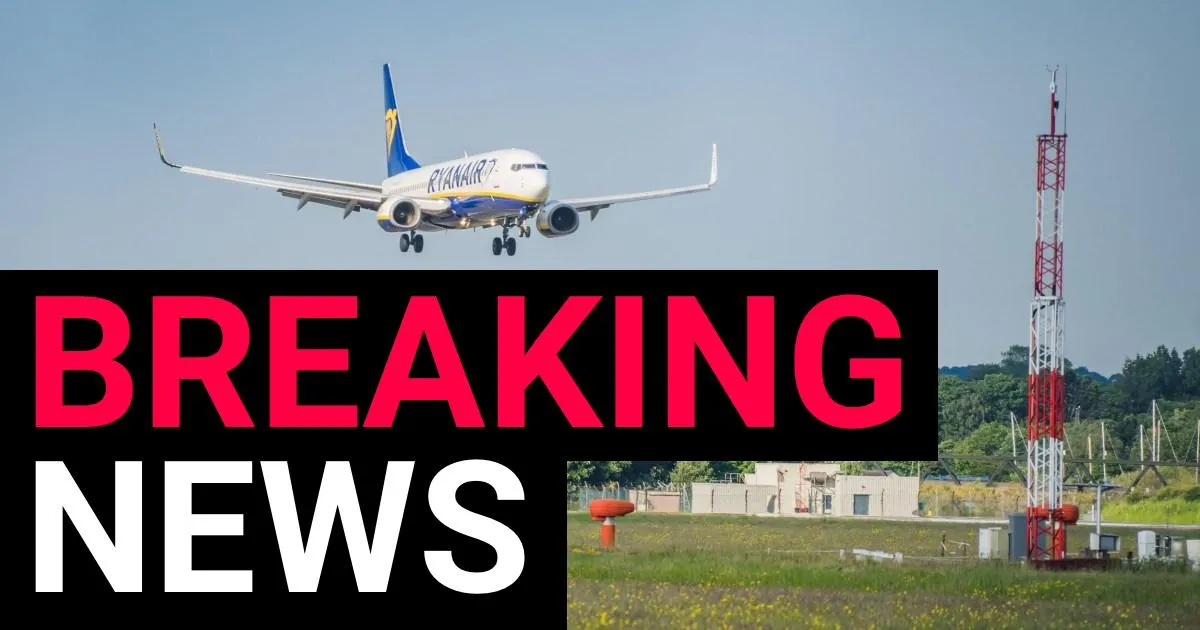
It was supposed to be just another ordinary travel day for thousands of passengers across Scotland, but a quiet Tuesday morning quickly turned into a scene of long queues, anxious glances at departure boards, and the unmistakable sound of flight delays being announced over airport intercoms. A technical issue at an air traffic control centre in Prestwick, a name most travellers have probably heard but few truly understand, had thrown the entire Scottish airspace system into a state of disruption. The problem was not weather-related, not a strike, and not something that anyone could control from the cockpit. Instead, it was a mysterious but significant glitch at the heart of the country’s air traffic infrastructure, one that forced air traffic controllers to put the brakes on the usual smooth flow of planes. As the morning wore on, it became clear that this was not a minor blip. Flights were being held on the ground, others were circling in holding patterns, and some passengers were left sitting on tarmacs, waiting for instructions that seemed slow to come. For anyone who has ever been trapped in a delayed flight, the feeling of powerlessness is familiar. You can see the plane, you can see the sky, but you cannot make the journey happen. And when the delay is caused by something as invisible as a technical fault miles away in a radar room, the frustration only grows.
NATS, the company that provides air traffic control services in the United Kingdom, was quick to confirm what was happening. In a carefully worded statement, a spokesperson explained that engineers had been alerted to a technical issue at the Prestwick centre and that, in order to maintain safety, air traffic regulations had been applied to manage the flow of aircraft. This is the aviation industry’s way of saying that everything had slowed down, because when something goes wrong on the ground, the priority is never speed. It is always safety. The decision to reduce capacity across Scottish-controlled airspace was not taken lightly, but it was necessary. With fewer flights being able to take off, land, and pass through, the knock-on effect rippled outward, touching regional airports, international hubs, and connecting passengers who maybe thought they were only passing through. What made this particular technical issue even more frustrating for those affected was the timing. Just a few weeks earlier, the same company had experienced unrelated technical problems that had also caused disruption, but the spokesperson was keen to stress that this was a separate matter. Engineers were on site, working to resolve the problem as quickly as possible, but as anyone who has ever waited for a computer update to finish at the worst possible moment knows, these things rarely resolve themselves on command.
To truly understand why a single fault in one building could cause so much chaos, it helps to appreciate the vital role that Prestwick plays in the invisible machinery of modern air travel. NATS operates two major air traffic control centres in the United Kingdom, one in Swanwick in Hampshire, and the other in Prestwick, on the west coast of Scotland. While Swanwick handles traffic across much of the south of England and parts of the UK, Prestwick is responsible for the skies over northern England, all of Scotland, and a vast stretch of the North East Atlantic. That last part is crucial. The North Atlantic is one of the busiest oceanic airspace regions in the world, with hundreds of flights daily shuttling between Europe and North America. Aircraft crossing the ocean rely on controllers at Prestwick to keep them safely separated, guiding them through routes that can span thousands of miles, far beyond the reach of ground-based radar. When the centre experiences a technical issue, it is not just about the domestic flights from Glasgow, Edinburgh, Aberdeen, or Inverness, although those certainly feel the effects. It is also about the wide-body jets flying from London to New York, or from Manchester to Toronto, that need to use those same corridors. The airspace over Scotland is a motorway, a service lane, and a fuel stop all at once, and Prestwick is the traffic officer keeping everything moving. When the officer has to lift their foot off the pedal, the entire network slows down.
For passengers, the human cost of this disruption can be measured in more than just missed connections and lost hours. Airports across Scotland began to fill with the kind of quiet, weary tension that has become all too familiar to frequent flyers. Boarding gates that should have been emptying were instead crowded with people checking their phones, calling ahead to hotels, or rehearsing the same questions to airline staff: How long is the delay? Will I make my connection? Is there anything available on the next flight? Some travellers faced the agonising choice of whether to wait it out or try to rebook for another day. Others, especially those travelling for weddings, funerals, job interviews, or once-in-a-lifetime holidays, found their carefully laid plans unravelling in a matter of minutes. The news that some flights were effectively grounded, as shown by tracking apps like flightradar24, turned the vague unease into a concrete reality. The advice from NATS and from the airlines was always the same: check with your airline before coming to the airport, because the situation could change at any moment. But for many, that advice felt like a cold comfort. Airlines have their own systems for managing disruption, with rebooking desks, automated notifications, and goodwill gestures that range from free snacks to overnight accommodation, but none of those things can give back the lost hours or turn back the clock. What made it worse was the sense that no one really knew when the problem would be fixed. Engineers were working, but technical faults can be stubborn, unpredictable things. In an age of advanced technology, the systems that keep aircraft safe are incredibly complex, and sometimes the simplest gremlin takes hours to find.
Behind the scenes, however, there was a quiet reassurance from the fact that safety remained the guiding principle. It would be easy to criticise NATS for the inconvenience, to grumble about another day of travel chaos, but the alternative would be far worse. Air traffic control exists for one overriding reason: to make sure that the world’s busy skies remain ordered, predictable, and safe. When something goes wrong, the first rule is to slow down, create space, and give the people on the ground room to breathe. This is why air traffic regulations are applied so quickly and why aircraft are asked to hold, divert, or delay rather than to push through a problem. The pilots, the cabin crew, the airport staff, and the controllers themselves are all trained to handle these situations with professionalism, and the system is designed to fail safe. Passengers may be frustrated, but they are never in danger. That is the stark truth of aviation. The normal rules of customer service, where a refund or a free upgrade can make everything better, simply do not apply when safety is at stake. So while the news stories focused on the delays, the cancellations, and the disruption, the real story was about the thousands of behind-the-scenes actions being taken to ensure that a difficult day did not become a dangerous one. Every aircraft that was held on the ground was a small victory for safety, and every delayed flight was a reminder that the invisible infrastructure of air travel, the radars, the computers, the communication links, and the skilled men and women who operate them, rarely gets the credit it deserves until something goes wrong.
Looking ahead, there is hope that the issue will be resolved quickly and that the skies over Scotland will soon return to normal. But as any seasoned traveller knows, the true pain of a delay is the uncertainty. Will it be another hour? Another two? Should I give up and go home? The answer, in this case, is to stay in touch with your airline, to keep your phone charged, and to remember that you are not alone. Thousands of other passengers are in the same boat, or in this case, the same terminal. What made this incident stand out was not just the technical fault itself, but the human impact that rippled out from a single building in Prestwick. Parents with young children were seen entertaining their little ones with games and snacks, trying to keep the mood light. Students heading home for the holidays stared at their laptops, hoping for an email telling them the storm had passed. Business travellers paced the corridors, juggling phones and calendars, trying to salvage a day of meetings that were rapidly slipping away. It was a portrait of resilience, patience, and, in some cases, genuine kindness, as strangers offered each other words of encouragement and shared what little information they had. In the grand scheme of things, a few hours of delay is a very small weight compared with the heaviness of a serious crisis. And while the memories of missed connections may linger, so too will the reminder that air travel, for all its frustrations, remains one of the miracles of modern life. It connects people, families, and ideas across oceans and continents. The system is not perfect, and days like this prove that even the most advanced infrastructure can stumble. But safety will always, and rightly, come first. The next time you board a plane and hear the engines hum, take a moment to appreciate the unseen army of engineers, controllers, and support staff who work so hard to get you where you need to go. They may not always be visible, but they are always there, watching, guiding, and ensuring that even when things go wrong, the journey continues as safely as possible. For those currently waiting in airports across Scotland, the advice is simple: breathe, be patient, and know that the skies will reopen. The planes will fly again, the delays will end, and eventually, you will get where you are going. It may not be on time, and it may not be according to plan, but it will happen. And when it does, the memory of this day will fade, replaced by the simple relief of arrival and the joy of seeing a loved one at the other end. Until then, the coffee is still hot, the seats are not as uncomfortable as they could be, and somewhere, a technician is working on the problem. The story of modern air travel is one of incredible achievement and, occasionally, humbling inconvenience. But through it all, the spirit of travel remains unshaken, ready for the next journey, whatever it may bring.