


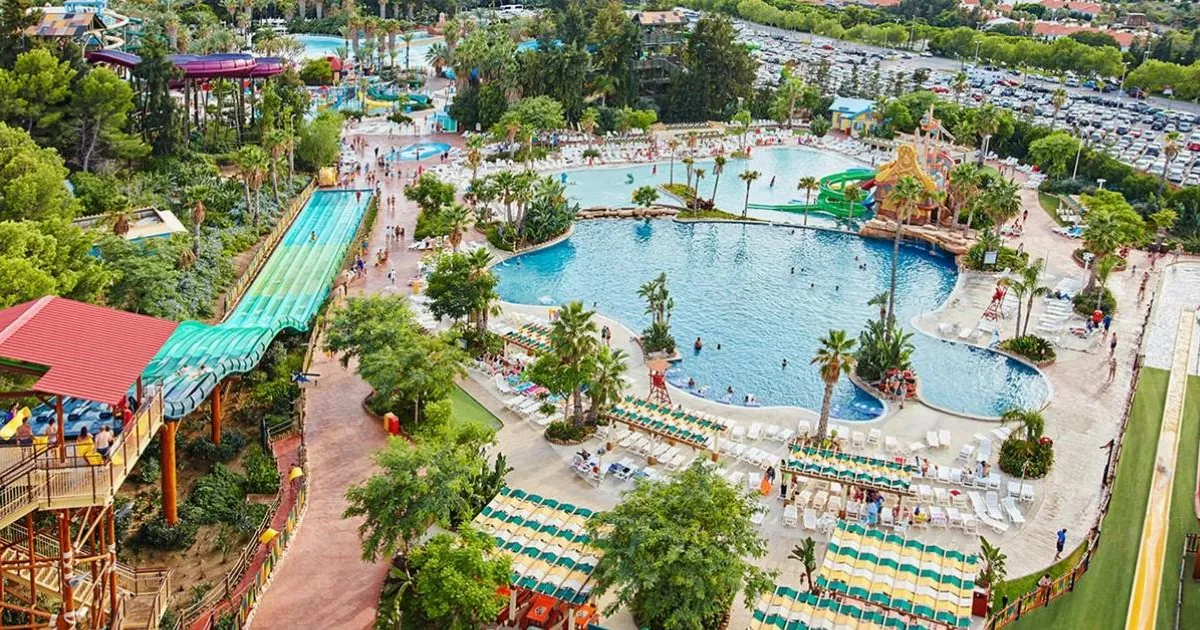
It was supposed to be another sun-drenched, carefree afternoon at one of Spain’s most popular waterparks, but instead it became a nightmare that no one saw coming. The “brown challenge,” as it has been grimly nicknamed, has apparently not gone away, and it continues to leave a trail of chaos behind it. In recent years, social media users, mainly on TikTok and Instagram, have decided that a clever prank means deliberately defecating in public pools—sometimes directly in the water, sometimes in a bag hidden inside swimwear—in order to force a closure. It is not a silly joke. It’s a serious public health threat. The latest victims are at the Caribe Aquatic Park inside the PortAventura World resort on Spain’s Costa Dorada, where two pools—one for adults and one for children—had to be completely evacuated after faeces were found in the water. The almost unbelievable reality is that these closures are no longer rare. More than 300 pools across Spain have already been shut down because of the trend, each one legally required to undergo deep cleaning and remain closed for 24 to 48 hours. For every family told to pack up and leave, for every upset child and frustrated parent, the price of this “joke” is far too high.
What happened at the Caribe Aquatic Park is the perfect shocking example. The Caribbean-themed attraction, located within the massive PortAventura World complex in the province of Tarragona, is wildly popular, attracting around 5.3 million visitors every single year, many of them British and Irish tourists looking for a bit of warmth and escape. It was filled with holidaymakers when, in the middle of the afternoon, faeces were spotted in the water. Immediately, lifeguards and park staff moved into action, ordering everyone out and shutting down both the children’s space and the adult area. A visitor captured and later shared video of the evacuation online, saying the event was all too real. In Spanish, she described how “some pig” had defecated in the pool, and how everyone was being thrown out for something that should have never happened in the first place. Another eyewitness described a tense moment, where families were left frightened and confused, not sure whether what had happened was a sick joke or worse. Of course, many were angry, and one asked: “Do you really have to go this far to pull a prank?” It’s a question that deserves an answer, though perhaps none will ever come.
What makes this kind of incident especially heartbreaking is the setting. Caribe Aquatic Park is the way to have a carefree holiday moment, full of waterslides, wave pools, and children’s laughter. Instead, it became yet another scene of an antisocial behavior that has been spreading through Spain’s public pools for years. It’s enough to make you wonder what’s so hilarious about infecting the water that will be swirling around everyone’s face—especially the small and the uninformed. It’s a disgusting, and it is one that can have far more serious consequences than an afternoon off. At a time when everyone is desperate for a bit of holiday magic, and pools and parks represent something so good for families—health, joy, exercise, togetherness—this challenge turns them into potential health hazards. It is not just about the immediate moment of closing, though. The entire incident casts a shadow over everyday spaces that are supposed to feel safe. When lifeguards suddenly wave everyone out from a pool, with sirens and shouting, there is real fear, especially when the news spreads and people wonder what might be in the water. It can be considered a violation in a private, communal space where people are often at their most relaxed and innocent.
The health risks are real, not something to laugh at. Pool maintenance used to be pretty simple. However, the presence and faeces in a swimming pool creates issues that go far beyond what normal chlorine can handle. Faeces can contain viruses, bacteria, and parasites that easily survive chlorinated water, including norovirus, Salmonella, and Cryptosporidium. These are not just words you read on a medical leaflet; they cause serious problems such as stomach pain, vomiting, fever—vomiting until you’re weak, diarrhea and dehydration, and sometimes worse. Children are the most affected because, by nature, they swallow a lot more water while swimming, splashing and playing. Even without an obvious accident, a single person’s reckless action can put an entire network of families at risk, not only the swimmers but the people who come later, since closing a pool is not as simple as turning off filters. The law in Spain is also clear: the moment a pool is contaminated, it must be closed, cleaned, disinfected, and then the water must be tested several times before the public is allowed back in. In some cases, the entire pool has to be drained and refilled completely, something that is extremely expensive, involves thousands of gallons of precious water, and intensifies the burden for an already pressured community.
Authorities are not pretending to be desperate, and it is not hard to see why. There are now fines ranging from around £1,000 to £5,000, meaning almost nobody can say they weren’t warned. However, the surprising part is that it is still reluctant to happen. People are which are strange unnatural habits, and they have caused a visible environment of anger and disbelief. One angry local, hearing about the repeated incidents at the Caribe Aquatic Park, said they’d make the culprits clean the toilets with their tongues. Keep at least have they introduced police surveillance around 50 municipalities, issued public health alerts, and tried to keep the situation under control. Catching offenders, though, is remarkably difficult. Pools can’t install security cameras inside changing rooms or corners, and they cannot always stop people asking for an ID when they walk in. In this strange world, a “prank” becomes a risk without accountability. The adults at the waterpark claimed that the incident happened on Tuesday, but somehow, on Wednesday, it happened again. The social media claims spread quickly, and many are now wondering whether the people responsible will ever be arrested, or whether they even feel sorry. All that vacation planning, all those plane tickets, hotel reservations, and orgasms, and one selfish act can be ruined.
As the summer season reaches its peak, the “brown challenge” hasn’t become just an online joke—it’s become a symbol of how far some people will go for attention, even if they hurt innocent strangers. Across Spain, the closures have touched family pools in small towns and huge waterparks alike, and the problem is coming graphically alive for tourist hotspots and their local communities. It is a reminder that we all rely on a collective basic trust at public swimming pools: that other people’s respect for basic rules will keep us all safe. When that trust breaks, the entire community suffers. The good news is that at PortVentura this latest incident seems to have been resolved, with the waterpark saying it followed all strict health protocols, and that staff were prepared and quick. The bad news is that the next weekend could bring a new incident, another pool closed, another beautiful holiday broken. For now, it matters less if the person was caught or how fine might be, because the bigger issue is a cultural norm, not just a legal one. This is not a game, and it is not a diaper, and people cannot or will separate their social media fame from human dignity. If we travel, if we swim, if we picnic, and especially if we have children, we must remember that other people are real, and that water is shared. The only way to stop this nasty trend is too ordinary, too unglamorous, and too human: responsibility, empathy, and a refusal to clap when someone makes the rests sick to create a prank that no one asked for.