



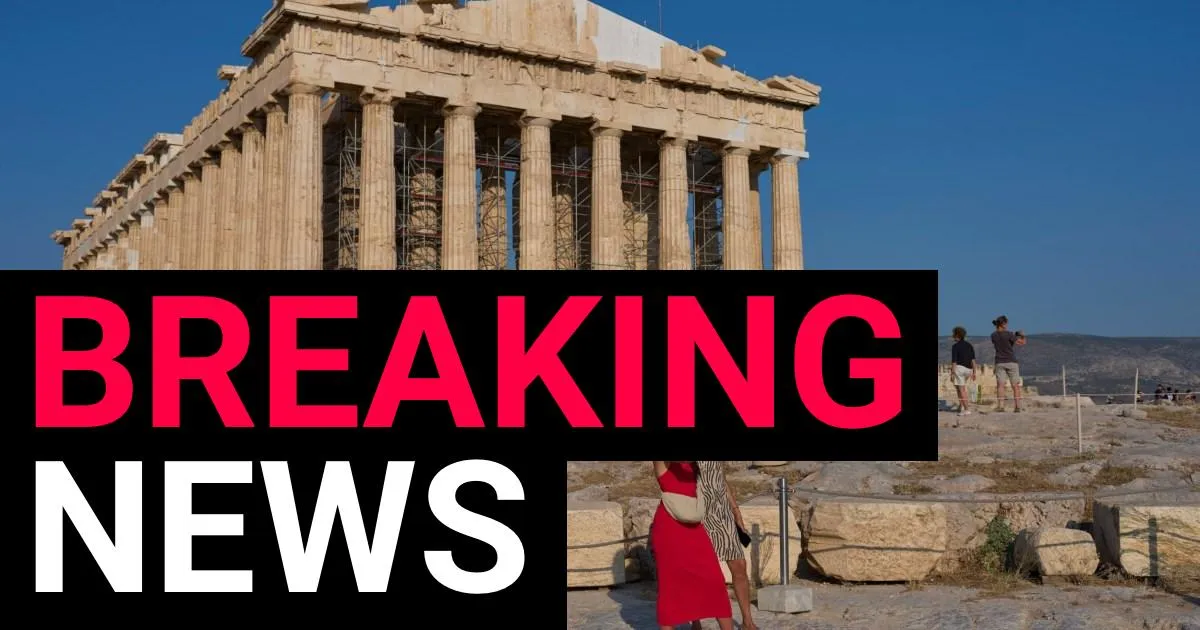
The Acropolis of Athens, a timeless monument that serves as a testament to the cradle of Western civilization, stands as a bucket-list destination for millions of travelers every year. Yet, this past Tuesday, the serene atmosphere surrounding this historic site was shattered by an unsettling act of violence. Near the entrance of the renowned Acropolis Museum, located at the base of the hill where the 2,500-year-old Parthenon rests, a man and a woman—both Greek Americans—were targeted in a sudden knife attack. What should have been a day of wandering through the echoes of antiquity turned into a harrowing ordeal for the victims, leaving a mark of tragedy on one of the world’s most beloved tourist landmarks.
The physical toll of the incident saw the male victim suffer significant knife wounds to his arm, while his female companion sustained lighter injuries to her leg. Authorities were quick to respond, apprehending the assailant directly at the scene to prevent any further harm to the public. Preliminary reports suggest that the attacker was struggling with deep-seated psychological issues, adding a layer of tragic complexity to what initially appeared to be a senseless act. Images circulating through Greek media outlets—depicting bloodstained pavements—served as a stark, graphic reminder of how quickly the tranquility of a summer morning can be disrupted by private demons manifesting in a public space.
While Greece remains widely regarded as a safe destination for international explorers, the vulnerability felt by visitors in light of this event is palpable. The site is a global hub; in 2025 alone, it hosted roughly 4.6 million people who came to admire the architectural marvels of the ancient world. To witness such violence at the museum’s doorstep is a jarring reminder that even the most culturally protected and guarded of spaces are not entirely immune to the volatility of individuals in crisis. The event has cast a temporary shadow over the area, reminding both locals and tourists that even in spaces dedicated to human history and advancement, personal well-being remains a fragile commodity.
This event, however isolated it may be, emerges at a time of heightened caution across Europe. Earlier this year, the tension in the capital was punctuated by an unrelated incident involving an elderly gunman, and the British Foreign Office has recently updated its travel guidance for Greece. While this specific knife attack is currently not linked to any organized terrorist threat or larger geopolitical agenda, the government’s broader warnings acknowledge that Greek institutions, banks, and diplomatic offices have previously been targeted by explosive devices. These alerts, while intended to ensure safety, can undoubtedly make the prospect of travel feel more daunting for those looking to enjoy a peaceful Mediterranean getaway.
Contextualizing these events is essential for any traveler. While there is no current intelligence suggesting that the Acropolis attack is part of a larger pattern of hostility toward tourists, the incident forces a conversation about the nature of public safety in major metropolitan centers. Modern travel requires a delicate balance between the desire to explore the world’s wonders and the necessity of keeping one’s guard up. While the vast majority of visitors to Athens leave with memories of breathtaking sunsets over the Parthenon and the vibrant energy of the Plaka district, the events of this past week serve as a sobering reminder that we live in a world where individual volatility can strike anywhere.
As the authorities continue their investigation, the thoughts of many remain with the two victims, hoping for their swift physical and emotional recovery. The Acropolis will surely continue to stand as a beacon of history, a place where people from every corner of the globe find common ground in their admiration for human ingenuity. Yet, for those involved in this incident, the site will forever be tied to a moment of profound darkness. It is a stark reminder to approach our travels with both wonder and awareness, honoring the history we visit while remaining mindful of the human realities—and occasionally, the human failures—that surround us in every corner of the modern world.