

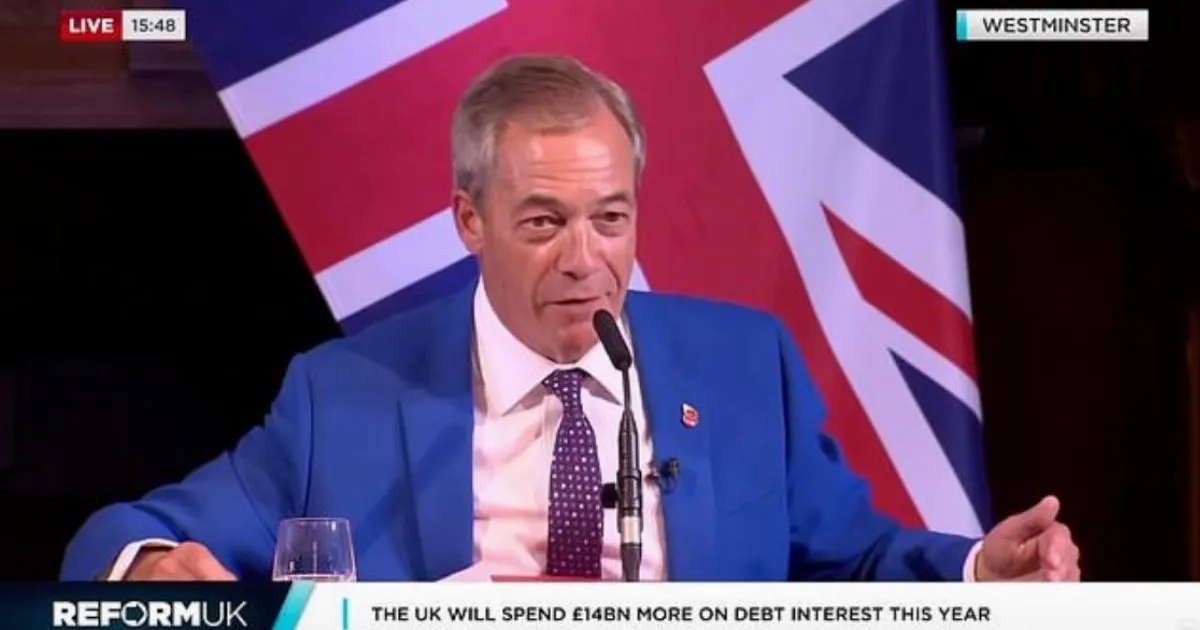
The Political Dance of Avoidance: Why Nigel Farage Skipped the Big Show
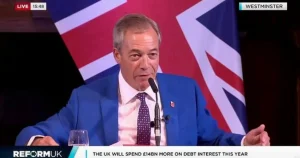
In the high-stakes theatre of British politics, few events carry the weight and drama of the annual Budget presentation. It is a day when the Chancellor of the Exchequer stands before the House of Commons to lay out the nation’s financial roadmap, a moment steeped in tradition, tension, and the kind of political theatre that defines Westminster’s unique atmosphere. Every MP knows that this is a day when attendance is not just expected but practically mandatory, a chance to be seen, to react, and to participate in the democratic process at its most visceral. Yet on this particular Budget day, one of the most recognisable and polarising figures in British politics was conspicuously absent from his seat. Nigel Farage, leader of the Reform UK party and a man who has spent the better part of three decades positioning himself at the very heart of political controversy, had decided to watch the proceedings from the quiet confines of his office, surrounded not by the bustle of parliament but by a small team of economists poring over line after line of fiscal detail. It was a choice that raised eyebrows across the political spectrum, prompting questions, speculation, and the inevitable social media commentary about what could possibly keep the famously combative politician away from such a quintessential parliamentary occasion.
The answer, it turns out, was not a scheduling conflict or a more pressing engagement in some distant constituency. Rather, it was something far more personal and, in its own way, far more revealing about the often unspoken dynamics that govern life within the hallowed and increasingly volatile corridors of power. According to Farage himself, his absence was a calculated act of self-preservation, a decision born not of disinterest but of a genuine desire to sidestep what he termed “potential conflict.” This was not idle speculation or casual avoidance; it was a considered choice rooted in recent experience, a memory still fresh of a physical altercation that had taken place during the State Opening of Parliament. That earlier incident, which Farage alluded to without providing exhaustive detail, had clearly left its mark. The removal of his prayer card—a small but significant procedural detail that signals an MP’s designated seat and presence in the chamber—became a telling symbol of the tensions that had escalated to physicality. In the often rarefied and ritualistic world of parliamentary procedure, such seemingly minor administrative actions can carry outsized meaning, and for Farage, it was a clear signal that his presence in the chamber might once again lead to confrontation, something he was determined to avoid.
To understand the significance of this admission, one must appreciate the full arc of Farage’s relationship with the House of Commons. Here is a man who has dedicated his political career to challenging the established order, who has thrived on controversy, and who has built his reputation on being the one willing to say what others will not, to push boundaries, and to court the very conflicts that he now claims to avoid. For years, Farage was a fixture of the European Parliament, a place where his theatrical and often provocative style made him a legend among his supporters and a source of frustration for his opponents. His transition back to Westminster politics, culminating in his election as an MP and his leadership of Reform UK, was never going to be a quiet affair. The House of Commons, with its arcane rules, its fierce loyalties, and its deeply entrenched party structures, is a very different arena from the more chaotic and less disciplined European Parliament. It is a place where behaviour is scrutinised, where tradition is sacrosanct, and where the physical proximity of political rivals creates a pressure cooker environment that occasionally boils over into unseemly incidents. Farage’s revelation that he had been involved in a physical altercation with another MP is a stark reminder that the boundaries of decorum are not always maintained, and that beneath the polite veneer of parliamentary language there lies a simmering tension that can, on occasion, erupt.
The decision to retreat to his office and analyse the Budget thoroughly rather than participate in the immediate, reactive atmosphere of the chamber is, in some ways, a departure from the Farage playbook. He has always been a man of action, a performer who thrives on the energy of the moment, who feeds off the reactions of his audience, whether that audience is a crowd of cheering supporters, a panel of hostile broadcasters, or the assembled members of a parliamentary chamber. Yet this time, he chose the quieter path, the more studious approach. He framed this not as a retreat but as a strategic use of his time, explaining that sitting with his economists allowed him to go through the Budget document line by line, a level of detail and scrutiny that would have been impossible amid the chaos and interruptions of the chamber itself. There is a certain logic to this, a pragmatic justification that presents his absence not as avoidance but as diligence. By his own account, he was not shirking his responsibilities but rather adopting a different, more focused method of engagement. The Budget is a notoriously complex document, a dense compilation of tax changes, spending commitments, economic forecasts, and policy announcements that can run into hundreds of pages. For a political leader seeking to hold the government to account, understanding its intricacies is arguably more valuable than being present for the theatrical presentation of its headlines.
Yet one cannot escape the irony that lies at the heart of this situation. Farage, the self-styled man of the people, the tribune of the ordinary citizen, the relentless critic of the political establishment, has always cast himself as the one who confronts the dishonest compromises and unspoken realities of political life. He is, by his own account and by the account of his many detractors, a disruptor, a fighter who refuses to play by the established rules. And now, here he was, admitting that he had chosen to give the chamber a “wide berth” because he could see “potential conflict” ahead. The image he conjures of himself as “a very quiet, shy, modest kind of person” is delivered with the kind of deliciously deadpan irony that has become his trademark, a joke that simultaneously acknowledges his reputation while playfully subverting it. No one who has followed his career could possibly believe that description, and Farage knows this full well. It is a comment designed to amuse, to deflect, and to reinforce his own sense of being the wry outsider looking in on a system he finds both ridiculous and deeply flawed. But hidden within the joke is a more serious admission: that even the most combative politicians can find the atmosphere of modern Westminster genuinely unsettling.
This episode raises broader questions about the state of our political discourse and the increasingly personal nature of political disagreement. The fact that a sitting MP, a leader of a significant political party, feels the need to avoid the chamber because he fears physical confrontation is deeply troubling. It speaks to a breakdown in the informal codes of conduct that have historically kept parliamentary life civil, at least on a personal level, even when political differences are vast. In recent years, we have seen the temperature of political debate rise dramatically, not just in the UK but across the democratic world. Social media has amplified every grievance, every insult, and every moment of conflict, creating an environment where outrage is the default setting and where the grey areas of compromise and nuance are increasingly difficult to navigate. Parliament itself has not been immune to these pressures, and the traditional rituals of respect and courtesy that once framed even the most heated debates have come under strain. Farage, as a polarising figure, has both contributed to and been a target of this heightened aggression. He has never been a shrinking violet when it comes to provocative rhetoric, and his political style has often been described as deliberately confrontational. But his decision to withdraw, even temporarily, suggests that the atmosphere has become unpleasant even for someone like him, a man who has weathered decades of criticism, abuse, and attempts to marginalise him.
For the ordinary observer, this story offers a fascinating glimpse behind the curtain of political life. It is easy to imagine the House of Commons as a place of order and dignity, where the weight of history and the solemnity of democratic responsibility create an atmosphere of gravitas and respect. The reality, as Farage’s comments reveal, is often very different. The chamber can be rowdy, tense, and even hostile. The physical need to be present for votes, to sit for hours on end on uncomfortable benches, to navigate the complex geography of a very old building, and to interact with colleagues with whom one may have profoundly bitter disagreements, takes a toll. The fact that Farage chose to spend his time poring over Budget details with economists rather than subjecting himself to that environment is, in many ways, a testament to the changing nature of political work. While the set-piece parliamentary moments still capture the media attention, the real work of political scrutiny increasingly happens elsewhere: in offices, in committee rooms, in meetings with experts, and in the quiet, unglamorous reading of official documents. Farage’s team of economists, working through the Budget line by line, represents a different kind of political engagement, one that is less about performance and more about substance, less about the instant reaction and more about the considered response.
Of course, this being Farage, the apology for absence is never quite an apology, and the retreat from conflict is never quite a surrender. There is a strategic dimension to everything he does, a calculation that rarely misses an opportunity to shape the narrative in his favour. By choosing to absent himself from the Budget and instead emerge later with detailed criticisms informed by a thorough examination of the numbers, he positions himself as the serious analyst, the man who reads the fine print while others simply react to the headlines. This is a deliberate framing, a way of elevating himself above the fray and presenting Reform UK as a party of substance rather than mere spectacle. In the crowded marketplace of political communication, where every soundbite is manufactured and every appearance is choreographed, Farage’s decision to be absent speaks volumes. It allows him to control his message, to avoid the unpredictability of the chamber, and to sidestep the potential for conflict that might have dominated the news cycle, drawing attention away from the Budget itself. Instead, the story of his absence and his subsequent analysis of the Budget becomes the story, ensuring that he remains the centre of attention even when he is not in the room.
The absurdity of a “quiet, shy, modest” Farage is, perversely, the most honest part of his explanation. This is a man who has made a career out of being anything but quiet, who has embraced the role of the provocative outsider, and whose political persona is built on a willingness to wade into conflicts that others would avoid. The image he conjures of himself as a creature of modesty is a playful recognition of this contradiction, a wink to the audience that acknowledges the gap between his reputation and the persona he adopts for the sake of comedy. But it also serves a more subtle political purpose. By joking about his own nature, he disarms his critics, invites his supporters into the joke, and reinforces the sense that he is above the petty concerns that consume lesser politicians. He is, in his own telling, too focused on the substance of policy to be caught up in the theatre of parliamentary conflict. Whether this is entirely true is irrelevant; what matters is the narrative he constructs and the consistency with which he maintains it. Farage understands that in modern politics, control of the narrative is often more powerful than control of the levers of government, and on this occasion, he has chosen to direct the story with a characteristic blend of humour, deflection, and strategic positioning.
As we digest this Budget and its implications for the nation, the future, and the economy, Farage’s absence serves as a reminder of the multifaceted nature of political life. There are the grand set pieces, the moments of high drama that broadcast live to the nation, and there are the quiet hours spent in offices, scrutinising details that will never make the headlines. Both are essential to the functioning of democracy, and political leaders must navigate between them. Farage’s choice to prioritise the latter on this occasion is a striking departure, one that reveals both the pressures of modern parliamentary life and the changing tactics of a politician who has always been a master of adaptation. Whether his absence will be seen as a wise decision or a missed opportunity, only time will tell. But his explanation, with its blend of candour, humour, and strategic calculation, offers a fascinating insight into the mindset of one of Britain’s most controversial political figures. In a world where political conflict is constant and the boundaries of acceptable behaviour are shifting, Farage’s decision to occasionally step back and choose his battles with care, even amid his typically combative style, speaks to a more thoughtful approach to the political profession than his caricature might suggest. He remains a polarising figure, beloved and loathed in equal measure, but on this day at least, he demonstrated that even the most unapologetic of political warriors understands the wisdom of sometimes staying out of the fray.