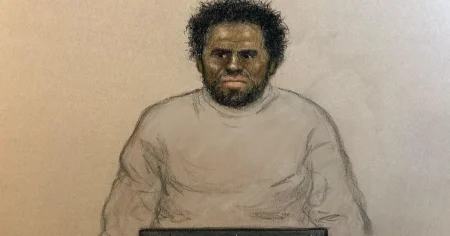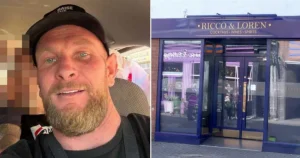

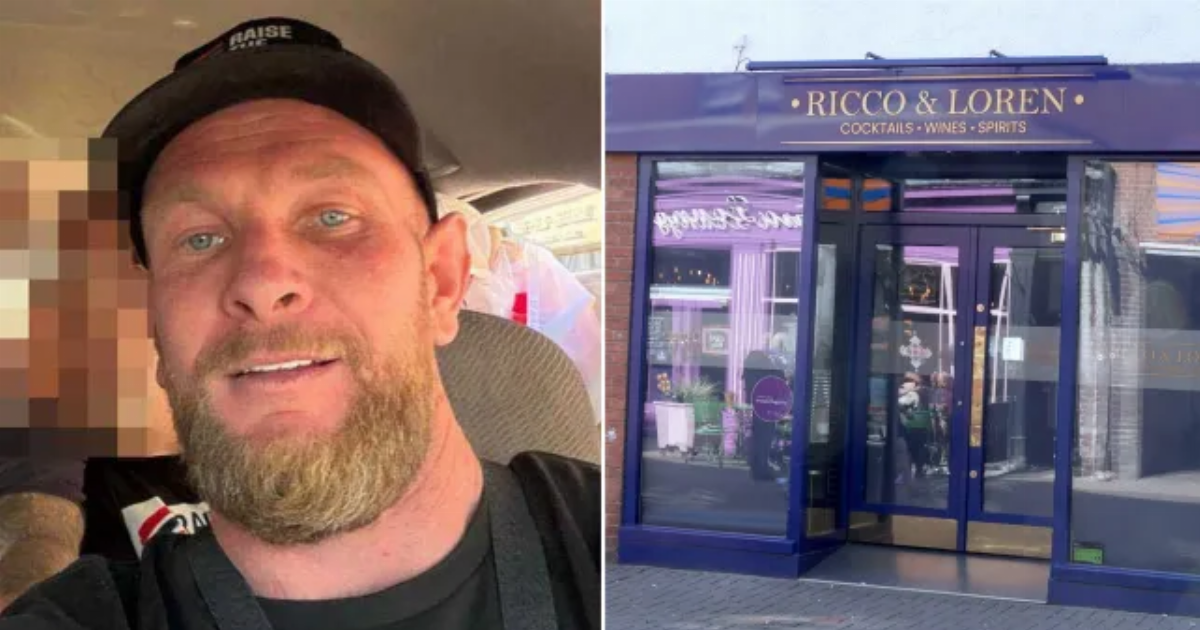
One evening in late May, a night out in the cathedral city of Lichfield turned into a catastrophe that no one who was there could have foreseen. A bar full of people, music, dancing, and the easy routine of a Saturday evening was shattered in a matter of seconds. In the dock at Stafford Crown Court, Billy Allison, 36, from Solihull, stood accused of an act of violence so sudden and so brutal that it cost a man his life. Allison, who founded an organisation called Raise the Colours, is charged with the murder of Matthew O’Gara, a 44-year-old publican who ran The Plough, a country pub on the outskirts of Lichfield. The attack happened at the Ricco and Loren bar, and the court heard that Allison had spent much of the day drinking in the area with friends, including his girlfriend Charlotte Dean and friends Ryan Bridge and Ben Cullen. According to prosecutor Timothy Hannam KC, Allison had also taken cocaine at some point that day. He now denies murder and denies causing grievous bodily harm with intent to Matthew’s friend Adam Cooper, but he has admitted manslaughter and inflicting grievous bodily harm. Those admissions acknowledge that he was responsible for the violence, but the central question for the jury is whether what happened was murder in the fullest legal and moral sense.
The prosecution’s account, laid out with grim precision in court, described what they call a completely unprovoked and senseless attack. Matthew O’Gara was on the dancefloor, completely oblivious to the danger behind him, with his back turned to Allison. Without warning, Allison delivered a full-force punch to the side of Matthew’s neck. The court heard that the punch was so powerful that the sound of it could be heard over the bar’s own DJ system. It was enough to break several bones in Matthew’s neck and to split an artery. The resulting bleeding caused a massive haemorrhage at the base of his brain, which in turn sent him into cardiac arrest. He fell to the ground motionless, and, as the prosecutor put it, he never moved again. He never regained consciousness and died two days later at the Queen Elizabeth Hospital in Birmingham. But Allison was not finished. Having felled one man, he turned his attention to Matthew’s friend, 65-year-old Adam Cooper, who had been dancing nearby. CCTV from the bar showed Mr Cooper looking in the direction of Allison and his girlfriend on several occasions before the attack. With Matthew out of the way and the path clear, Allison punched Adam Cooper hard in the face as he looked down in confusion at the unconscious body of his friend. The injuries were severe: a fractured eye socket and a broken nose. In total, the prosecutor said, three devastating punches were delivered in about six seconds, and two men were left demolished on the floor of a bar that should have been a place of joy, not tragedy.
What makes the case so haunting is the humanity of the victim. Matthew O’Gara was not a stranger to Lichfield; he was a known and loved figure, a publican who had dedicated his working life to running The Plough, a country pub on the edge of the city. People like Matthew are often at the heart of their communities, the ones who welcome others in, who make a place feel like home, who are present for the small moments that make up ordinary life. He had come into the bar that night as a customer, someone enjoying an evening out, perhaps dancing with friends, unaware that his life would end in a few brutal seconds. The prosecutor’s words carried a sad weight: Matthew was “completely oblivious” as Allison struck. He never saw it coming. There was no argument, no warning, no chance to defend himself. He simply fell, and he never got up again. His family have been left to face a future without him, while his friend Adam Cooper must live with both his injuries and the unbearable memory of watching his friend collapse beside him. The phrase “senseless attack” is often used in courtrooms, but here it fits with terrible accuracy. There was no logic to this violence, no rational motive, no reason that can explain why a man went out to dance and ended up dead on the floor of a bar.
The behaviour of the defendant after the attack is also central to the picture the prosecution is painting. Witnesses described Allison as “almost frothing, as if wanting a fight and manic, as if he was on something.” His state of mind and body, fuelled by alcohol and cocaine, may help explain how such violence erupted, but it does not excuse it. The court heard that after the punches, Allison was released by a bouncer “on the orders” of the bar’s owner, who happened to be a friend of the defendant. He then returned to the area where people were desperately trying to revive Matthew O’Gara, surrounded by chaos and panic. What followed was a series of actions that suggest a man aware that he had done something catastrophic. Allison swapped T-shirts with his friend Ben Cullen as he left the pub. Later, CCTV tracked him and Cullen to parkland on the edge of the city centre around 1am, and then to the Cathedral Hotel in Beacon Street, where Cullen was booked to stay. Allison himself was supposed to be staying at a different address, a B&B called St John’s House on St John Street. The prosecution argues that by going to the Cathedral Hotel instead, Allison was trying to evade capture, to hide from the consequences of what he had done. When police arrested him at around 5am at the Cathedral Hotel, he answered no comment to every question. For a man who had allegedly just killed someone, the prosecution would say, he had the presence of mind to lie low rather than to give himself up.
The legal battle now rests on the question of intent. Allison’s case, as anticipated by the prosecution, is likely to be that he was sleep-deprived, drunk and under the influence of cocaine, and that he did not intend to cause really serious harm to Matthew O’Gara. This is the crucial distinction in English law between murder and manslaughter. Murder requires an intention to kill or to cause really serious bodily harm, while manslaughter can still arise from an unlawful act that unexpectedly causes death. By admitting manslaughter, Allison is not denying that his punch was unlawful and dangerous, nor that it caused Matthew’s death. But he is asking the jury to accept that he did not foresee the catastrophic consequences of his actions. The prosecution, however, says that a “very, very hard” punch to the neck of an unsuspecting man is exactly the kind of act from which really serious harm should be expected. They point to the force of the blows, the sound heard over the music, the broken bones, the split artery, and the speed with which he turned from one victim to another. They argue that this was not a clumsy accident or a moment of harmless bravado; it was a violent assault by a man in a manic state, who used his fists like weapons and destroyed two lives in six seconds.
Behind the legal arguments and the careful courtroom language lies a human tragedy that no verdict can undo. A family in Lichfield is grieving for a man who should still be here, standing behind the bar at The Plough, serving pints to regulars and making strangers feel welcome. His friends are left with memories of a night that began in music and laughter and ended in sirens, hospital waiting rooms, and the final, devastating news. Adam Cooper, too, carries the physical scars of that night, but perhaps the deeper scars are invisible: the image of his friend lying motionless on the dancefloor, the sudden, horrifying end to an ordinary evening. And Billy Allison, whatever the jury decides, has also lost his own life in a sense, the future he might have had, the reputation he once held, and the ability to undo the violence that exploded from him in those few seconds. There is no way to make sense of such an attack, no way to find a neat explanation that satisfies the heart. All that remains is the slow, painful process of justice, the attempt by a court to determine the truth and to assign responsibility in a way that respects both the law and the dignity of the dead. But for Matthew O’Gara’s loved ones, no sentence, whether for murder or manslaughter, can bring back the man they lost. It can only acknowledge, in the most formal and solemn way, that his life was taken too soon, in a senseless act of violence that has left a permanent wound in the lives of everyone who knew him.