
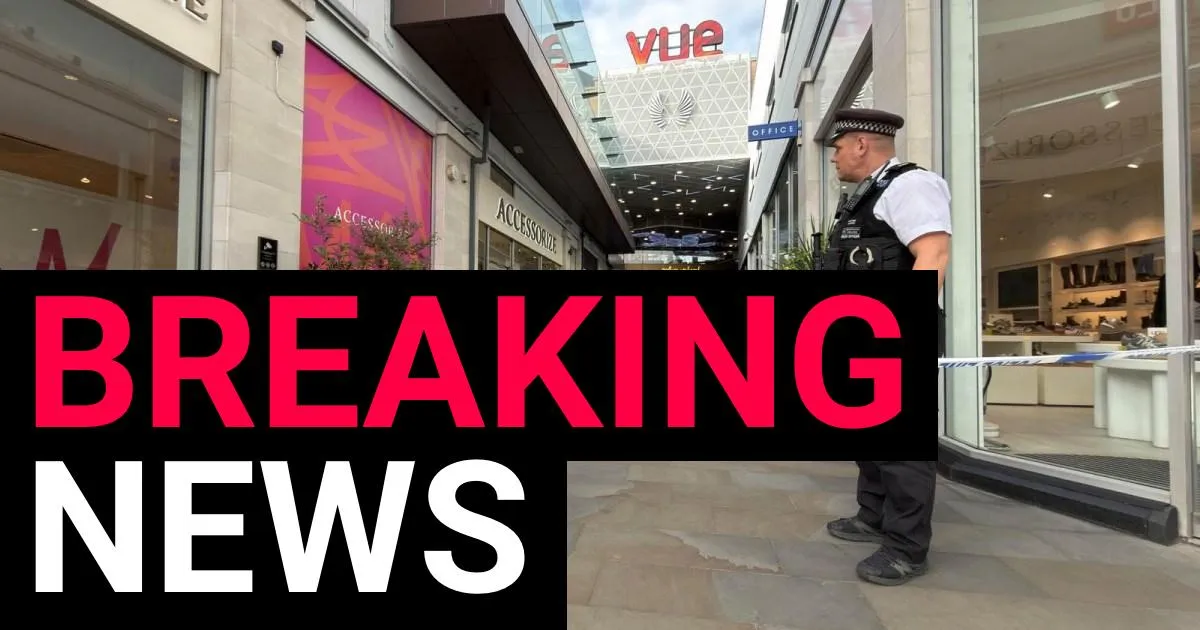
On a damp Tuesday night in north London, the usual hum of life around Islington’s Angel Central was suddenly shattered by the sound of gunfire. What should have been an ordinary evening of shopping, dining, and heading to a gig at the nearby O2 Academy Islington turned into a scene of chaos, fear, and flashing blue lights. Police were called to the bustling shopping centre just before 10.25pm, after reports that two men had been shot. The victims—one aged 33, the other 27—were found in the open plaza, wounded and in need of urgent medical care. Both were rushed to hospital, where their injuries were initially described as non-life-threatening. But in the hours that followed, the reality of what happened began to sink in. The 33-year-old’s injuries have since been assessed as life-changing, a cold and sobering detail that reframes the entire incident. The gunmen, whoever they were, remain at large. No arrests have been made. And as the night stretched into the early hours, the area that thousands of people pass through every day became a crime scene, sealed off by police tape and guarded by officers in high-visibility jackets. The sight was surreal to locals who know Angel Central as a lively, family-friendly destination. But on this particular night, it became the backdrop for a violent attack that would leave a community shaken to its core.
For the two men who were shot, this is not just a statistic or a headline—it is the beginning of a long, painful journey. The younger man, at 27, is likely facing weeks or months of recovery, with physical wounds that may heal but emotional scars that may not. The older man, at 33, has been told his injuries are life-changing. That phrase, “life-changing,” carries with it an almost unbearable weight. It means that whatever the bullet did to his body, the consequences will ripple through every part of his life from now on. Perhaps it affects his ability to work, to walk, to care for his family, or to enjoy the simple freedoms he had just hours before. It means hospital appointments, surgeries, rehabilitation, and an uncertain future. Behind every line of this sparse police update is a network of people whose lives are now turned upside down: parents, partners, children, friends, coworkers. They are the ones who hurried to the hospital in the middle of the night, clutching their phones, hoping for good news. They are the ones who now have to sit in waiting rooms and hear doctors explain the extent of the damage. And they are the ones who must somehow find a way to process the fact that a random act of violence, in a busy public place, has altered their family forever. What makes it even harder is the absence of answers. There is no explanation yet. No one has been arrested. The people responsible are still out there, and that thought alone is enough to keep anyone awake at night.
Meanwhile, the investigation is well underway. Metropolitan Police officers descended on the scene and immediately began the meticulous, unglamorous work of solving a shooting: examining the area for shell casings, reviewing CCTV footage from nearby shops and street cameras, looking for witnesses, and tracing the movements of anyone who was in or around Angel Central at the time. The shopping centre itself remained partially closed as crime scene investigators worked through the night and into the following day. Shops that would normally be full of customers were dark and silent. Commuters who rely on the area found their usual routes blocked by police cars and barriers. The O2 Academy Islington, a beloved live music venue that has hosted countless bands and eager concertgoers, found itself at the center of a stark reminder of urban violence. For many, the contrast was jarring. This is a part of London that feels safe, vibrant, and full of culture. But gunfire does not discriminate by postcode, and the presence of armed attackers in such a public space sent a shudder through the community. Police officers were sent to carry out house-to-house inquiries, knocking on doors and speaking to people who might have seen something from their windows. Detectives were also checking dashcam footage from vehicles that had passed through the area, hoping to catch a glimpse of the suspects as they fled. The investigation is fluid, fast-moving, and complex, but at its heart is a simple, urgent question: who did this, and why?
Speaking on behalf of the police, Chief Superintendent Jason Stewart tried to offer reassurance while also acknowledging the gravity of the situation. His words painted a picture of an incident that was not just reckless, but terrifying for innocent people who happened to be in the wrong place at the wrong time. He described the shooting as “incredibly reckless” and pointed out that it took place in a busy area close to a major venue. That meant families, young people, and groups of friends were likely nearby, perhaps just metres away from where the bullets were fired. The fear that this must have caused is difficult to put into words. Parents pushing strollers. Students walking home. Staff locking up their shops. Audience members spilling out of the academy after a show. All of them could have been caught in the crossfire. Stewart also stressed that violence has no place in our communities, a phrase that has become tragically familiar in recent years, yet still carries enormous meaning for those who live and work in the area. He confirmed that there would be an increased police presence in the coming days, both to support the investigation and to reassure the public. But he also struck a humbler note, asking for patience and understanding as officers carried out their work around Angel Central, which remained partially closed. It was a reminder that even as life in London races on, there are moments when everything must stop, when the physical space itself becomes a witness to what happened and needs to be treated with care. His appeal to the community was simple: if you have information, if you saw something, if you know something, please speak up.
But this shooting is not just an isolated incident, and it would be dishonest to pretend otherwise. London has been grappling with gun violence for years, and while overall crime rates have fluctuated, the fear that such attacks generate goes far beyond the immediate victims. Every time a shot is fired in a busy public space, it chips away at the sense of security that people are entitled to feel in their own neighbourhoods. It makes parents hesitate before letting their teenagers go out with friends. It makes workers think twice about walking to their cars late at night. It forces people to look at familiar places—like Angel Central—through a different, more anxious lens. The fact that this shooting happened near a music venue adds another layer of sadness. Music venues are supposed to be places of joy, escape, and togetherness. The idea that anyone would bring a gun to such a space is a violation of everything those venues stand for. It is also a reminder that violence is not always the result of gang feuds or organised crime in faraway places. Sometimes it happens in the heart of a bustling city, among ordinary people going about their day. And when that happens, the trauma spreads outward, touching everyone who hears the news, everyone who sees the police tape, everyone who worries that the next headline might involve someone they love. Community leaders, local councillors, and residents now face the difficult task of turning shock into action. That might mean more youth programmes, better mental health support, stronger policing, or simply more conversations between neighbours about how to keep each other safe. But none of that can happen without first acknowledging the pain that this event has caused. Healing takes time, and in the aftermath of a shooting, time feels painfully slow.
In the coming days, the community around Angel Central will try to return to normal. Shops will reopen. The barriers will come down. Life will move forward, because it always does. But for the two men recovering in hospital, nothing will feel normal again for quite some time. For their families, the world has changed in a single instant. And for the investigators still working the case, the pressure is enormous. They are asking anyone with information—no matter how small or seemingly insignificant—to come forward. A phone call to 101 could make all the difference. It could help identify the people responsible. It could prevent another family from going through the same nightmare. It could bring a measure of justice to two men whose lives were shattered in the darkness of a Tuesday night. The police have promised an increased presence, but they cannot solve this alone. They need witnesses to speak, residents to share what they have seen, and a community to stand together against the fear that gun violence seeks to spread. There will be vigils, perhaps. There will be conversations on doorsteps and in cafes. There will be people looking at their city and wondering how safe it truly is. But there will also be resilience. London has faced tragedy many times before, and again and again, it has found a way to hold on to hope. The gunmen may be on the loose, but they have also made a terrible mistake: they have awakened the conscience of a neighbourhood that refuses to look away. As Chief Superintendent Stewart said, violence has no place in our communities. The challenge now is proving those words true—not just with messages and statements, but with action, with care, and with the quiet determination of people who believe that a better, safer world is still possible.