
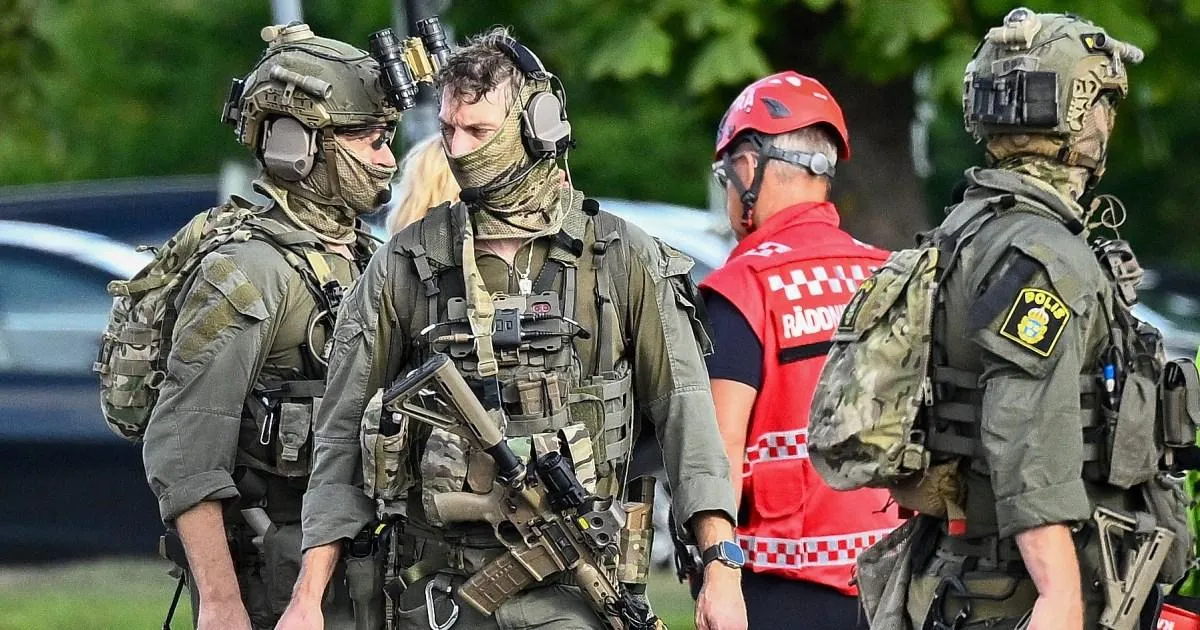
School was supposed to feel like a fresh start. After a long, sun-soaked summer, the students of Brinell High School in Fagersta, a small working town in central Sweden, were beginning the familiar rhythm of a new school year: new books, old friends, plans for the months ahead. Their first morning back was filled with normalcy, but in the early afternoon, that normalcy was violently shattered. A man entered the building wielding a sword, and by the time the chaos settled, two teenage boys lay severely injured, their futures suddenly complicated by an unimaginable moment of horror. A third student was also wounded, although doctors, police, and school staff could not immediately say how badly. The attack took place in the kind of place where such things were not supposed to happen. Fagersta is home to roughly 13,000 people, many of whom know one another. When panic spread, it spread through a community already small enough to feel every ripple, every emergency vehicle passing by, every parent arriving at the scene with a racing heart. The municipal emergency services sent every available officer to the school after receiving a report of “suspected deadly violence” at around 2:06 pm. Police cordons appeared quickly, tape wrapped around familiar buildings, and students were told to stay inside or run out if they could. Those who were present on the grounds that afternoon will not soon forget the sight of helicopters overhead, uniformed officers rushing toward entrance doors, and a man being taken into custody, reportedly after being shot in the leg. But even the facts that would later emerge on the news could not really explain the raw terror students felt while hiding, running, or waiting for answers in the hallway.
The arrest happened within hours, and the community slowly learned a few uncomfortable truths. An eighteen-year-old former student was arrested and accused of carrying out the attack. According to public broadcaster SVT, he had been under legal scrutiny before, with a previous conviction for assault on his record. Police then searched his home, seeking anything that could connect him to an even larger plan. What they found, or at least what they examined, included a TikTok account that raised immediate and dark questions. Around twenty-five minutes before the attack, a photograph of a sword appeared on the account, along with other disturbing posts—images and videos that appeared to praise notorious mass murderers from around the world. Whether that account actually belonged to the young man still in custody to be publicly established, but for investigators, it was a thread worth pulling. At least one eyewitness has said that during the attack the suspect wore a helmet, he had done so, and this detail alone seemed to suggests that cruelty had been anticipated. The mask of anonymity, or perhaps wound of fear, has left many wondering what signs were present before today’s return. A former pupil returning to the school must have passed hallways where he had once walked as a student, passed teachers who had expected him to simply fade into memories, and then crossed to the other side of a line that no one in this community could have predicted.
The students on the other side of that line were brave in their confusion. One boy, Abdulrahem Salmo, described how a single moment was transformed into a complete and total panic. They had all just gathered after the first day back, but suddenly there was shouting and stumbling and a terrifying sight. “We just all ran,” he told journalists. He went on to say that he had seen one of the injured students with a bloody wound on their arm, helpless to do anything as fear overwhelmed. The instinct to flee is primal, and elsewhere inside the school, students were hiding behind doors, texting parents that they were alive, or invoking a message that barely felt usable: “Somebody had been stabbed, and the police were on their way.” One parent, Madelene Jansson, waited outside the cordon with her own heart pounding because her daughter carried one of those messages. In an interview with the local newspaper Fagersta-posten, Jansson said: “Then it all just went off. It feels unreal.” She was not alone in this disorientation. In the moments after an attack, time moves strangely. There is the comforting presence of the afternoon sun, but the perspectives of the event are stark and brutal. Student refugees are in the wave of their escape, phones pressed to their ears sobbing, the silence of teenagers. For Jansson, for the boy named Abdulrahem, for dozens of unnamed children, this first day back will forever be remembered not as the first day to learn, but as the day learned what it was like to feel completely defenseless.
As the attack unfolded, the response was immediate and overwhelming. The police gave everyone the order to send all available resources, and there was no exception: ambulances, special units, police officers from every area, even officers who had just ended their shifts responded to the call. It was a watchful, tense afternoon that only slowly softened into the quieter work of evidence collection and interviews. Because the town was a small one, the fear did not stay contained within the school. Eight other schools in the region were locked down as a precaution, students already safe in classrooms were told to stay where they were. Public buildings across Fagersta closed their doors. A community that usually welcomed everyone into its routines made itself small overnight, a city of closed blinds. Local authorities in Vastmanland County issued a statement quickly, saying, “We are moving into high alert status to marshal our resources and gain the clearest possible picture of the situation.” That phrase, “clearest possible picture,” was exactly what the town was waiting for. But the only true pictures were the ones inside the students’ heads, the memory of a former classmate swinging a blade in a hallway. The country continued to hold its breath long after the last police vehicle clicked: not, now knowing exactly how the victims were doing and whether they would heal. The fact that one suspect was in custody meant no further danger to the facilities, but the danger to the calm of a community was just beginning. It is hard to return to normal when every dismissed classroom and every fault line of safety has been pulled apart.
The attack also landed in national context, adding another layer of raw sorrow. Sweden has experienced one of the deadliest school attacks in its history only eighteen months ago, when a gunman in Orebro, another central Swedish city, killed ten people before turning the gun on himself and bringing national grief to years and many families into mourning. That memory has not healed, and today’s event has forced it to be reopened. The Swedish government was already coordinating with police within hours, and social media quickly became a place where politicians, colleagues and citizens struggled to voice their emotions. Prime Minister Ulf Kristersson wrote in a post: “Our thoughts are with all those affected,” and then explicitly discouraged anyone from interrupting emergency staff with speculation or other unwanted attention. In a stark reminder that not even this tidy Swedish democracy is protected from the shock of violent acts, Social Democrat leader Magdalena Andersson included a few simple words: “All of Sweden stands together with Fagersta at this difficult time.” Yet the knowledge that a nation’s leader writes in a moment like this offers little comfort to the mother who will need to find a way to help her daughter learn from terror, or the parents watching their son be bandaged in a hospital room. But the togetherness matters, because a small town can feel seldom nothing more than its own silence. The math of total strangers across the country sending prayers, posting positive messages, and sharing correct information allowed Fagersta to feel even a little supported at the enormous darkness it suddenly was confronting.
The next few days will be difficult. The kids who survived the attack will have to face the fear that lives right outside their front door; they will have to choose whether to go back to the building, or even back to sleeping without lights on. The schoolyard will be quieter, the first period after lunch will be quieter, and the silence left by the three investigated injured may be heavy. The police will continue investigating the suspect, the TikTok messages, his past, and the moments that led up to the attack. The trial, likely months away, will raise disturbing questions of how and why and whether mental illness lurked undetected in places where adults were willing to look. In the meantime, students will have the opportunity to eventually heal, to check on each other, to remind one another that strength does not have to be a solitary task. A community that has been shaken can still choose to come together, even at slow, in a procession of ordinary actions: inviting a neighbor for coffee, helping with a ride, holding the hand of a child on the first day back. There was a reminders from many official statements to let emergency services do their work, but once they finish, ordinary people do. The survivors of this small-town aftermath will carry the story for the rest of their lives, but they will not carry it alone. The danger is over, the suspect certainly behind bars, and the town is still standing, close and brave, ready to learn what came from this day.