


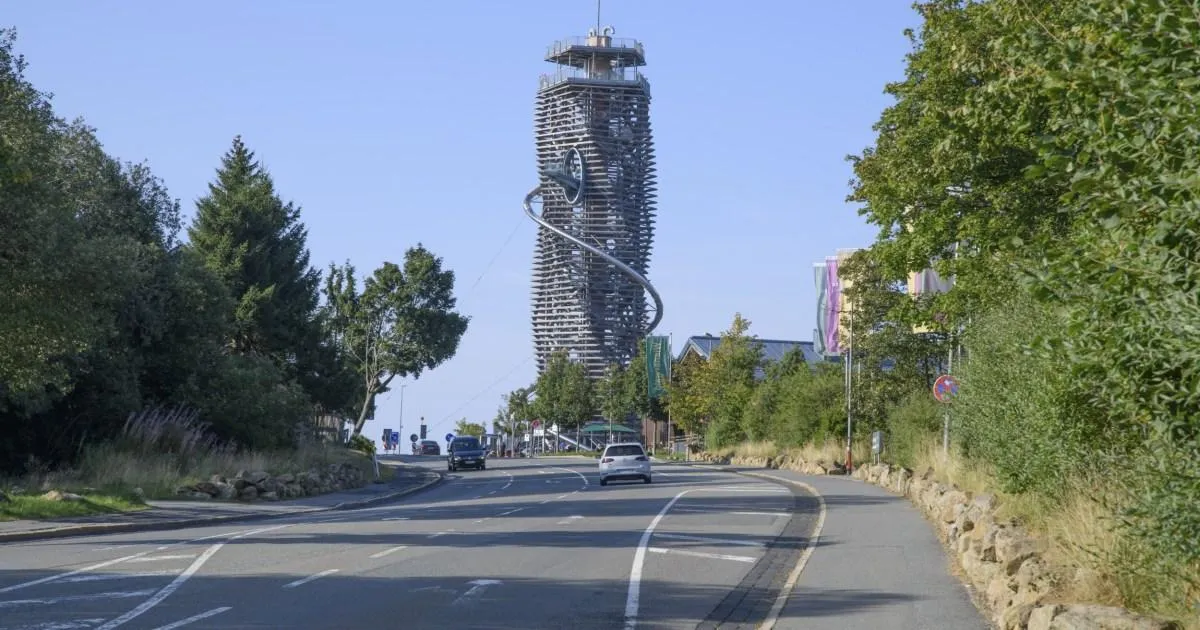
The remote beauty of Germany’s Harz Mountains has been overshadowed by an unimaginable tragedy. Recently, the region’s silence was broken by the news that two adults and a child lost their lives after falling from the summit of the area’s tallest observation tower. This structure, which typically serves as a spot for tourists to admire the sprawling, verdant landscapes of Lower Saxony, became the site of a profound loss that has left the local community and the wider public in a state of shock and mourning. Emergency services, including firefighters and paramedics, rushed to the base of the 213-foot wood-and-steel edifice, but despite their swiftest efforts, there was nothing that could be done to save the trio.
For those who visit, the tower is usually associated with wonder rather than tragedy. Standing as a modern architectural marvel that cost roughly 10 million euros to construct, the attraction is well-known for its impressive engineering and its dual observation decks. The highlight for many thrill-seekers is the “skywalk”—a feature that allows visitors to stand on a glass floor nearly 150 feet above the ground, looking directly down at the forest canopy below. The structure has long been a centerpiece of regional tourism, designed to blend contemporary design with the wild, rugged nature of the Harz Mountains, making it a place where families go to create memories.
In the immediate aftermath of the incident, the local police force initiated a comprehensive investigation to determine exactly how such a catastrophe could occur. Authorities have worked diligently to comb through the site, seeking answers that might bring peace to the grieving families and clarity to a baffled public. While the investigation remains ongoing, preliminary findings have sought to clarify that this was not the result of a structural failure. Officials explicitly stated that there were no signs of a technical defect in the tower, suggesting that the integrity of the stairs, railings, and viewing platforms remained intact throughout the event.
The lack of an obvious mechanical cause has only deepened the mystery, leaving many to contemplate the precarious nature of life. When a tragic event occurs in a public space built for safety and leisure, the psychological impact ripples far beyond the immediate scene. News outlets and neighbors are left to reckon with the stark contrast between the tower’s intended purpose as a sanctuary for sightseeing and the brutal reality of the lives cut short. The silence of the mountain forest now feels heavier, as the community attempts to navigate the confusing and painful questions that arise when a place of beauty becomes a place of mourning.
As the official investigation continues, the focus has shifted increasingly toward the need for deep compassion and support for those impacted by this unspeakable event. In times of such sudden, devastating loss, the public is often reminded that help is available for anyone struggling with feelings of despair or hopelessness. Organizations such as the Samaritans play an essential role in providing a lifeline for people in crisis. By offering a listening ear, 24 hours a day and 365 days a year, these services act as a vital safety net for individuals who find themselves overwhelmed by the weight of heartbreak or the stresses of everyday life.
Ultimately, the fall of a family from such a great height serves as a sobering reminder of the fragility of the human experience. While the police will continue to sift through the facts to understand the mechanics of what happened on that day in the Harz Mountains, the emotional weight of this incident remains the focal point for observers everywhere. As the investigation into these three lives concludes, the lasting takeaway is the importance of collective empathy. Whether it is through checking in on neighbors or utilizing mental health resources, the community’s response to this tragedy underscores a singular truth: that in the face of profound loss, we must look out for one another with patience, kindness, and vigilance.