


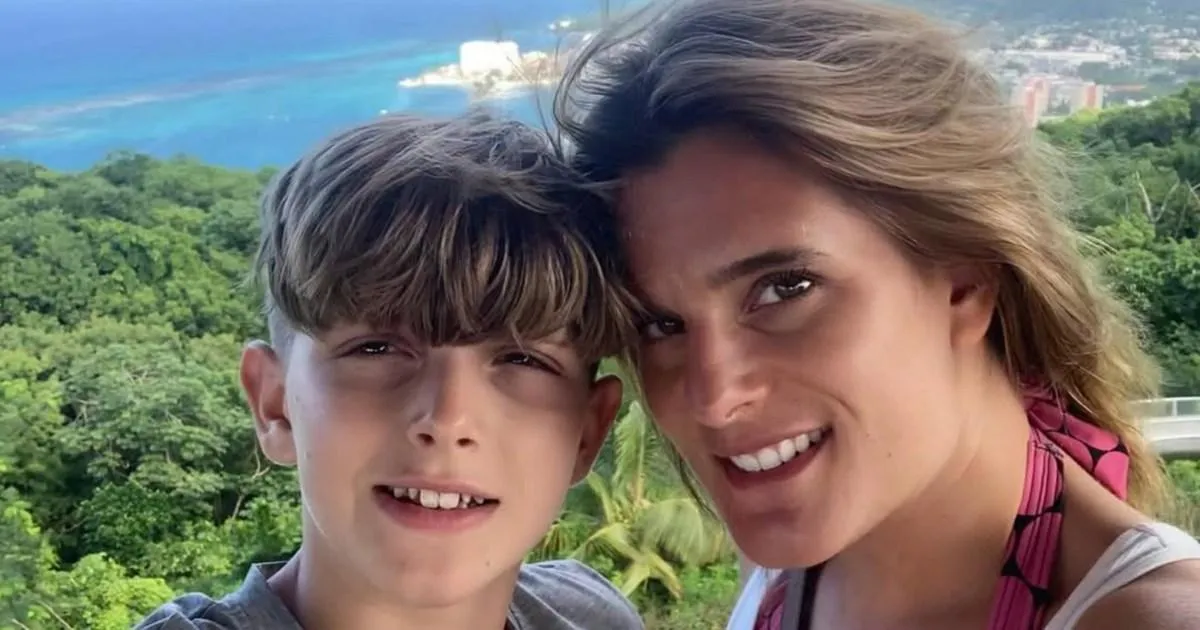
The tragic death of 14-year-old Jools Sweeney in April 2022 left his family in a state of inconsolable grief and, eventually, a long-standing quest for clarity. When Jools was discovered unconscious in his Gloucestershire bedroom, an initial inquest held later that year was completed in a mere 23 minutes, yielding a narrative conclusion without the presentation of live evidence. For his mother, Ellen Roome, this rapid closure felt entirely inadequate. She sensed that something vital was missing—specifically, the potential role of dangerous online trends and digital interactions that may have contributed to her son’s final, devastating moments. Driven by a mother’s intuition and a relentless need for the truth, she refused to let the system’s silence serve as the final word on her son’s life.
In a landmark legal victory, Ms. Roome recently succeeded in an arduous battle to have her son’s inquest reopened. Following a hearing at the High Court in London, two senior judges quashed the original, brief conclusion, acknowledging that the investigative process had fallen short. Lord Justice Warby, presiding alongside Mrs. Justice Heather Williams, ruled that a new inquest was essential for the interests of justice, noting that several potential lines of inquiry—some of which involved the profound influence of social media—had been overlooked. For Ms. Roome, the ruling felt like the first time the legal system truly acknowledged that her son’s passing raised serious, unanswered questions that the state had a moral and legal obligation to address.
The scope of the new inquiry promises to be far more comprehensive than the first, delving into the murky, high-stakes world of children’s digital lives. Lawyers representing the family revealed that not only was the role of TikTok a primary concern, but there was also evidence suggesting Jools had been targeted by a fraudulent Instagram account. This suspicious interaction, which carried the potential hallmarks of “sextortion” by a criminal gang, adds a terrifying layer of complexity to the case. By bringing these details to light, Ms. Roome is challenging a system that historically struggles to pivot toward the digital realities of modern youth, asserting that a child’s smartphone history is now just as critical to a death investigation as any physical evidence at a scene.
This fight for accountability is not limited to a single courtroom or a single family; it is part of a much wider, systemic campaign to force social media giants to reckon with their responsibilities. Ms. Roome is currently one of several British parents pursuing legal action against TikTok for its role in the loss of their children, as she advocates for legislative changes that would mandate the sharing of crucial data with bereaved families. The timing of the court’s decision aligned, perhaps fittingly, with a newly announced investigation by the regulatory body Ofcom into TikTok’s safety protocols. These parallel developments underscore a growing societal consensus: that the digital safety of children can no longer be treated as an afterthought by the platforms that host them.
Throughout this grueling four-year journey, Ms. Roome has evolved from a grieving mother into a powerful advocate for change, carrying the weight of her loss to the highest levels of the British legal system. Her legal team, led by Gary Miller of Mishcon de Reya, argues that current police and coronial procedures are no longer “fit for purpose” in an era where a child’s entire life—and often their greatest dangers—reside on their devices. They are calling for a vital harmonization of agency protocols, ensuring that in the future, social media data is preserved and scrutinized from the very first hour after a tragedy occurs. This is not about seeking a specific agenda, as she often emphasizes, but simply about ensuring that parents are not left in the dark while technology companies operate with relative impunity.
Ultimately, this ruling sends a profound message to other bereaved families navigating the labyrinth of the legal system: do not accept a premature “no,” and do not assume that the limits of an investigation are fixed. By refusing to be silenced, Ms. Roome has not only honored her son’s memory but has also sparked a necessary national debate about digital accountability and the sanctity of truth in the face of tragedy. She has shown that while no outcome can replace the life of a child, no stone should ever be left unturned in the search for answers. The fire she has ignited is a warning to both state agencies and tech giants that the era of unanswered questions regarding digital harm is drawing to a close.