



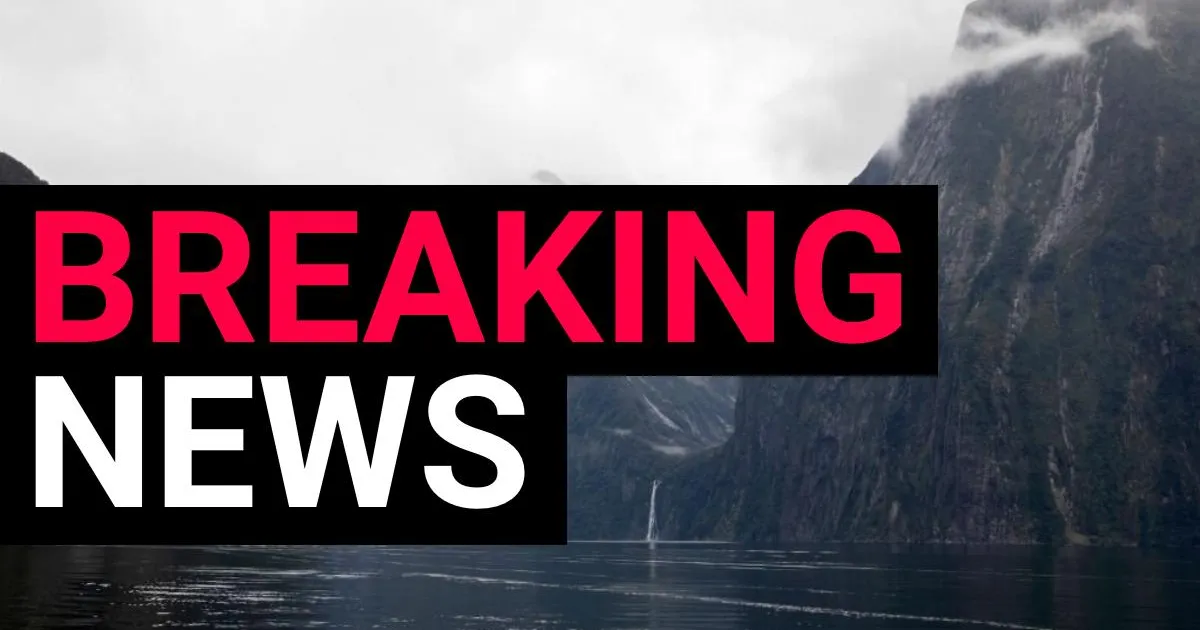
The tranquil silence of New Zealand’s breathtaking Fiordland region was abruptly shattered today when a powerful 6.3 magnitude earthquake rocked the coast, sending shockwaves through the local communities. The tremor, which originated roughly 24 miles north of Te Anau, served as a stark, terrifying reminder of the earth’s volatility. While the natural beauty of the region is world-renowned, the immediate aftermath of the quake has forced residents and tourists alike to shift their focus from the scenery to the sheer necessity of survival. As the ground stopped shaking, the reality of the situation became clear: the ocean had become a potential source of danger, prompting an urgent and widespread response from emergency services.
In a move that highlights the precarious nature of life in coastal zones, the National Emergency Management Agency issued an urgent tsunami advisory that rippled across the South Island. The warning zone, which stretches from the iconic Milford Sound down to Puysegur Point, was immediately placed on high alert as officials grappled with the genuine fear of a “damaging” surge. This isn’t merely an advisory for those who felt the earth move; authorities have emphasized that even if the shaking was barely perceptible in certain pockets of the region, the latent threat of a wave cannot be ignored. The potential for land inundation has turned coastal living into a high-stakes race against time.
The urgency of the government’s message carries a tone of grave necessity, explicitly instructing citizens to abandon their daily routines and head for higher ground without hesitation. In a world where we often rely on our vehicles to get us from point A to point B, the directive here is unconventional and stark: if you are in an evacuation zone, do not wait for the gridlock of traffic. If at all possible, residents are being told to walk, run, or cycle to safety. The fear is that the roads—often narrow and winding in these rugged parts of the country—could quickly turn into death traps if everyone attempts to evacuate by car simultaneously.
This unfolding situation serves as a poignant reminder of the importance of heeding professional guidance during natural disasters. The National Emergency Management Agency has been clear: do not stay home, do not wait for secondary signs, and do not attempt to return until the official “all-clear” has been broadcast. These protocols, while disruptive to normal life, are designed to save lives in the critical minutes before a tsunami might reach the shore. It is a moment where individual initiative must be balanced with strict adherence to the instructions of Civil Defence authorities, who are currently working to monitor the coastline for any signs of rising water.
For those outside the immediate evacuation zones, the rule of thumb remains simple yet imperative: if the earthquake was long, strong, or made it difficult to stand, you should treat it as a siren. Moving inland or to higher ground is a precaution that can never be considered an overreaction when dealing with the unpredictable force of the ocean. It is a humbling experience that strips away the veneer of modern certainty, forcing us to recognize that nature holds power that human technology can only warn us about, not control. The anxiety felt by those currently displaced is palpable, as uncertainty about their homes and their safety dominates their thoughts.
As the situation continues to evolve, the resilience of the New Zealand community is being put to the test. Beyond the immediate logistical challenges, there is a human story of courage and caution unfolding along the coast. Whether it is a local resident navigating the steep terrain or a visitor caught in the middle of a trip of a lifetime, the shared goal is to move beyond the reach of the tide and wait for the danger to pass. Our thoughts remain with those in the grip of this crisis, and we watch the horizon with the hope that the warnings prove to be more than enough to ensure that everyone makes it to safety unharmed.