



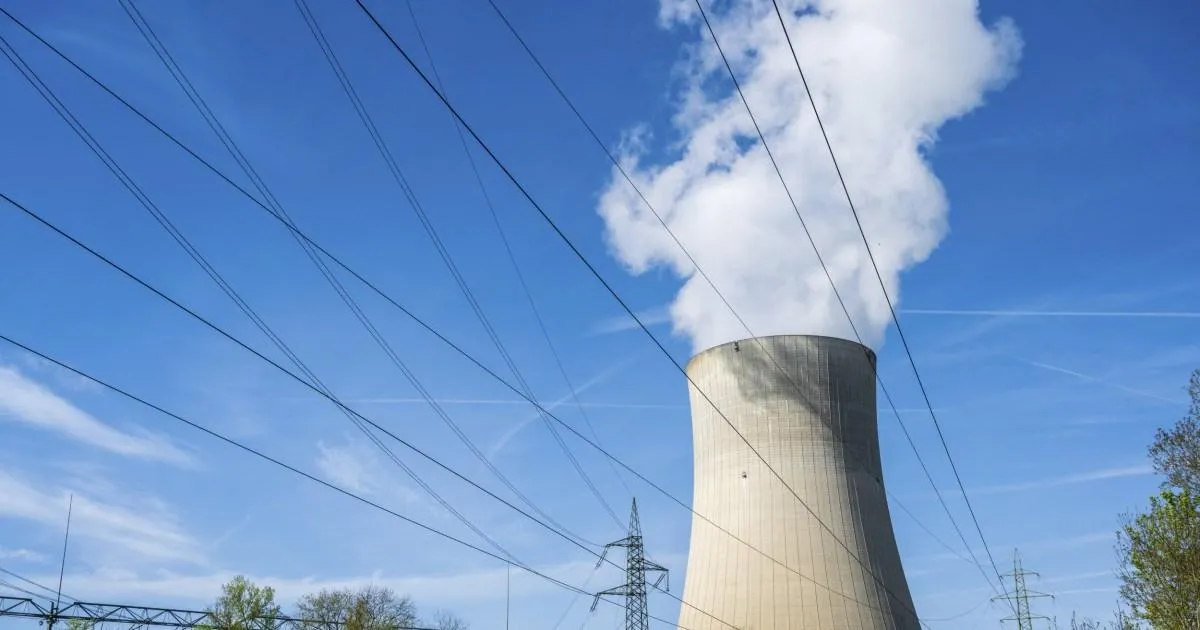
The recent lockdown at Switzerland’s Gösgen nuclear power plant following the sighting of at least seven mysterious drones has understandably stirred public concern. Late in the evening, a local resident alerted authorities, triggering a significant police response around a facility that is already governed by a strict, permanent no-fly zone. While the head of communications for the plant quickly moved to reassure the public that operations remained secure and the immediate risk was “negligible,” the event highlights a deepening sense of anxiety regarding the vulnerability of critical infrastructure in an increasingly unstable era.
For many, these humming, unwelcome visitors in the night sky feel like a harbinger of a new kind of silent, unconventional warfare. The identity of the operators remains unknown, leaving the community to speculate on the purpose behind such a brazen violation of controlled airspace. Was this mere curiosity, a probe for security weaknesses, or something more sinister? In a world where high-tech surveillance is becoming increasingly accessible, the sight of drones circling a nuclear reactor serves as a stark reminder that the protective perimeters we assume are impenetrable may, in fact, be under constant digital and physical observation.
This incident at Gösgen does not exist in a vacuum; it is part of a growing, documented pattern of incursions across Europe and the UK. A sobering report from the International Institute of Strategic Studies (IISS) has recently shed light on a clandestine campaign allegedly involving Russian “shadow fleet” vessels. These ships are reportedly being utilized as mobile launch and recovery platforms for unmanned aerial vehicles (UAVs) to spy on sensitive locations. From major military bases like RAF Fairford and Lakenheath to critical civilian infrastructure, the sheer scale of these drone sightings across the continent suggests a strategic effort to probe our defensive capabilities.
The intent behind these flights, according to defense experts, is far more calculated than simple espionage. Intelligence suggests that these incursions are designed to map the reaction times of local authorities, identify gaps in integrated air defense systems, and test the overall resilience of the nations they target. By consistently pushing the boundaries of what is considered acceptable, these actors are essentially conducting a dress rehearsal for potential future conflicts. They are learning exactly how much they can get away with, normalizing the presence of spy technology over our most protected sites to ensure they are prepared for a “decisive opening operation” should tensions escalate into high-intensity war.
Beyond the drones, there is a mounting sense that our fundamental infrastructure—the systems that provide us with water, energy, and security—is under a broad, multifaceted assault. We have seen reports of record-breaking cyber threats, widespread GPS jamming incidents affecting tens of thousands of flights, and unexplained disruptions to water supplies. When these events are viewed individually, they might seem like isolated technical glitches or local disturbances; when viewed collectively, they reveal a fragmented, persistent “shadow war” that impacts the rhythm of daily life and erodes the public’s sense of safety and predictability.
Ultimately, the Gösgen incident is a localized manifestation of a far broader, global geopolitical reality. As technology continues to outpace traditional defensive measures, the task of safeguarding our nuclear plants and public services becomes exponentially more difficult. While officials continue to work toward mitigating these threats and strengthening surveillance, the psychological impact remains. We are transitioning into a period where the skies above our homes and critical facilities are no longer quiet, but are instead being scrutinized by forces hidden from view, forcing a collective rethink of what it truly means to be secure in the modern age.