
Tornado Devastates French Village: A Community Struggles to Recover from Nature’s Fury
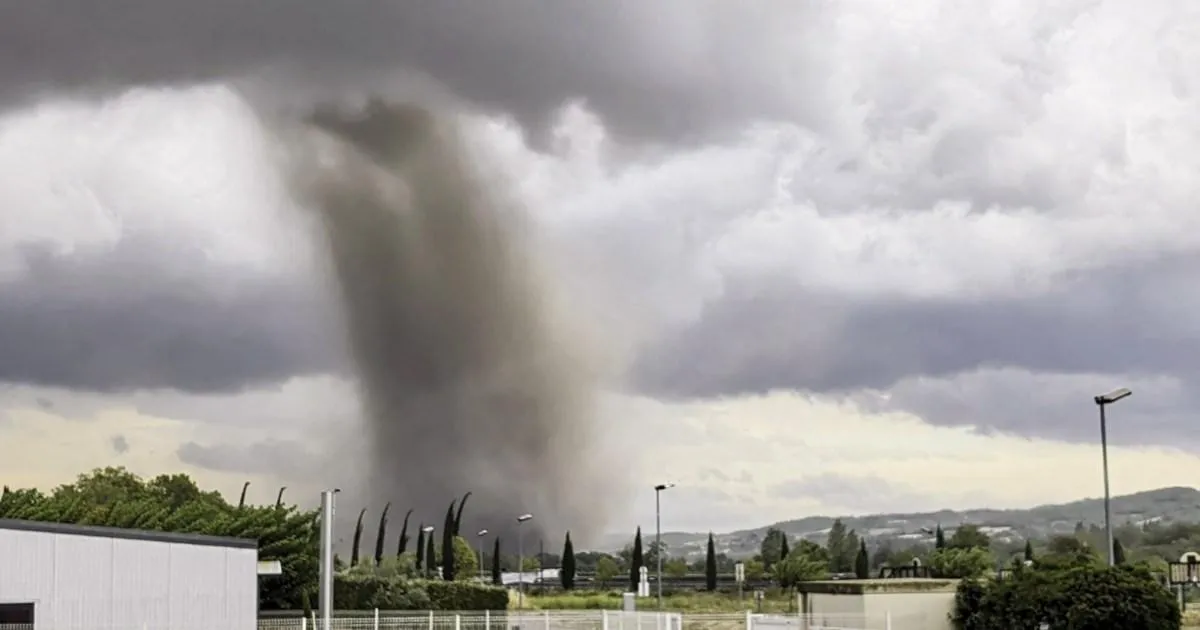
In a terrifying display of nature’s raw power, a violent tornado tore through the small village of Pomas in southern France, leaving behind a path of destruction that has shocked residents and emergency responders alike. The ferocious storm, which struck early Monday, unleashed winds reaching an astonishing 73mph, ripping roofs from buildings and reducing dozens of homes to piles of rubble within minutes. The aftermath was heartbreaking, with 15 people transported to hospitals for treatment and a total of 41 victims left nursing various injuries. Among the injured was a pregnant woman whose home collapsed directly on top of her, serving as a horrific reminder of the sudden and unrelenting force of the twister. The village, normally a place of quiet simplicity, transformed into a chaotic scene of disaster, with uprooted trees lying scattered across the landscape while mangled cars and debris from destroyed homes were left for residents to process and survivors to mourn. More than 120 emergency workers were dispatched to the village to begin rescue and recovery operations, working frantically to search through the wreckage and ensure no one was left trapped beneath the debris.
Eyewitness accounts from stunned residents painted an alarming picture of the sheer suddenness of the storm that has devastated their community. Chantal, a long-time resident of Pomas speaking to French radio, described the terrifying experience of watching her life being destroyed before her eyes, stating, “I heard this massive noise then I saw everything flying around in the air and my entire roof collapsed. I’ve got no house left, that’s for sure.” The services provide a shocking shock throughout the Occitanie region, which has been left grappling with the scope of the destruction that unfolded in just minutes. Video footage captured the moment of catastrophe, showing a huge swirling vortex moving menacingly next to houses and trees before systematically destroying everything in its path. The storm left an estimated 300 homes damaged, a staggering statistic in what amounted to a community of a mere 1300 residents. The emergency services, which included firefighters, paramedics and search teams, worked around the clock to address the scenes of destruction and prevent further lives being claimed by the storm or subsequent dangers.
The storm’s impact reached far beyond the battered homes and injured residents of Pomas, as the volatile weather conditions whipped throughout a wider area of southwestern France. There were widespread utility failures, leaving around 2,800 homes in ten villages without electricity and plunge communities into darkness during the recovery effort. Transport networks were brought to a standstill, leaving many stranded and complicating the movement of rescue teams and supply deliveries. The severe weather also managed to reach the world of international sports, leading to the cancellation of the third stage of the Vuelta a España, which was taking place in the region. A hailstorm in the French Pyrenees forced riders to abandon the route and seek shelter as conditions became far too dangerous for cycling. Travelers also faced substantial disruption as airports, including those at Bordeaux, Marseille, Nice, and Toulouse, as well as airports north of Paris, and severely affected by delays and representative cancellations, according to statements from Transport Minister Philippe Tabarot, highlighting the immense geographical scope of the extreme weather event.
A Village in Shock: The Human Toll and the Healthcare Response
As the days following the storm begin, the true scale of the challenge facing the community of Pomas and its surrounding areas has become clear. The 41 injured people have been identified to represent the physical toll of the storm, with 15 of them requiring hospital admission for their injuries. The injured include a pregnant woman, whose story has resonated with many as a symbol of the vulnerability that all residents faced in the middle of the storm. She was rescued from the rubble of her own home, where the structure had collapsed around her, saving her life narrowly. The rapid and coordinated response from emergency services was critical in minimizing the death toll, despite the devastation having been widespread throughout the village. The experiences of individuals like Chantal highlight the psychological trauma that accompanies physical injury, as families have lost their homes and belongings within minutes. The remaining residents are now left to grapple with the demanding task of rebuilding their lives from the world crisis, while relying on emergency shelter and community support to see them through the dark unknown days.
In the wake of this catastrophe, a significant mobilization of resource to n установленыхит on the region. Over 120 emergency workers flocked to Pomas on Monday, including disruption search and rescue teams from neighboring towns and cities. Their efforts were combined with the work of pumping utilities to restore power and water for the thousands of affected residents. The security forces established the perimeter to protect damaged homes from extensive looting, while also coordinating the evacuation of the most endangered families. The repair of roughly 300 homes is set to take months in the respective needs has become overwhelmed by the sheer volume of cases detailed. The psychological impact, in parallel, requires long-term support structures that can help the community process the trauma of having their homes destroyed and their lives uprooted in an instant. France’s authorities have promised that support to the community, but the long road to recovery will undoubtedly require patience, resilience, and a deep collective effort.
Broader Environmental Impact and the context of an Extreme Summer
The disaster in Pomas is not an isolated incident but rather a severe escalation in a pattern of extreme weather events that have plagued Europe throughout this volatile summer. The tornado’s appearance comes after record-breaking heatwaves, devastating wildfires, and severe flooding events across the continent. In France alone, a new wave of anti-firefighters battled to control one of the largest forest fires since the Second World War, which by late summer had already consumed approximately 42,000 hectares of woodland in the Gironde region, further up the coast from Pomas. The scientific community have long warned that a warming climate has attributed to a change in meteorological patterns and an increase in the intensity of storm events, though connecting any specific tornado complete climate change is scientifically complex but aligned. Météo-France, the national weather institute, notes that France historically experiences several dozen tornadoes each year, yet the severity and destructive power of this particular storm stands in a stark reminder of the increasing unpredictability of these events.
The scenes of destruction have in Pomas brought a concentrated focus on issue of climate said and regional vulnerability. For small rural villages, which often may lack the infrastructure to withstand such extreme storm activity, the impact of a major disaster can be profound and long-lasting. The challenge for these areas is not just physical rebuilding but also the reconstruction of livelihood and social fabric. The storms and emergencies have been placed under the orange thunderstorm warning, suggesting that the dangerous conditions were not entirely unprecedented. It raises the question of preparedness and what small, exposed communities can do to protect themselves in an age of more frequent violent weather. As these events become more common, resource-providing communities and first responders will have to become increasingly coming in their apocalyptic approach to disaster risk reduction and community assistance. The emergency response to the Pomas tornado, though fast and efficient, also reveals the continuing need for robust public investment in measures that can help communities resist what nature throws at them.
The Fate of Residents and the Path to a Return to Everyday Life
As the rescue and recovery operation shifts from a crisis response to a sustained phase of rebuilding, the immediate struggle for the village’s residents is the need to find a stability in how the storms shattered their normal lives. For families and individuals, living out of temporary shelters, lacking the most basic amenities and provisions, the uncertainty lies in how they will reconstruct their homes and what they will do for the next weeks and months. The mental and emotional toll cannot be underestimated for people who have lost their house, personal possessions, and sense of security for all they once knew. Community leaders have expert measures to provide initial accommodation, food aid, and psychological support to those most affected. The stories of neighbors helping neighbors, offering spaces and assistance to those displaced, demonstrate a sense of solidarity and mutual support that is essential in a moment of crisis. However, the long-term psychological and financial problems will persist long after the initial shock has subsided. Local authorities and the state have begun the complex process of damage assessments and will have to work on establishing clear channels for compensation and reconstruction aid for home. Yet, for many of her aging residents in the region, the prospect of beginning repairs or building anew is a daunting task, carrying with it both financial and emotional impediments.
The road to rebuilding is set to be a slow process, spanning many more months and years. The ministries of the government have pledged to support the village and the region, expediting invasive measures and providing an initial funding to clear debris and stabilize the damaged structures. For the community of Pomas, the calls is not just lost on their homes but the annihilation of their vital village landscape—the centuries of heritage—that could be a distinctive feature of the area. The emergency storm also destroyed local shops, and services, likely leading to economic disruption for businesses and repercussions for the entire local economy and the jobs of those living there. While the immediate priority is in providing a secure and safe condition for everyone, the longer-term recovery will need a focus on rural regeneration, creating robust community space the effects of the storm. This week’s tornado remains one of the most catastrophic singling in section, but it told in the context of a broader age of environmental and physical hazard, of building resilience to the grand economic design.
A Community in the Age of Extreme Weather
The memory of the devastating tornado will long remain captured in the minds of 1,000 residents of Pomas and the wider region. It was a trauma caused with a swift, unforgiving force that reminded people from the threats mother nature can pose. As the summer of turmoil throughout Europe, this small village was easy hit by an element of nature’s dangerous twist. The tornado has yielded a wider rupture in the lives of the people, leaving the them with the massive problem of reconstruction not only of houses, but also social infrastructure and a sense of permanence. The stories of conveying the high true scale, in the kind of horror that significantly for individuals and showing a summary of how and even more global challenge of climate change is following down on a very real, physically terrifying level. To see an entire place be transformed within a few minutes reminds of the small of lowland in the face of such extremes.
The global community watches wide, sharing the grief of the village and offering the kind of support needed to get back on their feet. However, this will begin with a displacement from this event that is particularly necessary for France, and especially southwestern regions. The phrase, “building back better,” has become a common refrain after any catastrophe, but it must prompt more than just the physical routine. it requires a reassessment of the appropriate sustainable building codes, sustainable land-use planning, and the creation of a network of resilience in more vulnerable locations. The meteorological agencies have the task of improving prediction models for the caution and warning systems, to let a nations react and prepare for the worst that weather can hurl at them. The immediate response to online needs to translate into a longer-term action plan, ensuring that when the next episode of extreme conditions plays out, the political and natural system is building the necessary elements to mitigate the harm on lives and property. The story of unlikely progress is the recovery and equality for the small community to regain its safe place at the same time.