

The Unseen Crime: Russia’s Child Abduction Machine and the Officials Britain Won’t Touch
In the shadows of Russia’s brutal invasion of Ukraine lies a crime so systematic and devastating that it threatens to erase an entire generation of Ukrainian identity. While the world has focused on the front lines and the military battles, a quieter but equally destructive war has been waged against the children of Ukraine. Two Russian officials, Marina Peschanskaya and Anton Demidov, have allegedly become central figures in this campaign of abducting and “reformatting” thousands of Ukrainian children, yet shockingly, neither has faced sanctions from the British government. Their activities, which include forcibly transporting children from occupied territories and subjecting them to psychological conditioning designed to strip away their Ukrainian identity, have drawn condemnation from across the globe, but the United Kingdom has remained conspicuously silent on these particular individuals.
Marina Peschanskaya, who serves as the head of the children’s rights watchdog in Sevastopol, occupied Crimea, has been remarkably open about her role in what she euphemistically calls “evacuations.” In interviews with pro-Kremlin media outlets, she has boasted about the thousands of children now living in Sevastopol alone, describing how these young Ukrainians from regions like Zaporizhzhia and Kherson “arrived with a different mentality, a different worldview” that needed to be corrected. Her chilling language about the need to “reformat” children, to find the right psychological approach to reshape their thinking, has alarmed human rights advocates worldwide. Peschanskaya has spoken openly about consultations with psychologists in Moscow about how to properly reorient these children, acknowledging that they require “quite serious work” to change their fundamental understanding of themselves and their homeland. She has even noted differences in how children from different regions respond to this indoctrination, with those from Donetsk and Luhansk supposedly showing “much greater adaptability” to the Russian worldview being imposed upon them.
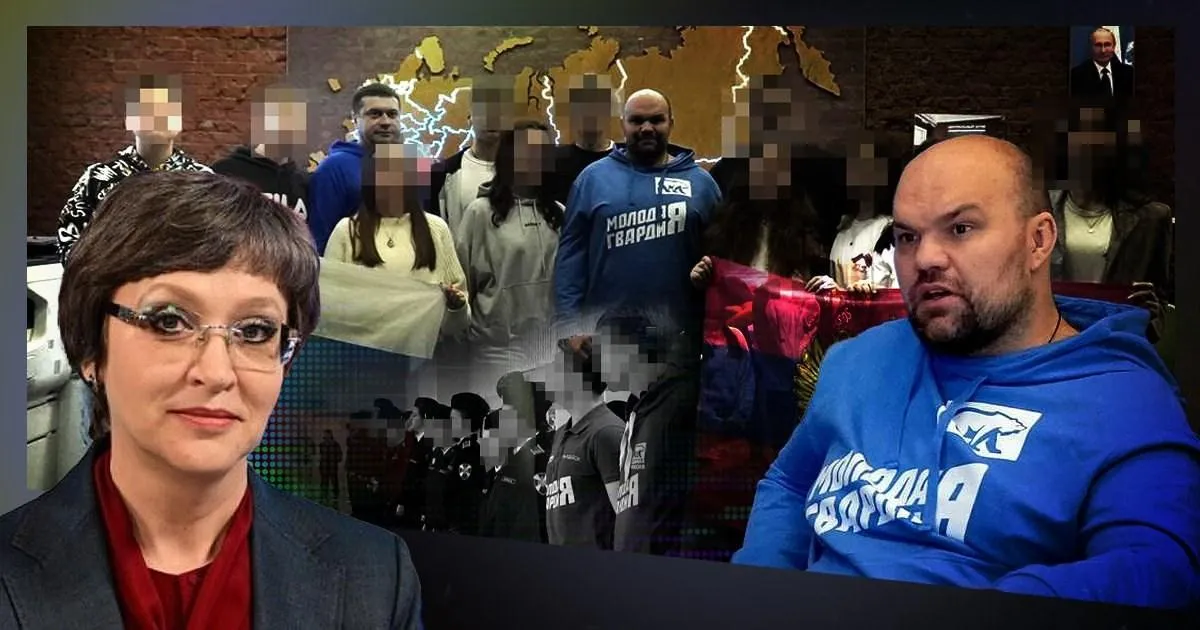
The second figure in this disturbing narrative is Anton Demidov, who chairs the Young Guard of United Russia, the youth wing of Putin’s ruling party. Under his leadership, this organization has established branches across occupied Ukrainian territory, recruiting thousands of children into its ranks. The group has boasted of enrolling more than 11,000 young people in Donetsk alone, and Demidov has personally hosted events with “evacuated” Ukrainian children at the organization’s headquarters. These gatherings have introduced vulnerable displaced children to political indoctrination programs and “socio-patriotic educational camps” designed to instill Russian nationalist ideology. The Young Guard has also organized military training events in occupied territories, teaching children everything from tactical medicine to marksmanship and weapons handling, effectively militarizing the next generation of Ukrainians and turning them against their own people. Beyond this ideological conditioning, the group has been deeply involved in supporting Russia’s war effort, with members delivering supplies to the front lines and participating in the conflict that has devastated their home country.
The implications of these actions have not been lost on British politicians and human rights organizations, who are now demanding that the UK government take decisive action. Alicia Kearns, the Shadow National Security and Safeguarding Minister, has been unequivocal in her condemnation, stating that “this is not evacuation, it is abduction and a war crime.” She has called out the systematic nature of Russia’s approach, noting how the country has “industrialized the abduction of children from illegally occupied Ukraine” and created a system designed to “brainwash them out of their own identity.” Her frustration with the UK’s inaction is palpable, as she insists that “the UK cannot claim to stand with Ukraine while the officials responsible go unsanctioned by our government.” Other MPs have echoed these sentiments, with Alex Sobel describing Peschanskaya’s language about reformatting children as “chilling” and calling for the government to align with European allies in sanctioning all those involved in these crimes.
The scale of this tragedy is difficult to comprehend. Ukraine has officially identified nearly 20,000 children who have been forcibly deported, but humanitarian organizations fear the true number could be in the hundreds of thousands. The 5 AM Coalition has estimated that anywhere from 260,000 to 700,000 children may have been taken from their homes in eastern Ukraine, with only 1,359 returned as of June 2025. Each of these numbers represents a child torn from their family, their culture, and their future. Fedir Kurlak, the chief executive of the Association of Ukrainians in Great Britain, has emphasized that what Russia describes as “re-education” is in reality brainwashing, a systematic attempt to make children reject their own country, culture, and identity. The trauma inflicted on these young people, who are being forced to abandon everything they know and love, will have generational consequences that extend far beyond the current conflict.
Both the Ukrainian government and Russian authorities have responded to these allegations with predictable but telling statements. Ukraine has strongly supported sanctions against all individuals involved in this forced deportation and indoctrination, describing these actions as “grave violations of international law and the rights of children.” The Ukrainian government has expressed confidence that the UK shares this principled approach, though Britain’s failure to sanction these specific officials suggests otherwise. Meanwhile, the Russian embassy has dismissed the allegations entirely, claiming that what they call “minors evacuated from areas of active hostilities were saved from being used by Ukrainian troops as human shields and hostages.” They describe their actions as a “rescue mission” and accuse Ukraine of using children in military capacities, though these claims have been widely disputed by international observers. The art exhibition by Piers Secunda, which opened in central London to highlight these crimes, serves as a testament to the ongoing nature of this humanitarian catastrophe, ensuring that the world cannot look away from the suffering being inflicted on Ukraine’s most vulnerable citizens.