
A Devastating Morning on the M9: The Tragic Collision That Shook Ireland
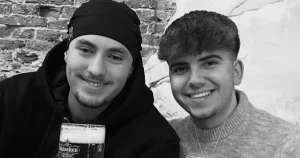
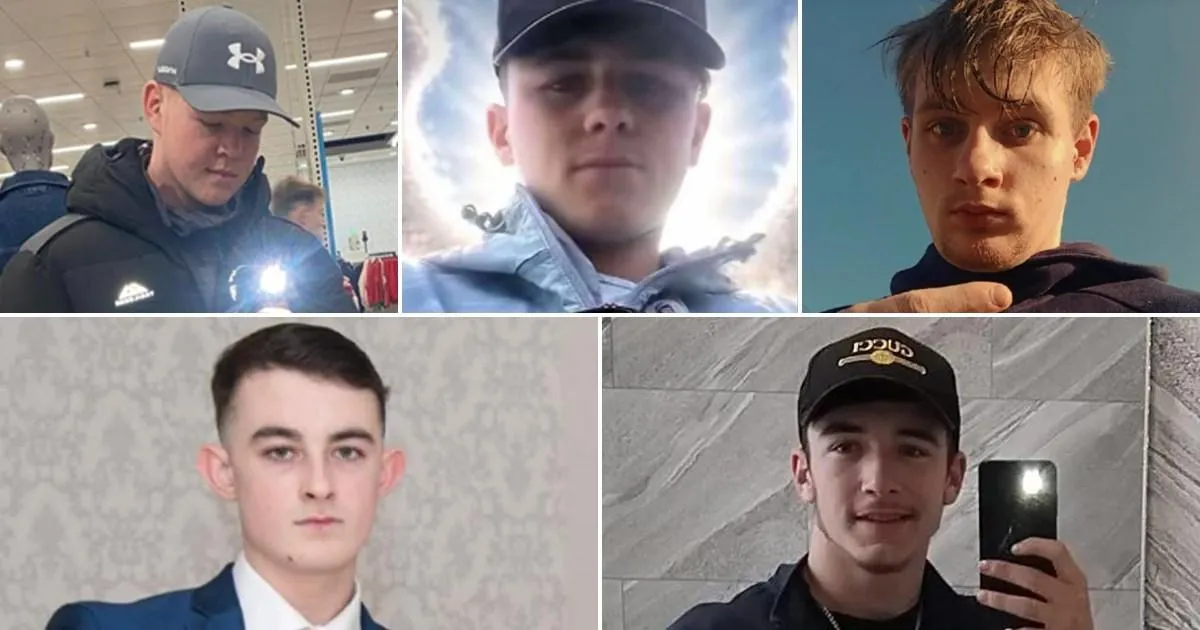
The quiet stillness of a Sunday morning on Ireland’s M9 motorway was shattered in the most horrific way imaginable when a stolen BMW, racing at terrifying speed against the flow of traffic, collided head-on with a family car heading off on holiday. The impact was so severe that it claimed the lives of five young men, all teenagers between the ages of 15 and 18, and left a family of four fighting for their lives in hospitals across the region. The victims were identified as Joey Carthy, Alex McCarthy, Jeremy O’Brien, Jack Kennedy, and Kamil Pustkowski, young men whose lives were cut tragically short in a moment of reckless abandon that has left an entire nation grieving and asking difficult questions about the culture of dangerous driving among some of Ireland’s youth. As emergency services worked through the wreckage on that fateful morning in County Kildare, little did anyone know that this single event would expose a troubling pattern of behaviour that had been building for weeks, and would spark a national conversation about social media, thrill-seeking, and the profound consequences of actions taken without thought for the lives of others.
The revelations that emerged in the days following the crash painted a disturbing picture of the teenagers’ activities leading up to that fatal morning. Far from being a spontaneous act of recklessness, reports suggested that the five young men had been terrorising communities across Kildare and Carlow for at least two weeks prior to the accident. They were suspected in a series of thefts and burglaries, and their behaviour had become increasingly brazen and dangerous as time went on. Security sources described how these youths seemed to operate with a sense of impunity, knowing full well that their status as minors would likely shield them from serious consequences in the justice system. They would film their exploits, documenting their encounters with law enforcement, often posting videos of themselves being pursued by gardaí. One particularly chilling clip showed the view of flashing lights in their rear-view mirror, captioned simply with the words “wrong way” – a dark omen of what was to come. This pattern of behaviour, amplified by the desire for social media validation, had transformed what might have been teenage mischief into a deadly game of cat and mouse with potentially fatal consequences.
The broader context of this tragedy extends well beyond the actions of these five individuals, touching on a worrying trend that has been causing increasing concern among law enforcement officials across Ireland. Garda Commissioner Justin Kelly spoke candidly about the phenomenon of young people driving the wrong way down motorways specifically to capture footage for social media, risking not only their own lives but the lives of countless innocent motorists. This desire for online notoriety, measured in likes and shares, has created a dangerous subculture where risk-taking is glorified and consequences are ignored. Security sources elaborated on the challenges this presents to police, noting that officers are often forced to abandon pursuits because the danger of high-speed chases through populated areas could put the public at even greater risk. The teenagers involved in this crash were part of what appears to be a growing number of youths attempting to outdo one another with increasingly dangerous stunts, creating what one source described as “a nightmare for gardaí to police.” The tragedy on the M9 was not an isolated incident but rather the culmination of a troubling trend that had been building momentum, with devastating results.
While the loss of five young lives is undeniably tragic, the full horror of the situation becomes even more profound when considering the innocent family caught in the path of that stolen BMW. The Kinsella family – sisters Niamh and Alma, both in their thirties, their younger sister Ella Hendricken, and Alma’s seven-year-old son Yemi – were heading off on what should have been a joyful holiday when their Hyundai was struck head-on by the oncoming vehicle. Every member of the family suffered serious injuries, transforming what should have been cherished memories of family time together into a nightmare of hospital visits, surgeries, and uncertain recoveries. The image of a young child, Yemi, enduring such trauma through no fault of his own, serves as a stark reminder that reckless behaviour has victims far beyond those who make the choice to engage in it. The family, like so many others affected by road tragedies, now faces a long and difficult road to recovery, both physically and emotionally, while the community rallies around them in support. Their story highlights the cruel randomness of such incidents, where innocent people going about their ordinary lives can suddenly find themselves at the centre of a tragedy they never could have anticipated.
The response from Ireland’s political leadership reflected the profound shock and sorrow felt across the nation, coupled with a clear message about the unacceptability of such behaviour. Taoiseach Micheál Martin expressed his horror at what he described as “the second appalling crash we’ve seen on our roads in a matter of days as a result of the reckless driving of a car on the wrong side of the motorway.” His words underscored a growing frustration with a pattern of behaviour that continues to claim lives despite repeated warnings and tragic examples of the consequences. The Taoiseach’s statement that “there can be no tolerance for this reckless behaviour” echoed the sentiments of many who have watched with increasing alarm as dangerous driving has become seemingly more prevalent on Irish roads. This crash, coming so soon after another similar incident, has intensified calls for action, for stricter enforcement of traffic laws, for more effective deterrents for young drivers, and for a fundamental shift in the culture that glorifies such risk-taking behaviour. Yet even as authorities grapple with how to address these systemic issues, they must also contend with the immediate aftermath of a tragedy that has robbed five families of their loved ones and left an innocent family fighting for their lives.
As the investigation into this devastating crash continues, the wider community must confront uncomfortable truths about the factors that contributed to this tragedy. The intersection of youth, social media culture, inadequate consequences for criminal behaviour among minors, and the persistent issue of dangerous driving creates a complex web of causation that defies simple solutions. The teenagers who died were someone’s children, someone’s friends, someone’s classmates – young men with potential and promise whose lives spiraled into a deadly combination of thrill-seeking and poor judgment. Their families now face the unimaginable grief of losing children, while also grappling with the knowledge of how those children spent their final days. Meanwhile, the Kinsella family continues its own battle for recovery, serving as a living testament to the lasting impact of that Sunday morning’s events. The M9 motorway, usually just a ribbon of asphalt connecting communities, has become a symbol of lives forever altered, of futures cut short, and of a moment of reckless abandon that will echo through countless lives for years to come. In the days and weeks ahead, as Ireland mourns and heals, the hope must be that this tragedy serves as a catalyst for meaningful change – that it prompts young people to reconsider the risks they take, inspires authorities to find new ways to prevent such behaviour, and reminds us all of the precious, fragile nature of life and the responsibility we bear toward one another on the roads we share.