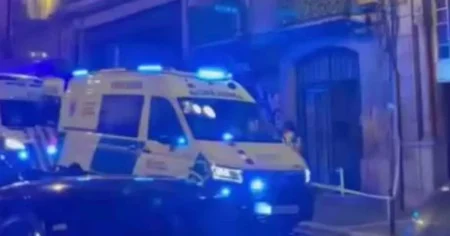


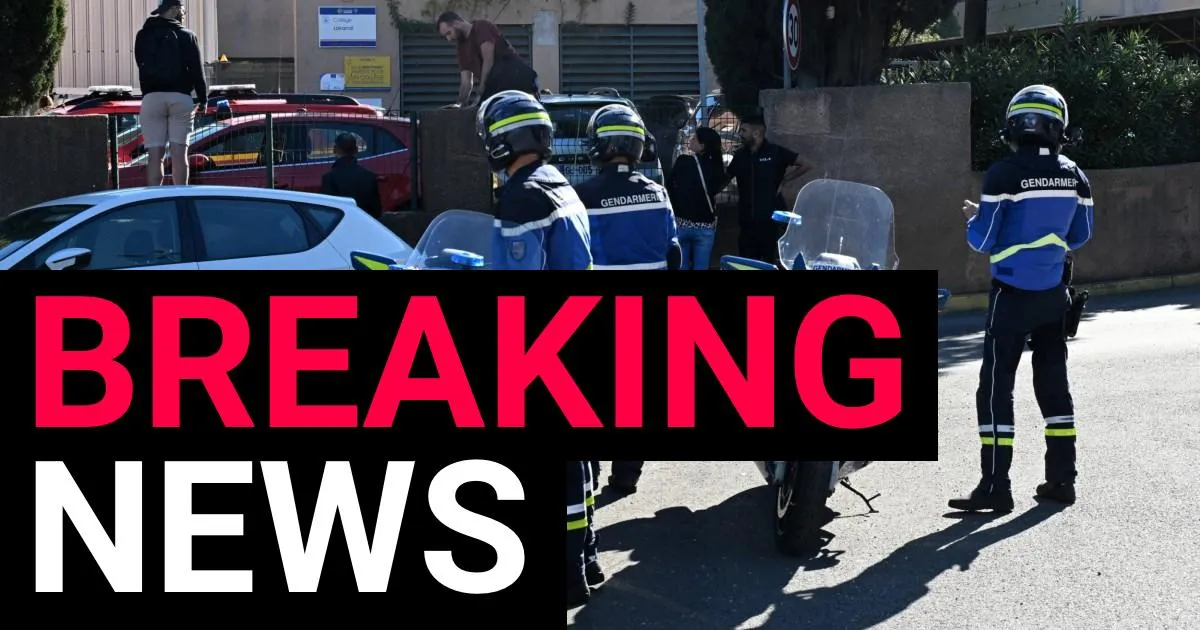
The sound of gunfire is not something any student or teacher expects to hear inside a school. But on a tense Tuesday morning in Aubagne, a small town close to Marseille in the south of France, that nightmare became reality. At the Joseph-Lakanal middle school, a place meant for learning, laughter, and the ordinary chaos of adolescence, two educators were shot by a 14-year-old student. The 53-year-old head teacher was struck in the right hip by a shotgun blast, and a 37-year-old teacher was hit in the thigh when a bullet ricocheted. Emergency workers rushed to the scene, and both victims were quickly given medical attention. Their injuries, while serious enough to require urgent care, were not life-threatening, and they are expected to survive. But the emotional damage to the school community, to the families, and to the entire country will take far longer to heal. A source close to the investigation confirmed that the teenager had been detained on suspicion of firing the shots, leaving everyone to grapple with the unimaginable question: how did a child come to bring a weapon into a classroom and open fire on the very people who were there to help him learn and grow?
The attack immediately drew a response from the highest levels of the French government, and the words chosen by education minister Édouard Geffray reflected both shock and sorrow. He confirmed the shooting on X, writing that two staff members from the National Education system, a principal and a teacher, had been victims of gunshot wounds at Lakanal middle school in Aubagne. He added that a student was said to be the perpetrator, and he announced that he was heading to the scene immediately alongside the Interior Minister, Laurent Nunez. In a country that has seen more than its share of violence in schools, this was a moment that demanded more than bureaucratic statements. Geffray called the act “unacceptable,” but he also spoke of unity and strength in the face of tragedy. “In the face of this new attack,” he wrote, “the National Education system will, as always, remain united and strong, around an educational community sorely tried. But this unacceptable act bears witness once again to the spread of unbridled violence in our society, against which we must all mobilise. In words as in deeds.” His words carried the weight of a nation that has become painfully familiar with the sight of children and teachers caught in the crossfire of social unrest, but they also spoke to a deeper frustration: the feeling that no school, no classroom, no corridor is truly safe anymore.
To understand how such a tragedy could unfold, one must look beyond the gates of Joseph-Lakanal middle school and into the broader crisis that has gripped France’s education system for weeks. The country has been rocked by protests led by students, teachers, and unions demanding at least £9 billion in emergency funding to fix dilapidated classrooms, address severe teacher shortages, and create the kind of educational environment where children can actually learn. For years, teachers have warned that they are overworked, underpaid, and left to manage overcrowded classrooms in crumbling buildings with outdated materials. Students, meanwhile, have watched their schools fall apart around them, and they have begun to take to the streets in frustration. What started as a demand for resources has escalated into a full-blown national movement, and the violence that has accompanied it has left scars on communities across France. Just days before the shooting, a graphic video posted online showed the aftermath of a police grenade explosion near the Béhale high school in Lens, in the north of the country. In that incident, a 15-year-old schoolboy lost his left hand. The footage, which circulated widely on social media, showed the chaos and bloodshed of a protest that had spiraled out of control, and it became a symbol of the rage and desperation felt by many young people who believe their futures are being neglected by the government.
The violence has not been limited to protests. There have been almost 7,000 arrests linked to the unrest, and many of those arrested are teenagers. Lycées, the French schools that serve students aged 15 to 18, have become flashpoints for anger, with buildings torched and vandalized as demonstrators clash with police. It is a scene of national crisis that feels almost surreal: schools, which should be sanctuaries of knowledge and opportunity, are being burned and attacked, and now teachers are being shot by their own students. The connection between the two is not difficult to see. When a society fails to invest in its children, when it allows classrooms to crumble, when it ignores the cries of teachers who are overwhelmed and exhausted, it should not be surprised when those children lose faith in the institutions that are supposed to protect them. The 14-year-old boy who allegedly fired a shotgun at his principal and teacher did not act in a vacuum. He is a product of the same society that has allowed anger to fester, that has normalized violence as a means of expression, and that has left so many young people feeling invisible, unheard, and desperate. Student unions have already called for another national day of demonstrations on Tuesday, and there are signs that other worker groups may join them, which means the unrest is far from over. The question now is whether the government will listen, or whether it will simply send more police, more security, and more force to suppress a generation that is crying out for help.
For the teachers at Joseph-Lakanal middle school, the horror began without warning, as it always does in moments of sudden violence. The head teacher, a 53-year-old man who had likely spent decades in education, who had probably guided countless students through difficult moments, who had celebrated their successes and comforted them in their failures, was shot in the hip. The teacher, a 37-year-old woman or man in the prime of their career, was struck by a ricochet, a random piece of metal that could have struck anyone standing nearby. Their lives are not in danger, but the psychological scars will remain. They will forever remember the sound of the shotgun, the chaos of students screaming, the sight of blood on the floor of a place that should have been safe. And they will forever wonder what they could have done differently, even though the blame lies not with them but with the breakdown of a system that has failed both its teachers and its students. The 14-year-old suspect, meanwhile, is just a child, a boy who should be worrying about homework and friendships, not about guns and violence. He is now in police custody, facing charges that will likely alter the course of his entire life. Somewhere along the way, he was failed by someone, by a family struggling to cope, by a school that did not have the resources to help him, by a society that offers too little mental health support and too much anger. His victims, the teachers who were simply trying to do their jobs, are also casualties of that same failure.
France is now left to ask itself hard questions. How did a 14-year-old get his hands on a shotgun? Why did he bring it to school? What was happening in his life that made violence seem like the only answer? And, more broadly, why has the country’s education system become a battleground? The protests, the riots, the torched buildings, and now the shooting are all symptoms of a deeper disease. The education minister spoke of “unbridled violence in our society,” and he is right to point out that this is not just a problem for schools. It is a problem for everyone. But the response cannot simply be more security, more metal detectors, more police presence in hallways. Those measures may protect people in the short term, but they do nothing to address the root causes of the despair and rage that drive young people to violence. The only real solution is investment: investment in teachers, so they are not overwhelmed and underpaid; investment in school buildings, so students do not feel like society has forgotten them; investment in mental health services, so children who are struggling get the help they need before they reach the breaking point; and investment in communities, so that no child feels so hopeless that they turn a gun on their own teacher. The head teacher and the teacher who were shot this morning survived, but the wound to the nation’s soul is deep. As France prepares for more demonstrations, as the cries for funding grow louder, and as the memory of this terrible day lingers, the hope must be that something changes. The hope must be that the words “never again” become more than just a slogan. The hope must be that the country listens, that it acts, and that it finally gives its children and its teachers the protection, the support, and the dignity they deserve.