

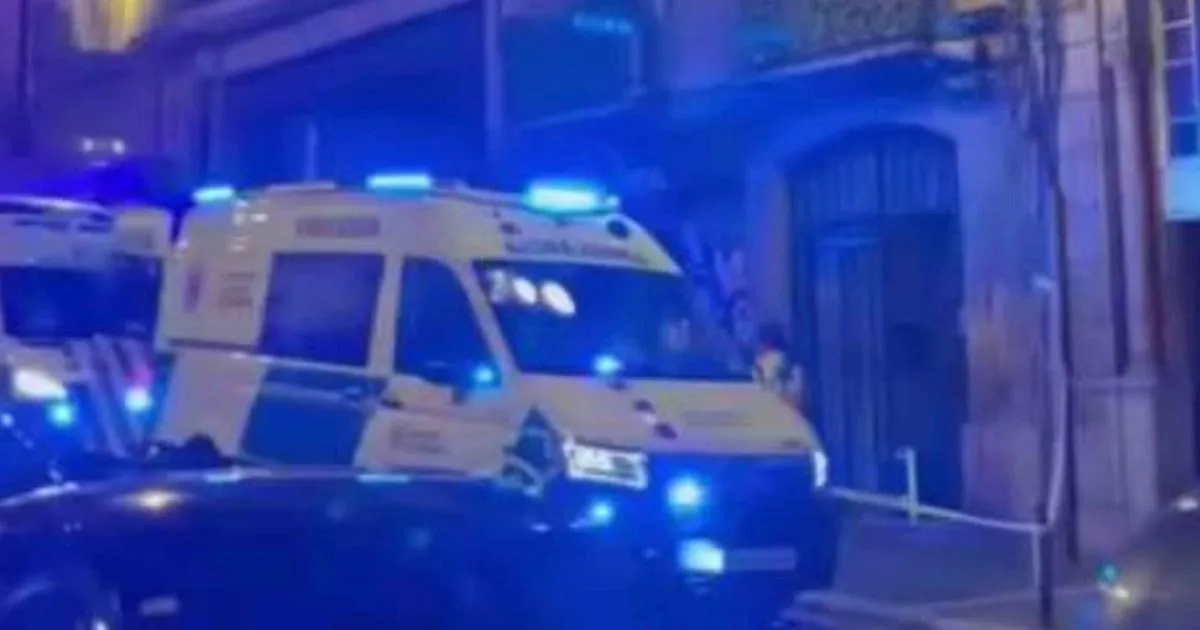
There is a particular kind of silence that settles over a place after something terrible happens, and that silence must have felt unbearable in Tarragona Hostel in the early hours of Sunday morning. A British tourist, believed to be around 40 years old, had gone to Spain for the reasons so many of us go: to see someone he cared about, to escape the ordinary, to spend a few days in a beautiful city with a friend who lived in Barcelona. The two had travelled north to Tarragona for a weekend getaway, perhaps drawn by its ancient Roman walls, its cathedral, and the Mediterranean light that has made the Costa Dorada a place of escape for decades. The man was staying at the Tarragona Hostel in the city centre, a modest base from which to explore. But around 1am on Sunday, all of that promise was erased in a moment. As he made his way back to his room, he lost his balance on the stairwell and fell. A local doctor rushed to his aid, but the injuries were too severe. Three ambulances were sent as part of the emergency response, yet every effort was in vain and the man was pronounced dead at the scene. A weekend that should have been filled with nothing more stressful than deciding where to eat had ended in the most brutal and unexpected way. The friend who was supposed to be sharing those days with him was now left standing in the wreckage of a plan that would never happen.
Police have launched an investigation into the death, but early signs point overwhelmingly to an accident. Sources have said that at this stage it is not being treated as a crime, and there is no suggestion that anyone else is suspected of involvement. That is a thin kind of comfort, because the truth is that accidents can be the hardest deaths to process. There is no villain, no explanation that makes sense, no one to blame for a misplaced foot or a sudden slip. The accident happened around 1am at the Tarragona Hostel, and the local doctor who tried to save him must be left with the awful memory of having been so close and yet too late. The emergency crews who arrived in three ambulances would have done everything they could, but the fall had already done its damage. The man was pronounced dead at the scene, which meant no ambulance ride to a hospital, no desperate surge of hope, only the finality of a body on a hostel floor. The friend who had been with him during the trip will have been pulled into a world of logistics and police statements and consular calls, all while trying to process that the person he had been laughing with hours earlier was never coming home. It is the kind of moment that cleaves a life in two: the before, when everything was normal, and the after, when nothing ever feels normal again.
Unconfirmed local reports have said that the British holidaymaker may have been drinking before he fell. The post-mortem examination, along with interviews with witnesses and the man’s friend, will help determine whether alcohol was a contributing factor. If that turns out to be true, it will not make this tragedy any less painful—it will only make it more human, more familiar. People go on holiday to relax, to loosen the grip of responsibility, to enjoy a few drinks and go to bed later than they normally would. Stairs can be tricky at the best of times; after an evening out, with dim lighting and tired legs, they can become dangerous. The investigation will look closely at all of this, not to assign blame after the fact, but to piece together the last moments of a life. The friend’s account will be particularly important. He may have been walking beside him, maybe a few steps ahead or behind, when the fall happened. He will have to relive that moment again and again, both in interviews with police and in the quiet hours of his own mind. The unconfirmed drinking reports will be weighed alongside the physical evidence, but no amount of analysis will change the outcome. The man is gone, and a family in Britain has to find a way to live with that.
The victim has not been named, and authorities are likely waiting until family are informed and formal identification is confirmed. He is believed to have been around 40 years old—someone who still had most of his life ahead of him. The investigation is being led by the Mossos d’Esquadra, the regional police force in Catalonia, and it will be conducted with care and thoroughness even though the working assumption is that this was an accident. They will examine the stairwell, check the lighting, measure the steps, and reconstruct the fall. They will speak to other guests, hostel staff, witnesses, and the friend who was staying with him. They will wait for the post-mortem and toxicology reports. All of this is necessary, but it cannot undo what happened. Behind the scenes, there will also be the slow, painful machinery of informing the next of kin and arranging for the body to be returned to the United Kingdom. The family will have to hear the details that no parent, sibling, or partner should ever hear. They will keep asking themselves whether there was something they could have done, even though they were thousands of miles away. There is nothing rational about grief. It comes in waves, and it does not care whether the death was an accident or a crime. The only thing that matters to those left behind is that someone they loved will not be coming home.
Tarragona is no stranger to the fragility of human life this season. In early September, another British tourist died in the same corner of Spain. A 45-year-old man drowned after jumping from a ferry near Salou, a coastal town about seven miles south of Tarragona, in an apparent attempt to swim to the coastline with his brother. The younger sibling, 43, made it safely to shore, but the older brother did not. Reports said the pair had been drinking and that they jumped overboard shortly before the last ferry of the day reached the Costa Dorada town. Their parents, who had been on the ferry with them, were stopped when the boat reached port and later told that one of their sons had died. His body was recovered after a search involving coastguards and police. The two incidents are separate and unrelated—one a fall in a hostel, the other a swim that ended in drowning—but together they are a stark reminder that holidays cannot be placed outside the realm of danger. People go abroad and take small risks they would never take at home. They drink more, they stay out later, they try things without thinking through the consequences. Most of the time, it ends in a story or a hangover. But sometimes, the risk is real, and the consequence is permanent. No one boards a plane expecting to die on holiday, and no one’s family expects to receive that phone call from a foreign police officer.
As the days pass, the hostel will return to its ordinary rhythm. New guests will arrive with backpacks and maps, unaware that someone died on those stairs. The city of Tarragona will continue to shine under the sun, its Roman stones unchanged, its cafés full of tourists. But the people touched by this death will not be unchanged. The friend who lost a companion will carry the weight of that night for the rest of his life. The local doctor who ran to help will remember the seconds lost and the pulse that would not return. The emergency workers who answered the call will file their reports and try to sleep, but the image will linger. And somewhere in Britain, a family will begin the slow, terrible process of learning to live without someone who was still young enough to have decades of plans. They will remember him not as a headline, but as a person who traveled to be with a friend, who cared enough to fly to Spain, who was somehow both careful and careless in the same single step. There are no words strong enough to soften that kind of loss. There is only the reminder, cruel and stark, that life turns on small things—a misstep, a moment of inattention, a hand that missed the rail by an inch. The best the rest of us can do is hold the people we love a little closer, send the message we have been postponing, and never forget that an ordinary night can change everything. The man who died was not a statistic. He was someone’s world, and his story ended on a stairwell, far from home, in a place he had only gone to find a few days of happiness.