


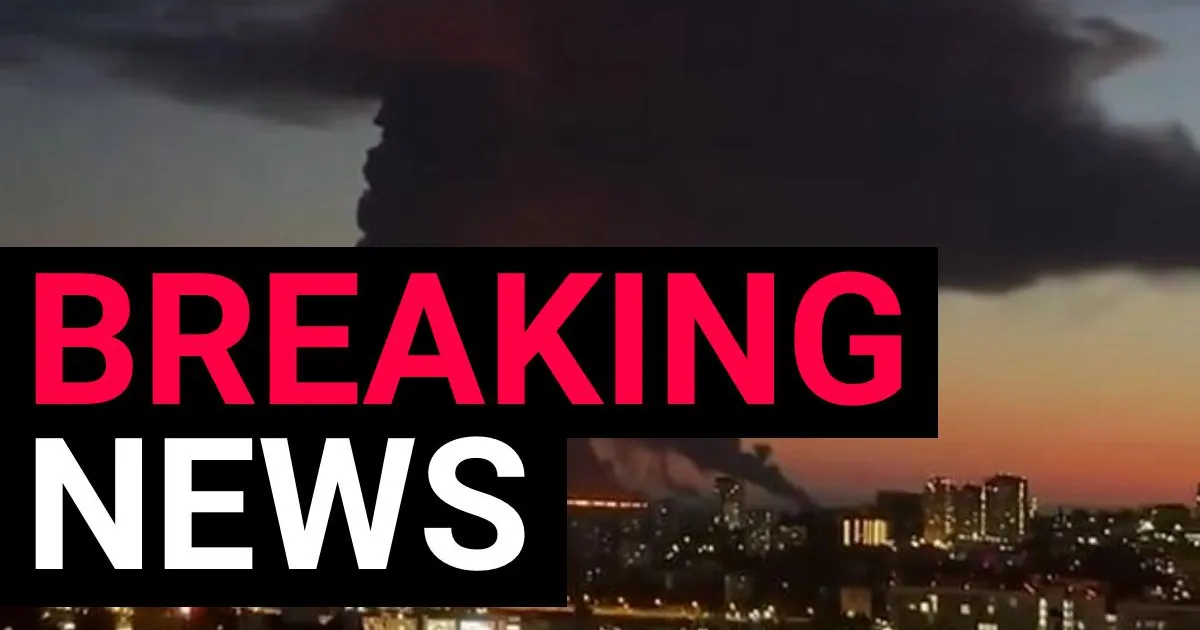
The black smoke rose thick and oily over the Black Sea, curling into a sky that should have been soft and blue over one of Russia’s most beloved resort towns. Off the coast of Sochi, a huge oil tanker was engulfed in flames, its burning hull sending a plume of darkness across the water and onto the beaches below. For locals and tourists alike, the scene was both terrifying and surreal—a vacation postcard turned into something out of a disaster film. According to early reports, the fire followed what was described as a Ukrainian marine drone attack, a reminder that the war between Russia and Ukraine no longer stays hidden in distant trenches or military headquarters. It now washes up on shores where families once built sandcastles and couples strolled along promenades. The black smoke blanketing Sochi was not just a visual horror, but a lived one: the acrid smell in the air, the sting in the eyes, the quiet panic as people wondered whether they were safe. It was a snapshot of how modern conflict reaches into everyday life, turning moments of leisure into moments of dread, and forcing ordinary people to confront a war they never asked for.
In the midst of this unfolding chaos, President Donald Trump stepped forward with a striking announcement that seemed aimed at calming another kind of turmoil—the kind felt at petrol pumps and on global markets. Taking to Truth Social, he declared that an “energy ceasefire” had been struck between Russia and Ukraine, a deal that would, in his words, stop world oil prices from surging. “Effective immediately, there is an ENERGY CEASEFIRE in the War between Russia and Ukraine. Both parties have agreed. Do not break it!” he wrote, with the unmistakable tone of a leader issuing both news and warning. It was a dramatic claim, made more dramatic by the timing. Just as black smoke filled the sky over Sochi, the American president was announcing a pause in the energy war—an agreement that, if real, could have enormous consequences for economies, governments, and households worldwide. But the announcement also raised immediate questions. Had Ukraine and Russia truly agreed? What exactly would an energy ceasefire involve? And could it hold while the physical war continued to burn, literally and figuratively, in places like Sochi?
To understand the weight of Trump’s statement, one has to look at the turbulent relationship between him and Ukrainian President Volodymyr Zelensky. This was not a friendly moment between allies. Trump had previously suggested that it might be time for Ukraine to get a new president, and he had accused Zelensky of “making problems for the world.” Those are not the words of a leader trying to build trust with a wartime partner; they are the words of someone deeply frustrated, even scornful, of the man leading Ukraine through its greatest crisis. The tension between them has been palpable, especially in the wake of what became known as the US-Russia diesel deal. That agreement, struck between Washington and Moscow, left Kyiv blindsided. Ukrainian officials had reportedly not been consulted, and they woke up to the news that the United States—their most important ally—had agreed to purchase nearly two million tonnes of Russian oil. For a country fighting for its survival against Russian aggression, the deal felt like a betrayal, a gesture of economic comfort to an enemy that was actively bombing Ukrainian cities and killing Ukrainian civilians.
The numbers made the pain even sharper. Kyiv feared that the oil deal could add more than three billion pounds to Vladimir Putin’s war effort. That is not pocket change; that is fuel for missiles, pay for soldiers, and resources for an invasion that has already caused untold suffering. For Ukrainians, every barrel of Russian oil purchased by the West is another barrel that helps sustain the war machine responsible for so much devastation. To see America, their largest and most powerful supporter, engage in such a deal was deeply demoralizing. It felt as though the moral clarity of the early days of the war had been replaced by cold economic calculation. And in the background, Trump continued to blame Zelensky and Ukraine for the very crisis that the “energy ceasefire” was meant to address. He pointed at Ukraine’s strikes on Russian oil refineries as a major cause of surging worldwide prices. In his view, Ukraine’s military actions were destabilizing global energy markets, and the solution was to convince Kyiv to stop those attacks in exchange for some kind of energy truce. It was a framing that infuriated many Ukrainians, who argued that they were simply defending themselves and striking legitimate military targets inside Russia.
The situation is fluid, to say the least. This is a breaking news story, and the full details of what has been negotiated, promised, or merely suggested have yet to emerge. What we know is that the image of a burning tanker off Sochi has become the backdrop to a high-stakes political drama. Trump’s “energy ceasefire” may be a genuine diplomatic breakthrough, the kind of bold move that could de-escalate a dangerous corner of the conflict and bring some relief to global markets. Or it could be another example of a leader making sweeping declarations that do not match the messy reality on the ground. There is also the uncomfortable possibility that the ceasefire, if it exists, will do little to stop the broader suffering. An energy truce does not stop bombs from falling on apartment buildings. It does not bring home the children taken from their families. It does not heal the wounds of soldiers or dry the tears of widows. It is, at best, a fragile step in a much longer and more difficult journey toward peace. At worst, it is a political slogan, used to project strength and control during a moment of global instability.
For the people most affected by this war—the residents of Ukrainian cities, the Russian soldiers sent to fight and die, the families in both countries who just want to live in peace—the news of an energy ceasefire is likely to be met with cautious hope and deep skepticism. They have seen too many promises broken, too many ceasefires fail within hours, too many “decisive” actions lead to more suffering. The burning tanker off Sochi is a reminder that the violence is not abstract. It creates real victims, real fear, and real economic pain, from the price of fuel at the pump to the safety of beaches along the Black Sea. As the smoke drifts and the politicians argue, ordinary people are left to wonder what comes next. Will this ceasefire bring actual peace, or is it just another headline in a conflict that refuses to end? In the end, the truest measure of any agreement will not be found in the bold words of a social media post, but in the quiet moments of everyday life: a mother breathing easy in Kyiv, a shopkeeper opening his doors in Sochi, a world that no longer holds its breath every time a siren sounds. Until then, the story continues to unfold, and the world watches, waiting to see whether this moment of fire and fury can somehow be turned into something that resembles lasting peace.