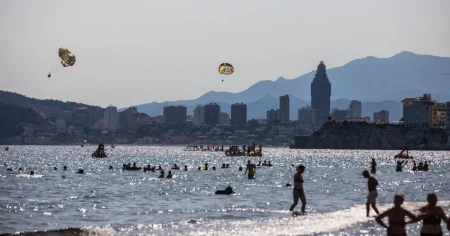

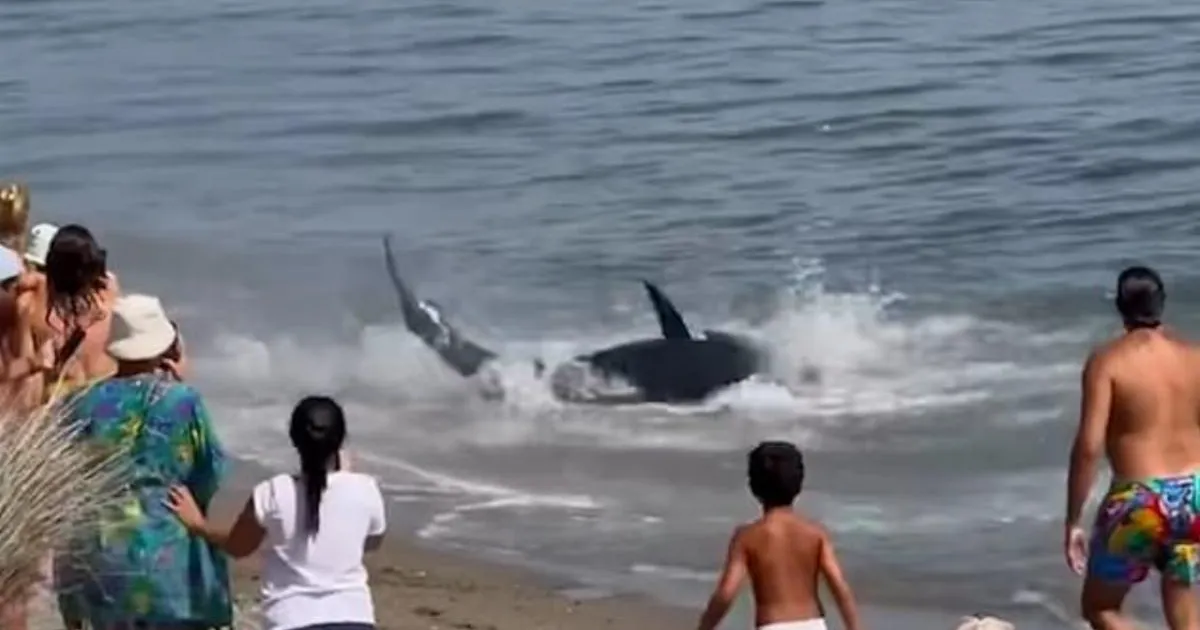
A serene afternoon at a popular Spanish beach was shattered in an instant, transforming a scene of sunbathers and gentle waves into a tableau of panic and confusion. The trigger was a single, unmistakable sight that has been the primal fear of beachgoers since the release of a certain blockbuster film: a dark, triangular fin slicing through the water’s surface. At the Ancón beach in the upscale resort town of Marbella, the shadowy silhouette moving just below the surface was immediately interpreted as a shark, sending a shockwave of alarm through the crowd. The idyllic soundtrack of lapping water and children’s laughter was replaced by the urgent shouts of onlookers and the frantic splashing of swimmers scrambling to escape the perceived danger. The incident, captured on video, serves as a stark reminder that even in the familiar, shallow waters of a Mediterranean summer, a wild card can suddenly appear to upend the peace.
The drama unfolded with terrifying speed as the fin, which had been moving parallel to the shore, abruptly changed course and began heading directly towards two swimmers who were still in the water. The crowd on the beach, now fully alert and gripped by a mixture of horror and morbid fascination, began to scream, their cries of warning echoing across the sand. One of the swimmers, a man who had just spotted the creature, turned and began to swim with every ounce of his strength towards the safety of the beach. It was a heart-stopping race against time, with the fin in hot pursuit, closing the distance between predator and prey with unnerving quickness. The tension was palpable as the entire beach seemed to hold its breath, watching this desperate human struggle against a creature that, in their minds, represented the ultimate marine terror. The chase culminated right at the water’s edge, just as the man’s hands found the sandy bottom and he propelled himself onto dry land, a breathless and bewildered survivor of his own personal nightmare.
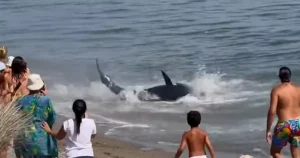
But what happened next defied all expectations. As the man reached the shore and the crowd braced for a shark to beach itself in a frenzy of teeth and violence, the creature surfaced, not with the menacing grace of an apex predator, but with a violent, desperate thrashing. It was not the sleek, grey form of a shark, but the massive, silvery body of an Atlantic bluefin tuna, arguably one of the largest and most powerful fish in the ocean. Weighing in at an estimated 300 kilograms, this giant of the deep was clearly in profound distress. It writhed and flailed in the shallows, its enormous body displacing water and creating a chaotic spectacle that was as awe-inspiring as it was confusing. The immediate terror evaporated, replaced by shock, pity, and a frantic desire to help the magnificent animal. Realizing the tuna was not a threat but a victim, the crowd’s instinct to flee was replaced by an equally powerful instinct to rescue.
With the tuna beached and gasping in the shallow water, bleeding from its gills, a community-wide rescue effort quickly sprang into action. Forget the heroic lifeguards and professional animal rescuers; this was a spontaneous, uncoordinated, and deeply human response. Using whatever was on hand, people grabbed deckchairs and umbrellas, fashioning them into makeshift stretchers and guides. They worked together, a team of strangers bound by a common goal, to gently maneuver the colossal fish and guide it back towards the deeper water. The effort, filmed and posted to a local Facebook group, shows the collective strain and hope of the crowd as they pushed and coaxed the giant tuna. Each wave that washed over the fish brought a glimmer of hope, and each retreating wave brought renewed worry. It was a gritty, hopeful, and somewhat surreal scene, a testament to the human desire to right a wrong and return a magnificent creature to its natural home.
The incident, of course, raises the obvious question: what was a deep-water giant like this doing so close to shore? Local reporters and marine experts suspect the answer is a tragic one. These tuna spend the vast majority of their lives in the deep, open waters of the ocean, hunting and migrating. It is highly unusual for them to venture into the sandy, shallow waters near the coast. The most plausible explanation is that this particular tuna had been injured, most likely by a fishing vessel. A strike from a boat’s propeller or an encounter with fishing gear could have disoriented the animal, damaged its navigational abilities, and caused it to seek refuge in the unfamiliar and dangerous environment of the shallows, where it ultimately became stranded. The tuna’s presence near the beach was not a sign of aggression or a new pattern of behavior, but a sign of severe injury and distress, a maritime creature out of its depth and desperately fighting for its life.
This story of a mistaken identity comes at a time when anxieties about sharks in the Mediterranean are, ironically, on the rise. While the tuna was a false alarm, the region’s waters do harbor their own apex predators, and recent scientific findings have added a new layer of intrigue. Researchers believe that great white sharks, made infamous by Steven Spielberg’s Jaws, may be breeding in the Mediterranean Sea, a place where they were long thought to have all but vanished. The discovery of a juvenile great white, accidentally caught by fishermen off the eastern coast of Spain, provided the first concrete evidence in decades that a breeding population might still exist in these warm waters. This “ghost” population, as scientists call it, is incredibly rare and elusive, with sightings few and far between. While the ferocious reputation of the great white is largely a product of Hollywood, their confirmed presence in the Mediterranean, however rare, serves to keep the fear alive, ensuring that the sight of any fin near a popular beach will inevitably trigger a primal panic, even if, in the end, it is only a giant fish on a very bad day.