

The world woke last Wednesday to a sound no one in Rasuwa District will ever forget—a deep, grinding roar that was part earthquake, part avalanche, part river breaking its own bones. High in the Himalayas, roughly 100 kilometers north of Kathmandu, a massive shoulder of ice and rock tore loose from a glacier and crashed downward, picking up dirt, stone, mud and meltwater as it fell. By the time it reached the valleys, it wasn’t a flood anymore; it was a moving wall of slurry that carved a 62-mile scar through the mountains, through villages, through lives. The United States Geological Survey measured a distinct 5.2 magnitude tremor from the event itself;; for people on the ground, it was simply the mountain falling apart. In a matter of minutes, entire communities were erased. The flood did not merely knock down buildings;; it picked them up and spat them out miles away, splintered timber mixing with boulders and prayer flags. It swallowed roads, bridges, fields and livestock, turning familiar terraced hillsides into a brown, unrecognizable moonscape where even the river seemed to have been picked up and moved. People who had spent their whole lives in those villages watched houses, schools, temples and neighbors tumble down a chute of debris. The official toll grew by the hour: more than900 bodies confirmed dead;; nearly4,300 missing, perhaps5,000 if you include those still unaccounted for in remote valleys;; and hundreds of bodies already buried in shallow graves, because there was nowhere else to put them. But the most haunting number may be this: more than900 workers, men and women who had gone underground to build hydropower tunnels bored into the world’s highest mountain range, are still believed to be trapped in those dark shafts. Their families wait outside boreholes with blankets and prayers;; rescue teams push into waist-deep mud with ropes, shovelsand flashlights;; the mountains,which always seemed patient,are now teaching everyone how fast forever can end.
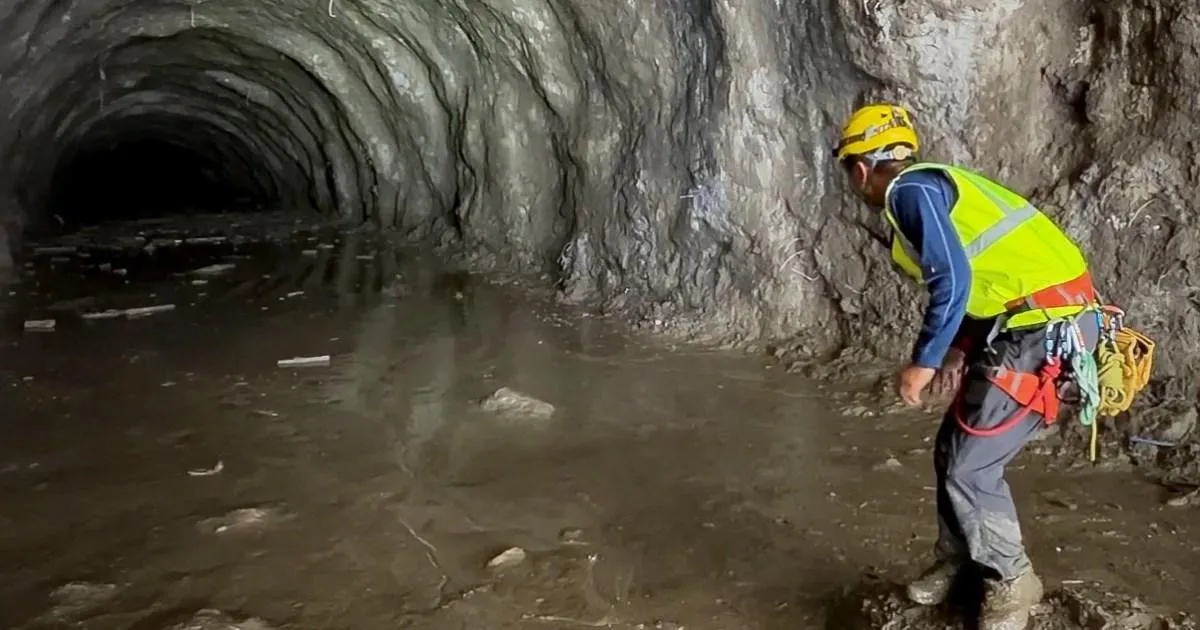
At the center of this disaster are the hydrotunnels—massive underground networks built to channel glacial rivers through turbines and generate power. They are among Nepal’s most important infrastructure:, clean energy, export revenue, development in remote valleys. Hydropower has long been Nepal’s great hope—a way to turn steep rivers into stable electricity and a better future. Now the same tunnels that were drilled with such ambition have become the most dangerous places in the country. On the day the mountain let go,hundreds of workers were inside them,many ending night shifts,others just starting,hundreds of feet beneath granite. Nepal’s Minister of Energy, Water Resources and Irrigation, Biraj Bhakta Shrestha,called rescuing the remaining workers the country’s highest priority,and no one argued. A person trapped in a tunnel is not just a missing person;; they are a heartbeat somewhere in the dark,a voice that might still answer if you dig far enough. As many as279 workers have already been rescued or walked out on their own, emerging covered in slurry,blinking in a world that had completely changed. They are the lucky ones,but they carry memories of screams,and water. The rest are still down there. An army spokesperson said the “large amount of debris” was posing a huge challenge to search teams trying to force open the tunnels. Mud,boulders,and collapsed steel have turned the precise,mechanical world of turbines,and conduits into a tomb that must be reopened by hand,and by hope. Rescuers are going in small teams,avoiding danger,listening. They know tunnels often have air pockets,high ledges,and machinery rooms where people could survive for days. That is why,despite the mud,and the bodies,they still speak of finding people alive. In the upper reaches of the Trishuli River,the name of a single tunnel—Upper Trishuli Number Two—has become a kind of prayer. Every person who emerges,alive or dead,changes the math of grief. But every hour without someone alive makes the next hour harder,because the mud does not drain,the lights flicker,and hope,like oxygen,gets thinner.
To understand what it was like, listen to those who lived through it. Madan Singh Budha had just come off a night shift at Upper Trishuli tunnel number2 when he looked outside and saw water coming. In an interview with CNN,he remembered the simple arithmetic of survival:the hill was rocky,with grass growing in between;; they grabbed the grass,and pulled themselves up as the flood roared below. “Those who weren’t able to climb up were swept away,” he said. There is no drama in his voice—just the raw report of a man who happened to stand on the right side of a second. Ashish Gurung,a rescuer working at Chilime Hydropower in Rasuwa,described what search teams are facing. “There is just mud everywhere,” he told The Guardian. “Inside the tunnel it was worse. It’s so difficult to move,the mud is so deep.” He and his colleagues pushed deeper than most people could stomach. “Walking in it is very difficult;at one point it was up to our chests. We got close to the first station,about130 metres in. Inside that far,you could see further in;it looked like it was just bodies.” Those words are hard to read. Imagine being waist-deep in freezing sludge,headlamp beam cutting through darkness,realizing that the lumps ahead are people—your fellow workers,maybe your friends—and there is nothing you can do with a shovel but try to reach the next pocket of air. Yet they keep going. They are not professional cave rescuers with fancy equipment straight out of a training video;; they are colleagues,engineers,local villagers,anyone who can hold a rope or carry a torch,walking into hell because someone they know is still inside. Every movement is exhausting,every step is a decision,and every sound could be either hope or a trick of the earth. In that underground world,the difference between rescue and recovery is measured in inches of mud
Behind the human stories are numbers that Nepal’s disaster agency is trying desperately to keep accurate,knowing that every statistic has a name. In its latest update,officials said903 people had been killed in the catastrophe,while4,247 remained missing—a category that includes597 foreigners,mostly workers,and trekkers caught by surprise. Among the missing are more than900 workers in hydropower projects,the very people who built the tunnels now being searched. Some may have made it to underground refuge areas;; others are simply unaccounted for. The full scale of loss may be closer to5,000,because entire villages are buried,and no census can keep pace with a mountain that moved. Across the border,Chinese authorities reported at least16 deaths,and546 missing of their citizens in the affected region,and Britain’s government faces growing questions herafter as many as48 British nationals were still listed as missing after the flash floods. The disaster itself is still being pieced together. Scientists believe a huge chunk of ice,and rock collapsed from a glacier,triggering a colossal debris flow;; the USGS registered a magnitude5.2 event from the collapse alone,separate from any earthquake. In other words,the mountain didn’t shake a flood loose—the mountain itself,in one terrible instant,gave way. It is a terrifying reminder of how fragile the frozen scaffolding of the Himalayas has become. For all the arguments about infrastructure,and development in fragile valleys,the flood did not distinguish between a Nepali villager,an Indian engineer,a Chinese technician,or a British tourist. They were all in the path of water that had been frozen for centuries,and decided,in one terrible minute,to run
Now the hospitals of Kathmandu,and the towns around Rasuwa,are doing work no hospital should have to do. Morgues are overflowing with bodies pulled from the debris;; many are already decomposing,hastened by warm weather,mud,and the sheer number of dead. Hospital corridors smell of antiseptic,and earth. Staff have run out of places to put bodies,and refrigerated trucks have been pressed into service. The Nepali government has made a painful decision:unidentified,and unclaimed bodies will be buried in mass graves,but only after DNA samples are taken,so that someday,when a mother or a spouse finally comeslooking,science can still give them an answer. It is a bureaucratically humane solution to an inhuman problem—a way of saying we cannot keep your loved one whole,but we will keep their truth safe. Outside the hospital gates,scores of family members gather,holding crumpled photos,asking the same question over,and over:Have you seen this face? Have you heard this name? Posters of missing people now line hospital walls,each one a small shrine of ink,and hope,with contact numbers written in marker so that anyone with information can call. Some of the posters are already fading in the sun. Some of the numbers have stopped being answered,,because the person holding the phone is also searching,or because they have already heard what they feared. The missing are not statistics. They are mothers who packed a lunch,fathers who kissed children goodbye before going into the mountain,brothers who sent a message saying I’ll be home by Friday. The flood took their bodies,but the waiting is taking their families apart,one unanswered ring at a time
In the middle of this wreckage,there are still small defiant lights. Nepal has said it does not need general foreign help,aware of its own capacity,and wary of a crowded relief operation in steep terrain. But it has accepted specialized assistance from India,and China,countries with enormous experience digging people out from under mountains—and that collaboration,across borders,and geopolitics,is a reminder that disasters do not respect passports. Search teams are still working. They are still listening. They have reached about130 meters into one tunnel,and seen horrors,yet they still talk about safe zones,air pockets,machinery rooms where someone might have survived. The Minister of Energy says rescuing the remaining workers is the highest priority,not because it is strategically convenient,but because every person down there is someone’s reason to wake up tomorrow. For the families outside,hope is not a statistic;; it is the sound of a drill that doesn’t stop,the sight of a stretcher coming out,the possibility that the next face will be the one they love. The world tends to look at disasters like this through numbers:900 dead,4,247 missing,48 British,900 workers trapped. But in Rasuwa,there is no aggregate suffering—only individual grief,individual courage,individual acts of grace. A man climbing a grassy hill holds on to a blade of grass,and lives;; a rescuer wading chest-deep mud keeps walking,cause he knows someone else would do the same for him;; a daughter pins a poster to a hospital wall,and leaves her phone number,just in case. That is humanity::not the flood that erased a valley,but the hands that refused to stop looking. And perhaps,in the end,that is the only thing the mountains cannot wash away.