
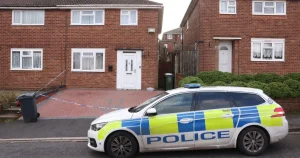

Imagine coming home after a long day, tired and ready to close the door on the world. You notice something off at first: a curtain moved, a drawer open just a few centimeters, a floorboard creaking under your weight. You tell yourself it’s your imagination. Then you find it—something so deliberate, so crude, that it stops you cold: human waste left in your bathroom. This is not a scene from a spy thriller. It is the reality facing more than twenty members of Finland’s parliament, who have reported break-ins at their homes over recent months. One elected official discovered that an intruder had defecated in his bathroom. Others found their belongings rearranged, windows opened, and signs that someone had moved through their private spaces while they were away. In a country that prizes order, trust, and personal safety, the violation feels especially deep. Finnish Parliament Speaker Jussi Halla-aho described the number of cases as “significant,” and the more you examine the pattern, the more uneasy it becomes. These are not random burglaries. They are not the work of petty criminals looking for valuables. The finger has been pointed squarely at Russian intelligence, which stands accused of sending agents to break into politicians’ homes, mess with their belongings, and, in at least one instance, leave excrement behind. It is a tactic that seems almost absurd at first glance, but it is anything but. It is a calculated form of psychological warfare, designed to remind Finland’s political class that they are being watched, followed, and penetrated at the most intimate level.
The symbolic weight of leaving feces in someone’s home is hard to overstate. It is not a random act of desperation or a hurried accident; it is a deliberate message, one that speaks to contempt, domination, and humiliation. In almost every culture, excrement is associated with disgust and degradation. To leave it in a politician’s bathroom—rather than simply stealing a laptop or breaking a window—is to say something far more sinister: I was here long enough to do this, and there is nothing you can do about it. Finnish MP Ben Zyskowicz, one of the country’s longest-serving lawmakers, put it plainly. He said the incidents are a way for the Russian intelligence service to show that people are being monitored, a way to create confusion or concern. His words capture the intent behind these intrusions. It’s not about damaging a building or stealing classified documents. It’s about making elected officials feel vulnerable in the one place where they should feel safe. If an agent can get close enough to defecate in your private bathroom, they can certainly listen to your conversations, photograph your papers, or harm your family. The message is not subtle. And it is not a new trick. The United States State Department has documented multiple home intrusions by Russian agents in which belongings were moved around, windows were left open, and targets were left with a chilling sense of being watched. One former BBC Russia correspondent wrote in her memoir that spies broke into her home and left a large, unflushed deposit in each of her toilets. For her, the meaning was unmistakable: nothing is private, and nowhere is safe. That experience, years ago, mirrors what Finnish politicians are now enduring. The tactic is old, but it remains effective because it targets a primal fear—the invasion of home and body.
Finland’s current situation has to be understood against a much larger backdrop of geopolitical confrontation. In April 2023, Finland ended decades of military non-alignment by joining NATO. That single decision transformed the security map of Europe. Finland and Russia share a border of nearly 1,300 kilometers, or more than 800 miles. By joining the alliance, Finland effectively lengthened NATO’s direct frontier with Russia by almost 1,000 miles. The Kremlin did not respond with a conventional invasion, but it did respond with what has come to be called hybrid warfare: a gray area of sabotage, disinformation, migration pressure, cyberattacks, and covert operations designed to destabilize without triggering a full-scale conflict. The break-ins and the excrement fit squarely into that playbook. They are cheap, deniable, and psychologically corrosive. Along the border itself, Russian military activity has increased. In Kamenka, a town roughly 35 miles from Finnish territory, satellite imagery and open-source analysts have identified around 130 new installations capable of housing 2,000 troops, built since February 2025. These are not just defensive positions; they are part of a pattern of military buildup along the frontier. Finland, for its part, has not been passive. Helsinki has moved to strengthen its own defenses and is currently setting up a new NATO forward command center in Lapland, in the far north, close to Russia’s Kola Peninsula. The message from Finland is clear: we see what you are doing, and we are preparing for every possibility. But the darker reality is that some of Russia’s most dangerous actions do not require tanks or missiles. They require only a determined agent, a unlocked window, and a willingness to humiliate.
The border itself has become a strange, uneasy front line. In 2023, Finland closed its border crossings with Russia after the Kremlin engineered an influx of asylum seekers, many of whom were brought to the frontier and pushed through in an apparent attempt to manufacture a migration crisis. The move was widely seen as another hybrid tactic, meant to overwhelm Finnish authorities and create chaos. Since the border shut, the area has become relatively quiet. Joel Linnainmäki, a research fellow at the Finnish Institute of International Affairs, says that while there has been very little activity, just some individuals attempting to cross, the calm is deceptive. The Finnish government remains careful and profoundly suspicious of Russian movement nearby. He notes that the border does not appear likely to reopen anytime soon, and every signal from Helsinki suggests a willingness to wait out the uncertainty. For the people who live in the border regions, the quiet can feel eerie. There are still checkpoints, fences, and surveillance systems. There is still the knowledge that just across the boundary, Russian troops are stationed in growing numbers. But the most unnerving developments are the ones that happen far from the frontier, in the cities and residential neighborhoods where Finnish politicians live. The break-ins are a reminder that modern warfare does not always announce itself with sirens and airstrikes. Sometimes it arrives in the middle of the night, in the form of a shadow moving through a hallway, leaving behind a mess that is meant to be found and understood.
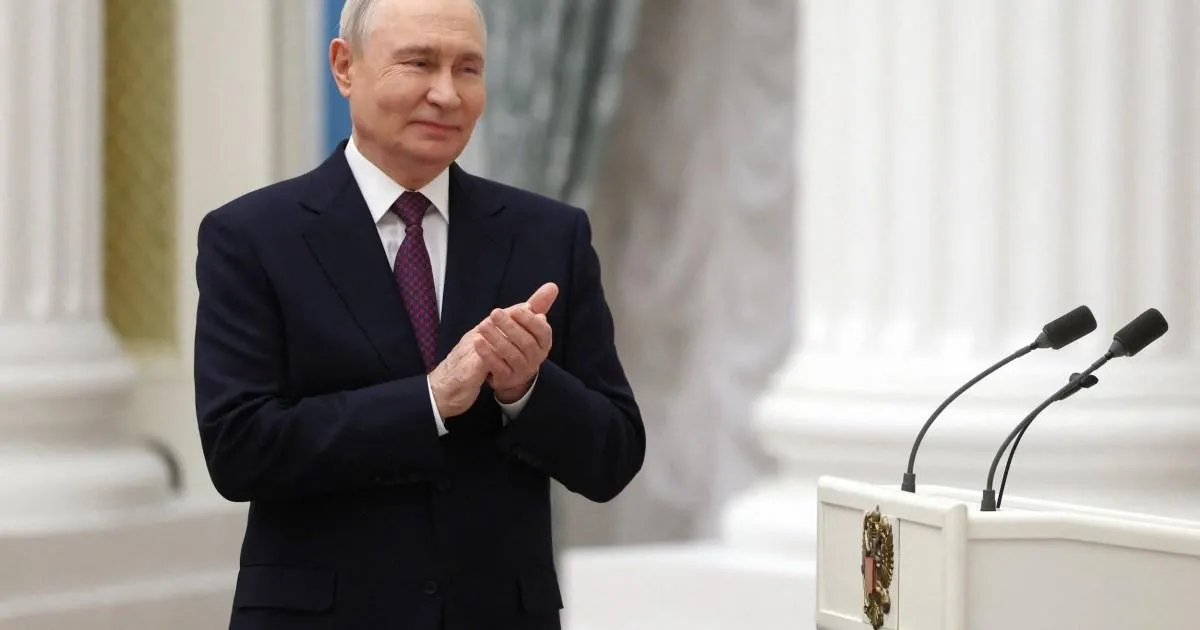
Looking at the larger strategic picture, Russia is playing a long game. President Vladimir Putin is clearly flexing his muscles along the Finnish border, but his capacity to do much more is constrained by the war in Ukraine. That conflict continues to consume Russian manpower, equipment, money, and attention. Linnainmäki argues that Russia simply does not have enough resources at the moment to focus on significantly bolstering its presence near Finland until the war in Ukraine ends. In other words, the current military buildup, including the new installations in Kamenka, is real but still limited. However, Russia is slowly re-establishing the Leningrad military district, a command structure that was disbanded years ago. On the surface, this is about defensive capabilities, but in practice, it could be used for offensive operations if the Kremlin ever decides it has the ability and the opportunity. Finland must plan for that possibility. It must assume that today’s weird, almost farcical incidents—like an MP finding excrement in his bathroom—could become tomorrow’s more serious threats. The psychological campaign is a way of testing Finland’s resilience, sowing confusion, and preparing the ground for something worse. It is also a way of signaling to other NATO members that Russia can reach into their domestic lives, that no politician is untouchable. Yet the very crudeness of the tactic reveals a certain weakness. A confident state does not need to send agents to defecate in the homes of foreign legislators. A secure state does not need to rely on intimidation and filth to make its point. Russia’s use of such methods suggests a regime that understands it cannot compete with the West through ideas, prosperity, or honest diplomacy, so it retreats into the shadows and tries to tear down the confidence of others.
For Finnish politicians, these intrusions are not just personal violations; they are attacks on the fabric of democracy itself. In a functioning society, people need to feel safe in their own homes. They need to believe that their private lives are private, that their children are not being watched, and that their evening routines are not being logged by foreign intelligence officers. When that trust is broken, everything becomes harder. Every politician who has been targeted must now wonder if another visit is coming. Every family member who heard about the incidents must wonder if their home is next. This is precisely what Russia wants. It wants to create an atmosphere of anxiety, to make public service feel perilous, and to remind Finland that joining NATO came with consequences. But the response of the Finnish people so far has been marked by grim determination rather than panic. They have faced harder moments in their history. During the Winter War of 1939–1940, a vastly outnumbered Finland fought the Soviet Union to a standstill, earning a kind of national pride that still shapes the country’s identity. That legacy, known in Finnish as “sisu,” is a combination of courage, stubbornness, and resilience in the face of overwhelming odds. It is that same spirit that now guides Finland’s approach to Russian hybrid warfare. The government is not dismissing the break-ins, but it is also not paralyzed by them. It is strengthening NATO ties, fortifying the border, and advising citizens to be aware of their surroundings. The smell in that Finnish MP’s bathroom may fade with time, but the message lingers. Yet the deeper message may be the opposite of what Moscow intends. Instead of frightening Finland into submission, the crude tactics have only reinforced the country’s conviction that it made the right choice by joining NATO. They have reminded Finland that it is not alone. And they have shown the world that even in the strangest, most humiliating encounters, the line between a free society and an authoritarian one remains stark. One side may resort to feces and fear. The other, for all its discomfort, will keep its doors open, its democracy alive, and its spirit unbroken.