

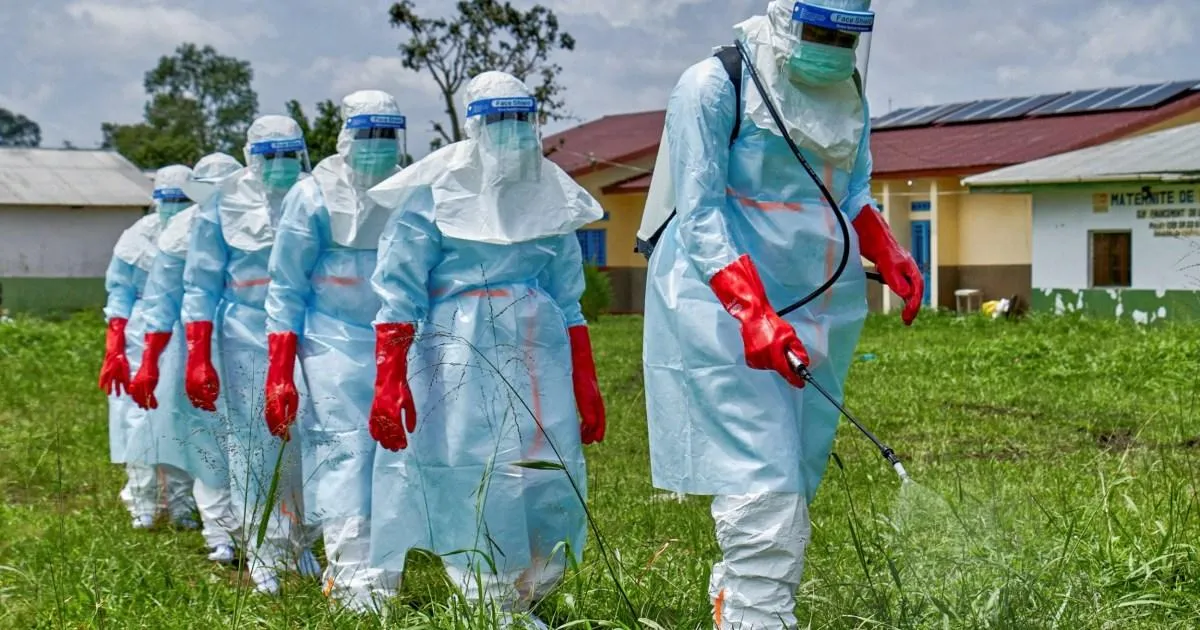
The quiet hum of Jomo Kenyatta International Airport in Nairobi was punctuated by the hurried footsteps of a man who had just disembarked from a flight originating in Uganda. He was a Kenyan national, returning home, but he was not merely a traveler; he was a carrier of one of the most feared pathogens known to humanity. Having recently lived in the Democratic Republic of the Congo (DRC), he had been feeling unwell for the past month, his body battling an unseen enemy that had already shuttled him through several hospitals in his adopted country. As he passed through the airport’s health screening protocols, designed to catch exactly such cases, his symptoms raised immediate red flags. Instead of being cleared to continue his journey, he was swiftly and quietly taken into medical custody, marking the beginning of a desperate, final fight for his life against the Ebola virus.
The man’s ordeal, which ended in his death just two days later, serves as a stark and tragic reminder that diseases know no borders. His journey had been a long and arduous one, a path that led from the heart of the outbreak in the DRC to Kampala, Uganda, and finally to Nairobi. Upon arrival, his condition was critical enough that he was immediately transferred to an isolation unit within a hospital. There, in a sterile and lonely room, separated from family and friends by layers of protective gear, the test was run. The results confirmed the worst fears of the medical staff: he was positive for the Bundibugyo strain of Ebola. Despite the best efforts of the doctors and nurses who treated him, the virus, which had likely been multiplying within him for weeks, proved too powerful. He succumbed to the illness on Monday, becoming a grim statistic in an outbreak that is spiraling out of control nearly two thousand kilometers away.
His death is not an isolated incident but a single, tragic thread in the vast and complex tapestry of the current Ebola epidemic. The outbreak, officially declared on May 15, has exploded with a ferocity that has overwhelmed the DRC’s public health infrastructure. According to the latest government figures, the number of suspected and confirmed cases has surged past 8,000, a staggering number that reflects the virus’s relentless spread through densely populated areas and conflict-ridden territories. The human cost is even more devastating, with more than 4,000 people having lost their lives. The fatality rate for this particular strain is a harrowing 48.4%, meaning that nearly one in every two people infected with the virus will not survive. These are not just numbers; they represent thousands of individual stories cut short, families shattered, and communities living in perpetual fear of a disease that strikes without warning.
The medical battle against this outbreak is being fought on two fronts: one against the virus itself, and another against the limitations of current science. While the world has seen successful vaccine campaigns against the Zaire strain of Ebola, the Bundibugyo strain presents a different challenge. Experimental vaccines are currently being trialled in the DRC, offering a glimmer of hope for the future, but as of now, there is no approved treatment specifically designed to combat this variant. This leaves doctors with only supportive care—managing symptoms, maintaining hydration, and hoping the patient’s own immune system can mount a sufficient defense. It is a desperate, often losing battle. The virus, a member of the Filoviridae family, causes Ebola hemorrhagic fever, a rare but severe and often fatal illness that affects both humans and non-human primates. It is a zoonotic disease, meaning it jumps from wild animals, such as fruit bats or monkeys, to humans, and then spreads relentlessly through human-to-human transmission.
Understanding how this invisible killer spreads is crucial to comprehending the fear and the precautions that now grip the region. Ebola is not an airborne virus; it does not travel through the air like the flu or the common cold. Instead, it requires much more intimate contact. The virus spreads through direct contact with the blood, bodily fluids, or tissues of an infected person or animal. This can occur through broken skin or mucous membranes, such as those lining the eyes, nose, or mouth. This means that healthcare workers, family members who provide care, and those who prepare the bodies of the deceased for burial are at the highest risk. A crucial, and often misunderstood, fact is that a person infected with Ebola is not contagious until they begin to show symptoms. This period of incubation can last anywhere from 2 to 21 days, creating a window where a person can travel and interact with others unknowingly, as was the case with the Kenyan man who boarded his flight in Uganda. This silent spread is what makes containing outbreaks so difficult, especially in regions with high mobility and porous borders.
The shadow of this outbreak extends far beyond the medical wards and isolation units, reaching into the geopolitical arena. Last week, the crisis was thrust into the international spotlight in a rather surreal manner during a White House press conference. Angolan correspondent Hariana Verás was questioning US President Donald Trump about the ongoing conflict between the DRC and its neighbor, Rwanda, when he abruptly interrupted her to ask, “How is Ebola going?” The question, while perhaps blunt, highlighted the international concern surrounding the epidemic. Verás, who had recently traveled to the Congo, responded that according to the World Health Organization director, the disease was “under control,” but she was quick to add that “the country still needs some help fighting Ebola.” Her comments underscored a painful reality: the DRC is fighting a multi-front war. It is battling a lethal virus while simultaneously being ravaged by internal conflict, widespread displacement of its citizens, and a protracted and violent struggle with Rwanda. These overlapping crises create a perfect storm, hampering the delivery of aid, limiting access to affected communities, and allowing the virus to exploit the chaos and instability.
In the end, the story of the Kenyan man who died in Nairobi is more than just a news headline; it is a parable for our interconnected world. It illustrates that a health emergency in one country is a potential threat to all, and that our collective security is only as strong as the weakest link in our global health defenses. His death is a call to action, not just for the DRC and its immediate neighbors, but for the entire international community. It is a plea for increased funding, for more research into vaccines and treatments, and for a coordinated humanitarian response that addresses not only the disease but also the underlying conflicts and poverty that allow it to thrive. As the world watches the case numbers climb, the memory of this one man, who simply wanted to go home, serves as a somber reminder of the human cost of this epidemic and the urgent need for a compassionate and effective global response. The fight against Ebola is not just a scientific challenge; it is a test of our shared humanity.