
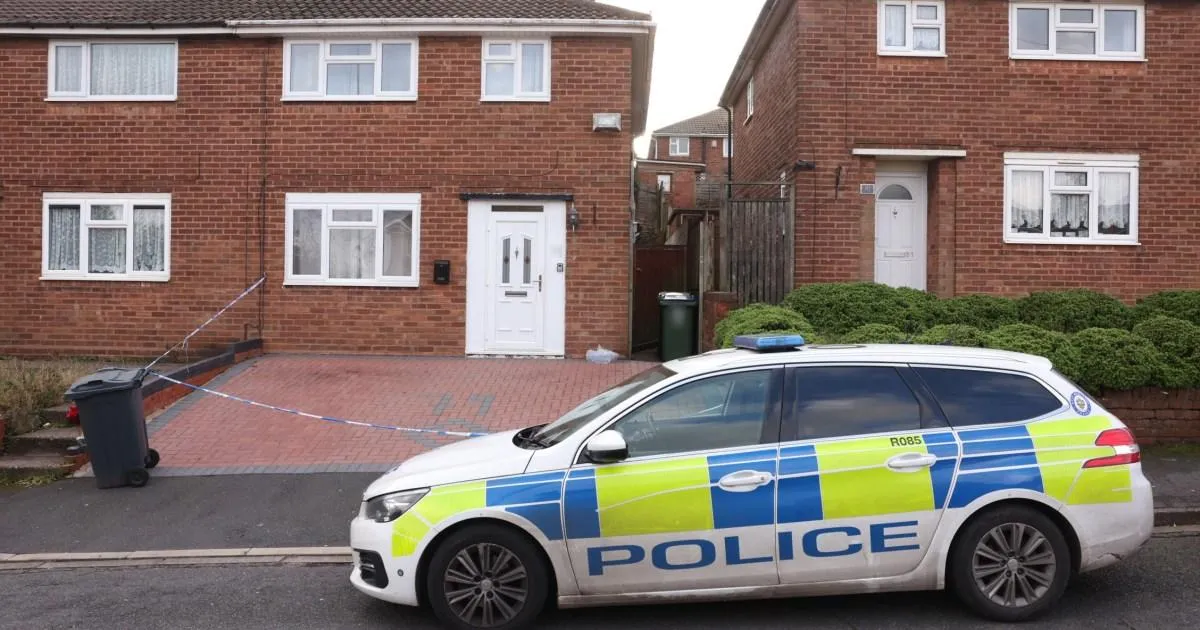
Benjamin William Day stood in the dock at Wolverhampton Crown Court and, on the second day of his trial, changed his plea to guilty. It was not the outcome many expected, given that his lawyers had signalled a claim of self-defence. The 19-year-old had begun university studying journalism before switching to applied biology and forensics, and he lived with his parents in Worcestershire, about 20 miles from the West Midlands Airbnb where Maria Saceanu was killed. Rachel Brand KC, prosecuting, told the jury that Day had “lured” Maria to the property in Barncroft Road, Tividale, as part of a detailed plan. He had prepared himself to kill her, planned to dispose of her body without leaving signs, and planned to get away with it. “But it all went wrong and he was caught.” The court heard he had never been in trouble with police before his arrest. The evidence against him was overwhelming. He had made a shopping list weeks earlier, assembled a room lined with plastic sheeting and stocked with knives, changed into clothing resembling that worn by Dexter, the fictional serial killer from the American television drama, and then waited for Maria to arrive. When she did, she was stabbed 78 times and left dead on the floor. Day then tried to dismember her body, but cut his own hand and abandoned the attempt, leaving a blood trail that would eventually lead police to the crime scene. As he entered his guilty plea, a smirk crossed his face. The image was chilling, not least because Day looked like any ordinary young man.
To understand the full tragedy, we must begin with Maria Saceanu. She was a sex worker, and that fact is central to the case because it was how Day found her: a woman whose work made her vulnerable to a predator who saw her not as a person but as a tool for his dark fantasy. She had a partner, and it was a friend of her partner who reported her missing after she vanished. On the night she died, she answered a text message from Day shortly after 9.30pm, then made her way by car to the rented property, arriving about 50 minutes later. She likely believed she was going to meet a client. Instead, she walked into a room that had been prepared for her murder. There was no evidence of any sexual contact between them. Day had not brought her there for sex; he had brought her there to act out a violent script. The post-mortem examination found 78 knife wounds, many inflicted after death, and a number of wounds to her hands consistent with the desperate act of trying to protect herself. The fatal wounds were to her neck, where her carotid arteries and jugular veins had been damaged. She died in a stranger’s rented bedroom, in a house where other people were staying, while a young man who had spent months planning her death carried out his brutal fantasy. It is easy in cases like this to focus on the killer, to be fascinated by the monstrous and the bizarre, but Maria was a woman with a life, with people who loved her, with hopes and fears no less real than anyone else’s. Her death was not a plot point in a crime drama; it was a brutal, terrifying ending, and it should force us to think about how vulnerable women are often left so exposed to violence.
Then there is the question of how Benjamin Day got to that point. By all outward appearances, he was an unremarkable young man. He was still living with his parents in Worcestershire, had no previous criminal record, and had once been a student of journalism before transferring to a course in applied biology and forensics—a choice that, in hindsight, seems a chilling preparation for the crime rather than a simple academic decision. His fascination with the American television series Dexter, about a forensic scientist who is also a serial killer, had become an obsession. Prosecutor Rachel Brand told the jury that Day’s actions were those of a copycat, imitating the things he had seen in the programme. She even warned jurors not to rush home and start watching it. The evidence showed that on November 18, more than a month before the murder, Day had made a shopping list on his phone. It included knives, scissors, a mask, an apron, disposable gloves, plastic sheeting, duct tape, a staple gun, a T-shirt, trousers, cleaning chemicals, microscope slides, a pipette, and “hefties”—the American term for heavy-duty bin bags. Every item on that list was later found at the scene. He had, in effect, been assembling a kit for murder. On the evening of the killing, he arrived at the Airbnb around 5.30pm and began preparing the room. He lined it with plastic sheeting, fixing it with duct tape and a staple gun, exactly as Dexter did in the show. He changed into a khaki T-shirt similar to the one worn by the character, and put on an apron, gloves, and a plastic visor. He had created a space where he could act out his darkest fantasy without being seen. What is most disturbing is not the eccentricity of the obsession—there are many people who enjoy dark television and true crime—but the way he translated fiction into reality, with a human being as his victim.
The killing itself was not the end of Day’s plan; it was meant to be the beginning of a careful disposal. After attacking Maria, he tried to dismember her body, but the task was interrupted by his own body: he cut his left hand. He had to abandon the gruesome task, leaving her remains in the bedroom, and left the property at about 12.30am on December 21. He had thought deliberately about his movements. He walked some distance from the house before disposing of a “burner” phone, and then called 999 at 12.50am. His intention, prosecutors suggested, was to ensure that no one connected him to the Airbnb. Perhaps he planned to return to finish the job once his hand had been treated. At 1.05am, he texted the landlord of the Airbnb asking if he could extend his stay for a week. When police and hospital staff asked about his bleeding hand, he claimed he had been bitten or scratched by a fox or a dog. It was a story that might have been plausible if not for the blood trail that had already been discovered at the house. Another resident, who had booked a different room in the Airbnb, went inside the property and saw the trail of blood. The resident alerted the landlord, who contacted police. Officers went to the house and found Maria’s body. Day was arrested at 3.42am as he lay on a bed at Russells Hall Hospital in Dudley. He was still wearing the khaki T-shirt—the Dexter T-shirt—when he was taken into custody. The scene must have been almost surreal: a young man in a hospital bed, calm enough to lie about an animal bite, while not far away a murdered woman lay in a blood-soaked room he had built like a stage. He had even placed her possessions into a black bin bag, ready for disposal, as if she were simply rubbish to be thrown away.
The prosecution built its case around the parallels between Day’s actions and the fictional world of Dexter. The main character, Dexter Morgan, works as a forensic scientist in a police department, and the broad premise of the show is that he is a serial killer who knows how to cover his tracks. He prepares “kill rooms” lined with plastic sheeting, fixes them with staple guns and tape, wears aprons, gloves and a plastic visor when killing, and keeps his knives in a canvas roll. All of these items were found in the bedroom at Barncroft Road. The dismemberment attempt and the microscope slides, which the prosecution suggested were intended as a trophy, added to the pattern. The pathologist’s findings confirmed the savagery: 78 wounds, many after death, defensive wounds to the hands, and fatal injuries to the neck. Day’s own account, before his guilty plea, had been that Maria Saceanu took fright when she saw how he had staged the room, picked up one of the knives and attacked him, cutting his hand. He claimed he disarmed her and stabbed her two or three times in self-defence. That account collapsed, however, on the second day of his trial, when he changed his plea to guilty. The smirk that appeared on his face did not go unnoticed. It is hard to know what to make of such a response—whether it was a mask for anxiety, a grotesque sense of triumph, or simply the face of a young man who had detached himself so completely from the reality of his actions that he still saw himself as the hero of his own story. Rachel Brand told the jury that the Crown did not pretend to know the deep psychological reasons why Day decided to kill another human being. But the evidence left little room for doubt that he had planned, in meticulous detail, to take a woman’s life. The defence did not dispute that his fascination with Dexter played a part in his actions leading up to the night Maria was killed. Sentencing was set for December 4, and Day was remanded in custody.
In the end, the story of Benjamin William Day is not just a case about a television show. It is about the dangerous intersection of fantasy and violence, about the vulnerability of women who sell sex, and about the failure of imagination that allows a young man to see another person as a disposable object. No one around Day seems to have noticed the transformation taking place inside him: the shopping list, the obsession, the shift to a forensics degree, the purchase of plastic sheeting and knives. Perhaps there were no obvious signs, or perhaps the signs were easy to misinterpret. Dexter itself has been criticised for glamorising a serial killer and inviting viewers to sympathise with him; it is not a documentary, but for a lonely, troubled young man it can become a template. The blame, ultimately, lies with Day, not with fiction. He made choices, repeatedly, from the first shopping list to the moment he lured Maria Saceanu to that room. As the court prepares to sentence him, it is important to remember that the crime has a victim beyond the legal case. Maria Saceanu was not a walk-on part in someone else’s nightmare. She was a human being who went to meet a stranger and was killed in a way that defies comprehension. The trail of blood, the discarded phone, the hospital bed, the courtroom smirk—these are the moments that define a case, but they should not obscure the quiet absence left behind: a woman who will never come home, a partner and friends left with grief, and a community left to wonder how a 19-year-old with no prior record could become a killer. Benjamin Day will be sentenced, and he will spend many years in prison. But the true weight of what happened on Barncroft Road cannot be measured in evidence or in the cold details of a post-mortem. It is measured in the loss of a life, and in the uncomfortable truth that sometimes monsters are not strangers lurking in the dark—they are young men in khaki T-shirts, planning murder in the language of television, while the rest of us look away.