


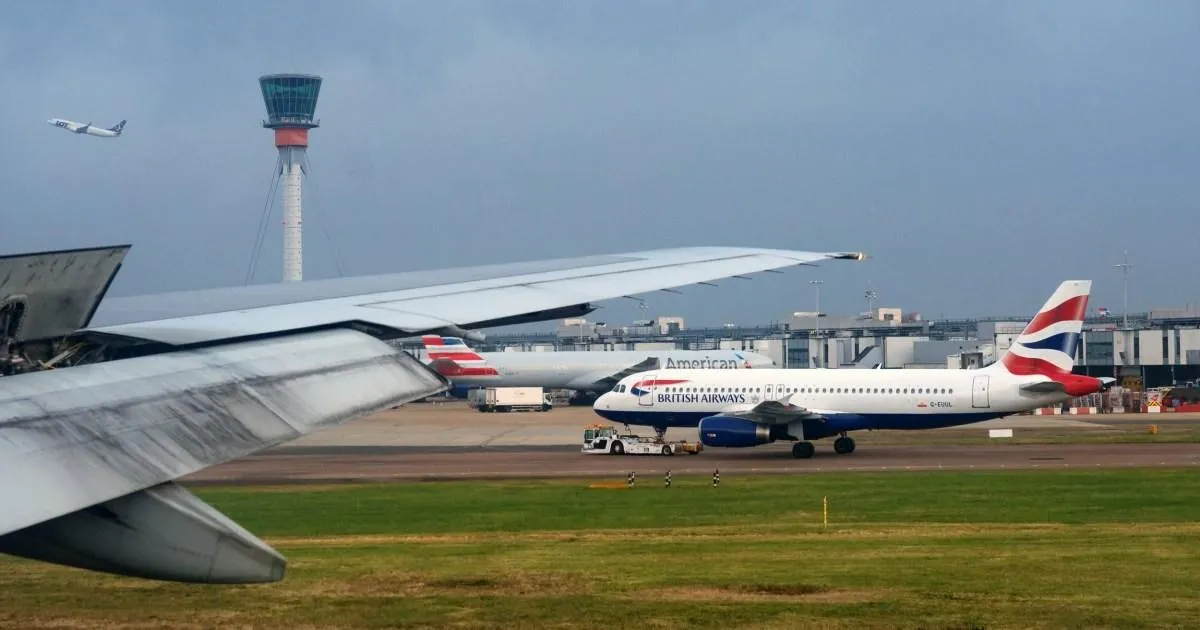
On an ordinary Tuesday afternoon, the kind of afternoon when hundreds of flights slip quietly into the sky above London, a group of travellers boarded British Airways flight BA295 with the familiar sense of anticipation that comes with a long-haul journey. They had checked their bags, queued through security, found their seats, and settled in for the roughly eight-and-a-half-hour trip from Heathrow to Chicago, a city they might be visiting for business, for family, for adventure, or simply for a change of scenery. The aircraft, a Boeing 777, lifted off from the UK’s busiest airport at approximately 12:15pm, and for a while everything felt completely normal. The cabin crew moved through the aisles, passengers adjusted their headphones and window shades, and the immense plane climbed steadily westward, heading first over the British countryside and then toward Ireland, the traditional gateway to the Atlantic crossing. There was no reason to suspect that this flight would become a story, that the very same passengers would be staring at the English coastline just a few hours later, their American plans abruptly suspended. But somewhere above the approach to the open ocean, at an altitude of about 36,000 feet, the journey began to unravel in a quiet, technical way that no one on board could see or feel, transforming a routine trip into an unexpected round trip.
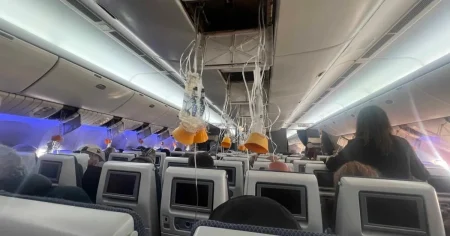
The first sign of trouble came less than an hour after takeoff, when the aircraft reported an issue that prompted the pilots to act with swift and decisive caution. According to flight-tracking data from Flightradar24, the Boeing 777 dropped thousands of feet in a matter of minutes, descending to around 9,000 feet, a sudden and dramatic change that would have been barely perceptible to many passengers but was unmistakable to anyone watching the flight’s radar signature. That descent was followed by a declaration of a general emergency, a formal signal that the crew needed priority handling and that the situation, while not necessarily life-threatening, required careful management. The plane turned back toward the UK coast, and then, in a manoeuvre that is both standard and puzzling to observers on the ground, it circled above the Bristol Channel for roughly two hours. The purpose of this aerial wait was not to burn time but to burn fuel. Landing a large aircraft that is still carrying the weight of a transatlantic journey can be risky and unsafe, so pilots routinely eject or burn off excess fuel before touching down. For the people waiting below, looking up at a huge airliner tracing lazy loops over the water, it must have been a strange sight. For the passengers inside, it was an interlude of uncertainty, a period in which the promise of Chicago grew fainter with every passing minute, until finally the plane banked toward Heathrow and touched down safely shortly after 4pm.
British Airways responded with a measured and reassuring statement, confirming that the aircraft had landed safely after the pilots decided to return to Heathrow following a technical issue. The airline emphasised that the crew was highly trained and that customers disembarked normally, with ground teams already working to rearrange travel plans. The language was calm, corporate, and polished, as all such statements must be, but behind it lies a much more human story. For the passengers, the moment the cabin doors opened back in London must have been a strange mixture of relief and frustration. Relief, because the safe landing was, in the end, the only outcome that truly mattered. Frustration, because an entire day had slipped away, because checked bags had to be recovered, because connections had been missed, because hotel rooms in Chicago were suddenly unreachable, because the mental image of the Chicago skyline had been replaced by the fluorescent lighting of a British airport terminal. It is easy to imagine the muted conversations on the tarmac, the glances at phones, the quiet resignation of experienced travellers who know that air travel, for all its marvels, is still subject to the stubborn limitations of machines. And yet, in that moment, there is also something to be grateful for: the aviation system is designed to prioritise safety above all else, and every precaution, every diversion, every tedious loop over the Bristol Channel is a reminder that the price of a ticket buys not just a journey but a promise.
There is one detail that added an extra layer of poignancy to the incident: the aircraft involved was thirty years old. Aircraft registration data revealed that the Boeing 777 had entered service three decades ago, making it one of the oldest in British Airways’ fleet of nearly three hundred planes. This fact was picked up by aviation enthusiasts and commentators, some of whom marvelled at the longevity of the machine, while others raised a quiet eyebrow at the image of a three-decade-old workhorse still crossing the Atlantic on a daily basis. The truth, however, is more nuanced than it might seem. Commercial aircraft are not like cars that slowly rust in a driveway; they are subjected to rigorous, continuous maintenance regimes, with every component inspected, repaired, and replaced according to strict schedules. An aeroplane can remain safe for many decades, and age alone is not a reliable indicator of risk. Still, the statistic speaks to something deeper about the world of modern aviation, a world in which airlines balance innovation, cost, and sustainability while keeping their passengers aloft. For the passengers on BA295, the age of the aircraft was probably the last thing on their minds. What they knew, in that visceral way that only passengers can know, was that a 36,000-foot problem had brought them back to where they started, and that the system had worked exactly as it was meant to, even if it did not feel like success.
On social media, the incident quickly became a topic of conversation, not because anyone was hurt, but because it was a spectacle, a rare moment when the hidden drama of aviation becomes visible to the outside world. Aviation enthusiasts, who spend hours tracking planes on apps and scanning the sky for unusual movements, reported seeing the jet flying exceptionally low overhead, a sight that was both thrilling and unsettling. One commentator on X wrote: “Just flew VERY LOW over head going into Bristol Channel.” Another joked, with the sort of gallows humour that frequent flyers specialise in: “Must be so much fun to sit on a plane for 5 hours only to return back to where you began.” These comments capture the strange public fascination with flight, a domain where ordinary people rarely see the machinery of safety at work. When everything goes smoothly, we scroll through our phones and complain about scant legroom. When something goes wrong, even something as benign as a technical glitch, the world suddenly looks up. The plane becomes a protagonist, the sky becomes a stage, and the passengers become characters in a story they never asked to join. The fact that the aircraft landed safely, that no one was injured, and that the only real cost was lost time, turns the story into a kind of collective sigh of relief, a reminder that in aviation, the most boring outcome is often the best one.
In the end, the saga of flight BA295 is less about a single incident and more about the promise and fragility of modern air travel. Every day, thousands of flights carry millions of people across oceans, mountains, and continents, and the overwhelming majority do so without a whispered word of trouble. But every so often, a reminder emerges, a small hiccup in the smooth machinery of flight, that forces us to pause and remember what is at stake. The passengers of BA295 did not see Chicago that day. They did not eat deep-dish pizza or walk along the shores of Lake Michigan or shake hands with clients on the other side of the Atlantic. Instead, they spent five hours in the air, circling, waiting, wondering, and ultimately returning to the very spot from which they began. They may have been disappointed, or annoyed, or simply tired. But they were also lucky, not because the flight was cancelled, but because the system that protects them worked exactly as it was designed to work. A technical issue arose, highly trained pilots responded, a safe landing followed, and an airline began the quiet, thankless work of rebooking, refunding, and helping people get on with their lives. That is the human story buried inside every aviation headline, the story of people whose plans are interrupted by machines, but whose lives are protected by the relentless discipline of safety. And so, while the Boeing 777 may have turned around over the Atlantic, and while a group of travellers may have spent an afternoon over the Bristol Channel instead of over Greenland, the most important thing is not where they landed, but how they got there with their lives intact, and how the journey, though not the one they expected, became part of their own personal geography of remembered flights, a story they will probably tell for many years.