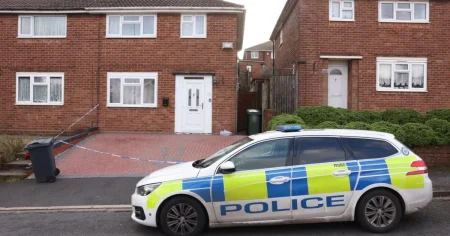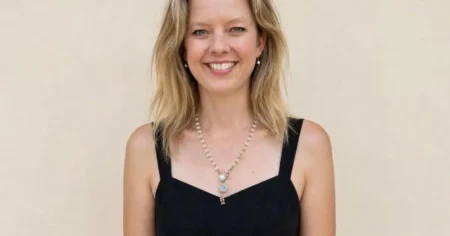
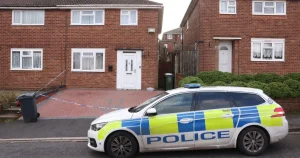

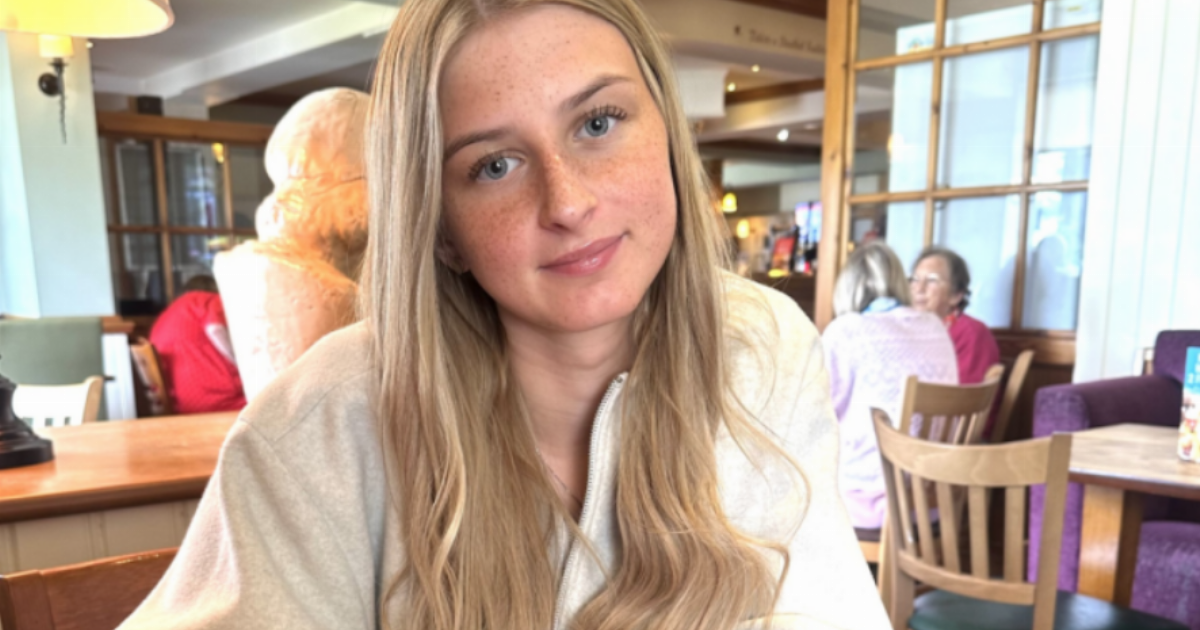
The first photograph of Nadia Mucha shows a sixteen-year-old girl with her whole life ahead of her, but the story attached to her face is one of profound tragedy. On Tuesday, 29 September, at around 8.33 pm, Nadia was found lying in the road on Rooks Nest Road in Wakefield after being struck by a car. She was left there, alone, in the dark, a terrifying and heartbreaking detail that haunts anyone who reads it. The police were called, and Nadia was rushed to hospital with serious injuries. What should have been a normal September evening became a terrible turning point for a family, a community, and an investigation. The phrase “left to die” is difficult to process. It suggests that whoever was driving did not stop, did not call for help, did not sit with her or shield her from the road. Instead, a teenage girl lay on the tarmac, vulnerable and alone, while her future slipped away. For four days, Nadia fought. Her family held onto hope, willing her to survive, surrounded by machines and doctors and the cold reality of a hospital room. But on Saturday, 3 October, four days after the collision, she died. The Homicide and Major Enquiry Team was already involved by then, and the word “homicide” in a road death speaks to the seriousness of the investigation. It tells the public that this was not simply an accident, but something that required the full weight of a major enquiry. Nadia was not a statistic; she was a daughter, a friend, a classmate, a young woman with dreams and secrets and plans. Her loss is a hole in the lives of everyone who loved her. The photograph released to the public is a reminder that behind every news story about road deaths there is a real person, a real smile, a real life stopped far too soon.
For four days after being struck, Nadia Mucha lay in a hospital bed while her family kept a painful vigil. The initial call must have shattered their world; the wait must have been agonizing. Every moment in that hospital room offered hope, but also the growing fear that no miracle would come. The injury she sustained was catastrophic, and despite the efforts of medical professionals, her body could not recover. When she died, her family were left to face an unimaginable future. They had to plan a funeral for someone who should have been planning her future. They had to tell friends, teachers, and younger relatives that Nadia was gone. They had to walk back into a home filled with her belongings, her music, her clothes, her laughter still echoing in the corners of every room. In Wakefield, the shock moved outward from her family into the wider community. People who did not know Nadia could still feel the weight of what had happened. Flowers appeared at the scene, messages were written, candles were lit. Teenagers who knew her gathered to grieve, trying to make sense of a void that could not be explained. The road where she was struck might look ordinary during the day, but it will forever be the place where a young life ended. The investigation continued while the public mourned, and detectives began the painstaking work of reconstructing the collision. They needed to understand what had happened: the speed of the car, the visibility on the road, the actions of the driver, the final seconds before impact. No detail was too small. Nadia was gone, but the need for truth burned as brightly as the memorial candles. Her family did not want sympathy alone; they wanted answers. They wanted someone to be held responsible, and they wanted the world to know that Nadia’s life mattered. In the midst of grief, that need for justice became a source of strength, but it could not undo what had happened.
Early in the morning of Monday, 5 October, police made a significant move in the investigation. A twenty-five-year-old man was arrested on suspicion of causing death by dangerous driving. He was taken into custody and questioned by officers from the Homicide and Major Enquiry Team, who had been working through the evidence gathered at the scene. The arrest marked a turning point, but it was not the end of the case. After questioning, the man was released on bail while detectives continue their enquiries. For Nadia’s family, the news of an arrest was a moment of intense emotion. There is relief that the police are making progress, but also anxiety because the full legal process still has a long way to go. The arrested man has not been identified publicly, and he remains entitled to the presumption of innocence until proven guilty. But the suspicion against him is serious. Causing death by dangerous driving is an offense that carries profound consequences, reflecting a standard of driving that fell far below what any careful motorist would accept. It can involve excessive speed, dangerous overtaking, distraction, impairment, or simply a reckless disregard for the safety of others. The investigation will determine whether any of these elements were present on Rooks Nest Road that evening. The police will examine the car involved, collect forensic evidence, review CCTV footage, seek dashcam footage, and speak to witnesses. It is a slow and careful process, but it is essential. The family must wait for the investigation to reach its conclusion, and waiting is painful. They have already lost so much. Every additional day without answers is another day of uncertainty. At the same time, the legal system is designed to ensure that decisions are made on evidence, not emotion. No matter how horrifying the circumstances, the process must be fair. But fairness does not diminish the urgency that Nadia’s family feels. They deserve closure. They deserve to know why this happened, and they deserve to see accountability delivered. Until then, the investigation remains active, and the police are not resting.
The police now need the public to help them fill in the gaps. DCI Elly Buchanan, from the Homicide and Major Enquiry Team, made a direct and heartfelt appeal. She said: “We are continuing to support Nadia’s family through this horrific time and are working at pace to find them the answers they deserve.” She added: “Our investigation is still ongoing and we urge anyone with any information to come forward and speak with us so that we can bring justice for Nadia’s family.” Those words carry more than professional responsibility; they carry compassion and determination. The police understand that in a case like this, no one should assume that their knowledge is irrelevant. Perhaps someone saw a car speeding through Wakefield that evening. Perhaps a driver with a dashcam captured something without realizing its importance. Perhaps a resident looked out of their window after hearing a loud noise. Perhaps a friend of the driver knows something, or suspects something, and is unsure whether to speak. These are the kinds of details that solve investigations. They are the pieces of a puzzle that, when placed together, reveal the truth. The appeal is not just for dramatic witnesses who saw the collision itself. It is for anyone who saw a vehicle in the area, anyone who noticed a car behaving strangely, anyone who knows someone whose story does not quite add up. Even the smallest detail can make a difference. Police can be contacted on 101, and the family are relying on the public to do the right thing. Silence is easy, but silence does not provide justice. Silence leaves questions unanswered. Silence lets a young girl’s death fade into an unresolved file. The plea from DCI Buchanan is a reminder that the public has a role to play. A simple phone call could help bring a grieving family the answers they desperately need. There is no such thing as too little information. There is only the overwhelming need to know what happened on that road, and to ensure that Nadia’s death is not simply accepted as an unavoidable tragedy.
Nadia Mucha’s death is part of a wider, painful pattern. Every year, pedestrians are killed on roads across the United Kingdom, and teenagers are among the most vulnerable. They are old enough to travel independently but still young enough to be caught in the chaos of careless driving. But behind every statistic is a human being, a family, a community left in pieces. The road where Nadia was struck was not an anonymous highway; it was a street where people live, walk, and travel daily. Her death raises difficult questions about road safety in Wakefield and beyond. Could more have been done to protect pedestrians? Were there traffic calming measures in place? Should there have been better lighting, a crossing, a reduced speed limit? These are questions that police, local councils, and the wider community must confront. It is easy to blame one driver, and there may well be personal culpability in this case. But there is also a collective responsibility to make roads safer. Drivers must slow down, pay attention, and understand that a moment’s distraction can end a life. We all share the road, and we all bear a responsibility to look out for one another. Nadia’s death should not be forgotten. It should be a reminder of how quickly life can be taken, and how devastating the consequences of dangerous driving can be. Her family carried her memory into their grief, and they want to know that her death will not be in vain. Perhaps the result will be a campaign for safer roads. Perhaps it will be a change in someone’s behaviour behind the wheel. Perhaps it will simply be a community that refuses to let her story disappear. There is no single answer, but there is a powerful need for reflection. Nadia’s life was cut short at sixteen, and that should force all of us to think about the preciousness of life and the fragility of the ordinary moments we take for granted. We can honor her by caring, by participating, by calling the police with information, and by demanding a world where such tragedies are less likely to happen.
As the investigation continues, Nadia Mucha’s face remains in the public eye, a reminder that behind the formal language of police appeals and legal processes is a real girl who was loved. Her family are facing the impossible task of learning to live without her. They will mark birthdays and anniversaries with aching hearts. They will hear songs that remind them of her, and walk past places where she used to stand. The pain will never fully fade. But they should not have to carry that pain without answers. Anyone who knows anything about what happened on Rooks Nest Road on the evening of 29 September should contact West Yorkshire Police on 101. Maybe you have already spoken to friends about it. Maybe you have a nagging feeling about something you saw. Maybe you have a dashcam that recorded the area, and you have not checked it yet. Now is the time. Information shared today could be the evidence that leads to justice. DCI Elly Buchanan has promised that the police are working at pace, and they are continuing to support Nadia’s family. But they need the public to stand with them. Nadia was only sixteen years old. She should still be here, laughing with her friends, arguing with her family, dreaming about what her future might become. Instead, she was taken away by the brutal reality of a road collision. Her death should not be accepted as just another statistic. It should be treated as the tragedy it is. The best way to honor Nadia is to help the investigation find the truth. It is to drive carefully, to value safety, to understand that every life is irreplaceable. It is to pick up the phone and share what you know. Her family deserves justice. They deserve to know exactly what happened to their daughter, and they deserve to see the person responsible face the appropriate consequences. Nadia’s story is not over. As long as her family seeks answers, as long as the public remembers her name, as long as police continue their investigation, there is still a chance to make something meaningful out of this devastating loss. Rest in peace, Nadia Mucha. Your life mattered. Your loss will not be forgotten.