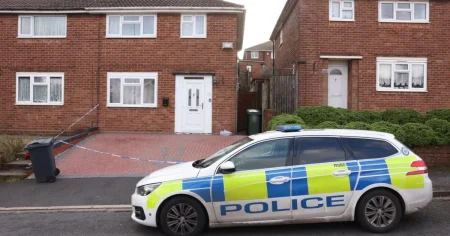
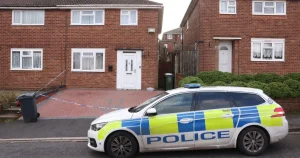

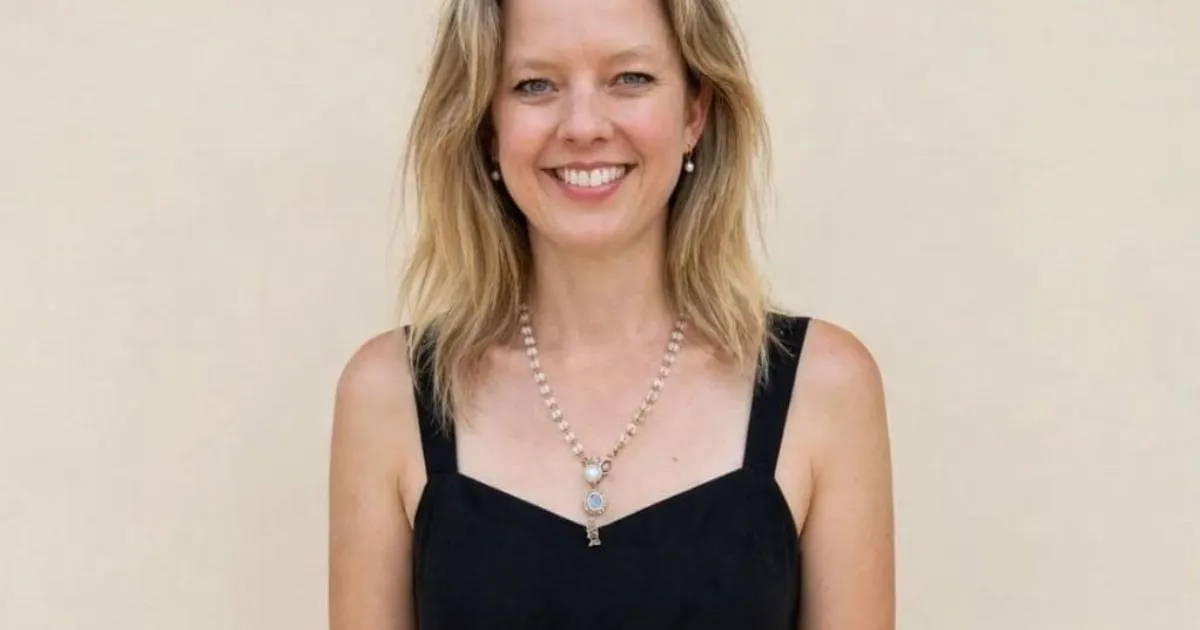
The quiet Norfolk village of Dersingham, a place more accustomed to the bucolic rhythms of farming life and the stately presence of the nearby Sandringham Estate, was plunged into profound shock and grief this week as news emerged of a violent death that shattered the peace of a family home. Hannah Cain, a mother-of-three described by friends as a “lovely human being,” was found with critical injuries at her £800,000 farmhouse on Fern Hill in the early hours of Sunday. Paramedics had rushed to the property after receiving reports of a medical emergency, but despite their best efforts, she was pronounced dead at around 2.30am. The discovery transformed a home that had hours earlier been filled with the joyful chaos of a children’s party into a crime scene, sealed off with police tape and guarded by officers who stood silent against the grey Norfolk morning. By Tuesday, the tragedy had taken on an even more staggering dimension when Norfolk Police charged Mark Cain, 45, also of Fern Hill, Dersingham, with Hannah’s murder. He was remanded in custody and is due to appear before Norwich Magistrates’ Court tomorrow. For the people who lived in this close-knit community, the news was almost too much to process. How could a woman who had been hosting a children’s party, a woman seen as warm and caring, be gone in such brutal and unexplained circumstances? The post-mortem examination, carried out yesterday, was unable to establish a definitive cause of death, leaving a cloud of unanswered questions that hung over the entire investigation and added to the collective anguish of everyone who knew her.
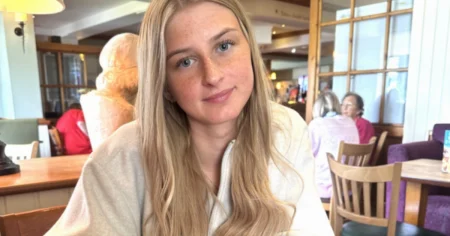
Before her death, Hannah Cain was known to the wider world as Dr Hannah Terry, a dedicated and compassionate general practitioner who had spent fifteen years caring for patients. She worked at Grimston Medical Centre, a practice that was so deeply affected by her death that it made the rare decision to close temporarily on Monday. In a carefully worded message to patients, the practice said: “We are sorry to let patients know that Grimston Medical Centre, including the dispensary, is temporarily closed due to extremely difficult circumstances affecting our practice team. We apologise for the disruption and appreciate your patience and understanding at what is a very difficult time for our colleagues.” The statement was understated, but the weight behind it was immense. For a medical practice to close its doors, even for a day, something truly devastating must have occurred. Dr Terry was more than a doctor to her patients; she was a familiar face, a source of reassurance, and a person who combined clinical expertise with genuine kindness. In addition to her NHS role, she ran Norfolk Sky Aesthetics, a beauty procedures business that allowed her to blend her medical training with a desire to help people feel more confident in their own skin. In a profile for that venture, she described herself as “a caring and professional doctor with a keen interest in aesthetics.” It was a self-description that captured her perfectly. She was a woman of many dimensions: a healer, an entrepreneur, a colleague, a wife, and above all, a devoted mother to three young children. Her death leaves a gap that will be felt not only in the hearts of her family but across the entire community that relied on her care.
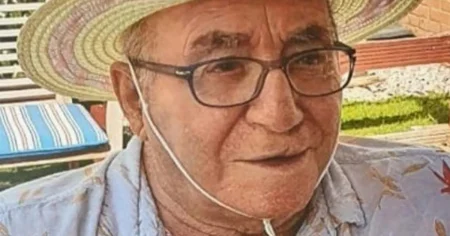
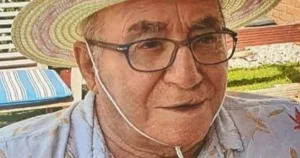
The tributes that emerged from those who lived closest to Hannah painted a portrait of a woman who was deeply loved and admired. One neighbour, speaking to the Fakenham Times, was visibly struggling to hold back tears as they described her as “a lovely human being with three gorgeous young children.” “Something’s obviously gone very badly wrong,” they added. “I’m just out of words, we all are.” Another neighbour, a man in his nineties who lived next door, recalled the simple, innocent interactions that had come to define his relationship with the family. He said that he rarely saw the adults, but that the children, two boys and a younger girl, were lovely. They would kick their football into his garden, and he would throw it back, or they would knock on his door and ask if they could come in and look for it. It was a tiny, almost ordinary detail, but it spoke volumes about the kind of family Hannah had raised. The children were polite, friendly, and comfortable in the world. Their mother had created an environment where they could be children, playing outside, making noise, and building relationships with the elderly man next door. Now, the footballs are likely to remain untouched, and the garden next door has fallen silent. Neighbours stood in small huddles, speaking in hushed tones, as forensic teams moved in and out of the property. Flowers began to appear, their bright petals offering a fragile counterpoint to the grim reality of police tape. For a community that prided itself on looking out for one another, the tragedy felt deeply personal. It was not just a news story; it was the loss of a mother, a friend, and a healer.
The legal proceedings now move forward under the weight of a murder charge. Mark Cain was arrested after Hannah’s body was discovered, and he was formally charged on Tuesday. He has been remanded in custody and is scheduled to appear before Norwich Magistrates’ Court tomorrow, where he will face the charge of murder. The post-mortem examination, which took place yesterday, has so far failed to establish a definitive cause of death, meaning further tests will be required. This only adds to the agonising uncertainty that has enveloped the case. The police investigation will now focus on reconstructing the events that led to Hannah’s death, from the children’s party on Saturday to the desperate call to the emergency services in the early hours of Sunday. No details have been released about what happened inside the farmhouse, and it is likely that much of the evidence will be presented in court. For now, the public has been reminded that the legal process is active and that everyone involved is entitled to a fair trial. The courts will weigh the evidence, and a jury will eventually determine the outcome. But for those who loved Hannah, the formalities of the justice system can seem cold and distant. No verdict can bring her back. No sentence can fill the void left in the lives of her children. And no legal outcome can erase the pain of knowing that she died in her own home, surrounded by the trappings of a life she had built with such care. The trial, when it comes, will be a painful chapter, but it is a necessary one if justice is to be served.
Beyond the courtroom, the tragedy has sent shockwaves through every corner of Hannah’s world. As a GP, she was a pillar of the local healthcare system, a woman to whom patients turned in moments of fear and uncertainty. The temporary closure of Grimston Medical Centre was a testament to the turmoil within the practice. Staff were not simply going through the motions of closing for a day; they were mourning a colleague and friend, someone who had shared their triumphs and their struggles. Patients who had relied on Dr Terry for years were left to navigate their own grief while also dealing with the practicalities of cancelled appointments and redirected prescriptions. But the impact went far beyond the medical practice. Hannah’s children, aged just young enough to still need their mother in so many ways, are now faced with a future that has been violently rewritten. They will grow up with memories, photographs, and stories, but not with the living, breathing presence of the woman who gave them life. Friends have spoken of her devotion to her children, of a mother who put them first in everything she did. The road ahead for them will be long and difficult, and they will need the support of family, friends, and professional counsellors to help them navigate their grief. The community, for its part, has already begun to mobilise. Offers of help have poured in, and people are determined to do whatever they can to support the family. Schools will need to provide extra care, neighbours will need to look out for one another, and the memory of Hannah will need to be preserved as a source of comfort, not just as a source of sorrow.
In the end, the story of Hannah Cain is not just one of crime and punishment; it is a story about the fragility of life and the resilience of the human spirit. It is about a street in Dersingham where children once kicked footballs into a neighbour’s garden, where a doctor took the time to make her patients feel at ease, and where a woman’s kindness left an indelible mark on everyone she met. All of that was stolen in the early hours of Sunday, and no amount of investigation will ever restore what was lost. In the coming months, the courts will do their work, and the media will eventually turn its attention elsewhere. But the loss will remain, woven into the fabric of the community. It will remain in the empty chair at the dinner table, in the unanswered phone calls, in the birthday cards that will never again arrive. The children will grow up with the knowledge that their mother was taken from them far too soon, and they will have to find a way to carry her memory forward. Perhaps the best tribute that can be paid to Hannah Cain is for those who knew her to remember her with love and to support one another in the days ahead. Her colleagues at the medical centre will need to rebuild not just their practice, but their sense of purpose. Her neighbours will need to continue the small acts of kindness that she herself might have shown. Her children will need to be surrounded by people who can tell them how much their mother loved them. The footballs will be kicked again, and the laughter of children will return to the gardens. But it will be different. It will always be different. As Mark Cain appears before the magistrates tomorrow, the search for justice will continue, but true justice, if such a thing exists, cannot undo the harm that has been done. What remains is the memory of a woman who was described as “a lovely human being,” a doctor, a mother, and a friend. She was irreplaceable, and she will be deeply missed.