

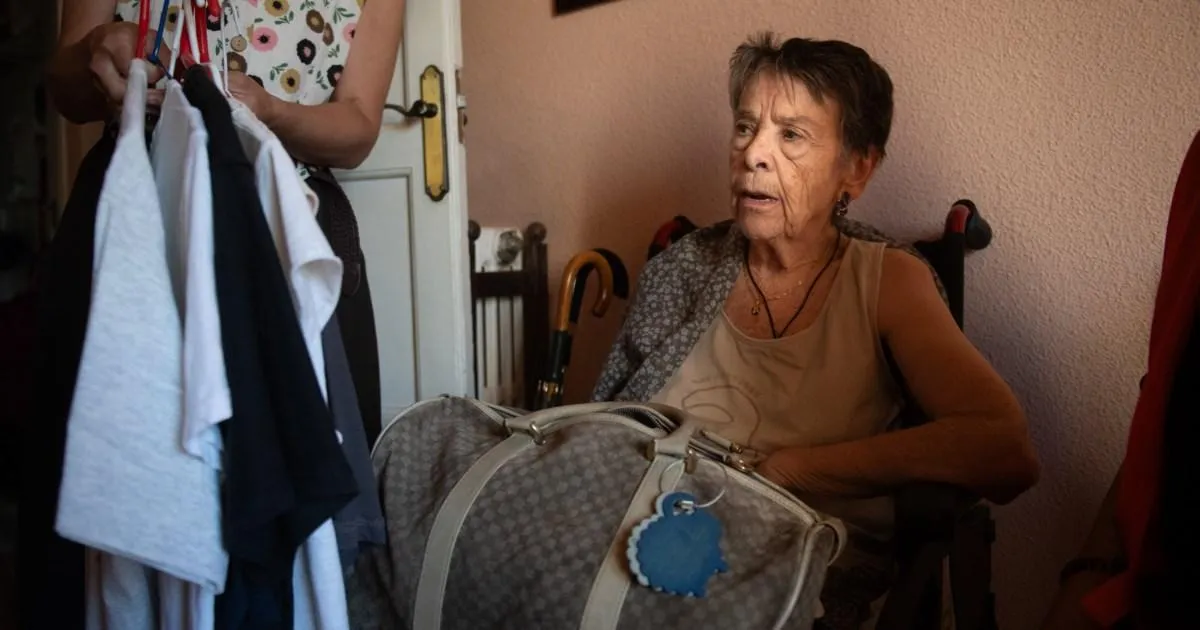
Sometimes the most political image in a country is not a speech or a slogan, not a parliamentary argument or a party manifesto. It is the face of an old woman being carried out of her front door on a stretcher, her eyes full of confusion and sorrow, her home behind her suddenly a closed chapter. Maricarmen Abascal has become that face. She is 87 years old, and she had lived in the same flat in Madrid for seventy years—a lifetime measured in birthdays, family dinners, ordinary mornings, and quiet evenings. The walls knew her history; the rooms held her memories. But a new landlord saw something different. Over recent years, the rent that had once been €440 a month rose to €2,650 a month, a jump of roughly 430 percent. For a pensioner, that was not just an inconvenience; it was an impossibility. She could not pay, and so she had to leave. In September, away from the comfortable language of housing policy, the eviction was carried out. Photographs showed her being taken out of the building on a stretcher, a woman who had spent seven decades in that place, suddenly reduced to a procedure. The image traveled across Spain and beyond, and it touched something raw. It was not simply one woman’s tragedy; it was the story of a country that had lost the basic understanding that a home is more than a financial asset. A court later said that Maricarmen could return to her apartment, but the relief could not erase the trauma. The photograph had already made her a symbol, and symbols, once born, are hard to put back in their box.
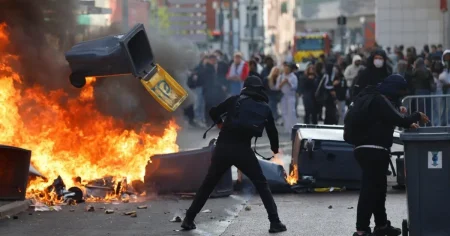
Her eviction was like a match dropped into a room filled with gas. It ignited a wave of anger that had been building for years, a slow, suffocating frustration over the cost of housing in Spain. People filled Madrid’s Puerta del Sol, the square that has seen many of the country’s most powerful social movements, and they turned it into a temporary city of protest. More than 1,200 tents covered the cobblestones, each one representing a person or a family with a story too heavy to carry alone. There were young people who had left their parents’ homes only to spend more than half their income on rent. There were graduates with good jobs and no real independence. There were grandparents who thought they had done everything right, who had worked and paid taxes and still faced the possibility of being pushed out of their neighborhoods. There were waiters, shop assistants, nurses, teachers—people who keep Madrid alive but can no longer afford to live there themselves. The protesters chanted for dignity, for rent controls, for public housing, for a future. They put up signs with messages like “Housing is a right, not a privilege” and “We are not evicted, we are human beings.” Unions responded by calling for a general strike, and the sense of crisis spread beyond the square. The anger was not just about one decreed measure or one political mistake. It was about the slow transformation of cities into investment portfolios, the explosion of tourist apartments, the relentless pressure on ordinary residents, and the feeling that the country had stopped caring about the people who built it.
At the political level, the crisis quickly moved from the streets to the chambers of power. Prime Minister Pedro Sánchez’s government tried to respond with two emergency decrees designed to calm the storm and offer protection to vulnerable tenants. The first proposed a moratorium on evictions that would last until 2030, a promise that families in desperate situations would not be thrown out of their homes while the country looked for a better answer. The second decree went after the booming tourist apartment sector, introducing a VAT increase on holiday rentals and offering tax breaks to landlords who agreed to lower rents for ordinary tenants. It was not a revolutionary transformation of the housing system, but it was a concrete effort, a hand stretched out to people who had been feeling invisible. Yet in the messy world of parliamentary politics, good intentions are not enough. The decrees were defeated in the Congress of Deputies, and the reason was as political as it was personal. Junts, the right-wing Catalan separatist party, voted against the measures, shattering Sánchez’s already fragile majority. The government was left in a deadlock, unable to pass the very laws that were supposed to address the country’s most urgent problem. With no viable path forward, Sánchez made a dramatic decision: he called a snap general election for November 29. Standing before the nation, he asked voters for a “larger progressive majority,” as if the solution lay not in the decrees themselves but in the numbers that would allow him to govern without being at the mercy of interested parties.
Sánchez has never been a stranger to political storms. He has survived coalition governments, no-confidence votes, and the constant pressure of a fragmented parliament since 2018. But this time the ground beneath him feels more fragile than ever. The polls are not friendly: his Socialist Party is trailing in most national surveys, and many voters seem tired, skeptical, or simply disappointed. Part of that weariness has been shaped by the scandals that have surrounded his administration. There are ongoing corruption investigations that have cast shadows over both Sánchez and his wife, and within his own party there have been allegations of sexual misconduct that have damaged public trust. His government has also faced sharp criticism over the handling of the migrant crisis in Ceuta, the small Spanish outpost on the coast of Morocco, where migration policy turned into a humanitarian pressure cooker. These problems have eroded the sense of moral authority that a left-wing government needs to lead in difficult times. And beyond Spain, the weight of history is pressing on his shoulders. If he loses, Spain would no longer remain one of Europe’s few significant left-leaning governments. Across the continent, far-right movements are rising, in France, in Germany, in countries where democracy once felt stable. A conservative turn in Madrid would add another tile to that worrying mosaic. Sánchez is gambling that the wave of public anger over housing will push voters toward his side, but a gamble is not a guarantee, and the faces in Puerta del Sol will not simply vote out of gratitude.
On the other side of the political divide, the opposition has prepared its own narrative. Alberto Núñez Feijóo, the leader of the People’s Party, responded to the snap election by promising a different approach. His policies are simple and market-friendly: cut taxes, encourage growth, and build more homes. He has pledged to double the pace of housing construction in Spain, aiming for 200,000 new homes a year, a target that sounds ambitious and practical. But there is a deeper story behind those numbers. Feijóo’s party is expected to remain the largest in parliament, but it will almost certainly need support from Vox, the far-right anti-immigrant party, to form a government. That prospect worries many Spaniards who see Vox as a harsh and divisive force, a party that offers answers by pointing fingers at foreigners rather than by addressing the structural flaws of the housing market. A coalition with Vox would not just change the government; it would change the tone of the country. It would likely mean a stronger emphasis on law and order, a tougher stance on immigration, and a more aggressive defense of property rights. For those who have been sleeping in tents in Puerta del Sol, the promise of more houses sounds good, but they know that cutting taxes and freeing the market will not automatically protect a pensioner from a 430-percent rent increase. They have seen that story before. The opposition says it will build more; the question is whether it will care more.
In the end, the Spanish election is not just about political parties and parliamentary numbers. It is about a very old woman and what her story says about the country she leaves behind. Maricarmen Abascal has been told by a court that she may return to her flat, but the reality is more complicated. The landlord is still there. The rent is still far beyond what she can pay. The housing market that allowed her situation to reach the point of eviction has not suddenly transformed. She has become a symbol, but symbols cannot pay bills and symbols cannot repair the trauma of being wheeled out of your own home in front of cameras. What she represents, however, is a test for the entire political system. Spain has a chance on November 29 to decide what kind of society it wants to be. It can continue to treat housing as a commodity, a place where profit matters more than people, where tourist apartments devour neighborhoods and where pensioners are forced to beg for a room. Or it can choose a different path, one that places dignity over investment returns, and humanity over ideology. The protesters in Puerta del Sol, the unions ready to strike, the millions of families holding their breath every month when the rent is due—they are all waiting for more than a campaign promise. They are waiting for a country that understands that a home is the foundation of a life. Maricarmen spent seventy years in that apartment. She should not have to spend her final years fighting for the right to die in peace in the place she loved. And no one else should, either.