


It was supposed to be just another weekend afternoon in Asunción, the kind of lazy, humid Saturday when people run errands, visit family, and take their dogs for a walk in the softening evening light. But the sky had other plans. What began as a distant rumble quickly turned into something far more sinister, as dark clouds rolled in with terrifying speed and the air grew thick and heavy with tension. Then the hail came. Not the small, harmless pellets that bounce off rooftops and melt within minutes, but stones the size of tennis balls, heavy, jagged, and driven by winds that reached nearly sixty miles per hour. They slammed into cars, shattered windscreens, dented roofs, and turned the streets of Paraguay’s capital into a battlefield of ice. Commuters who had been calmly driving home suddenly found themselves trapped in a waking nightmare, forced to pull over wherever they could. Some raced into petrol stations, abandoning their vehicles under the canopies in the hope that the thin metal roofs would offer some protection. Others huddled inside shops and doorways, pressing their faces against glass, watching in disbelief as white projectiles pounded the pavement. The noise was deafening. Witnesses later described it as sounding like gunshots, a relentless, angry barrage that made conversation impossible and fear unavoidable. The hail was so large that when it struck the flooded streets, it sent up massive splashes like small explosions. Within minutes, the city was transformed. Trees were stripped of their leaves, power lines were down, and thousands of homes were plunged into darkness. For anyone caught outside, there was no safe place to hide, only the desperate hope that the storm would pass before something worse happened. And in the middle of all that chaos, one small, ordinary moment captured the hearts of people around the world.
Among the many videos that flooded social media, one stood out because it was not about destruction or property damage, but about a man and his dog. The owner had been walking his pet when the storm broke, and he did what most people would do: he opened his umbrella, thinking it would be enough. But the hailstones were far too big and too violent for an umbrella to stop. As the ice crashed down around them, the dog stood confused and terrified, with nowhere to run. The man seemed torn, trying to shield himself while also urging the animal to move, but the storm was unforgiving. Then came the moment that made the video go viral: a giant hailstone struck the dog directly on the head. The animal stumbled, dazed, clearly knocked off balance by the blow. It was a horrifying sight, and the owner immediately turned around, abandoning any idea of continuing the walk, and rushed back toward the safety of their home. The dog followed, unsteady but still on its feet, and the two disappeared through a gate as another volley of ice hammered the street behind them. Viewers around the world watched with a mixture of relief and sorrow, because the video captured something deeply familiar: the helplessness people feel when nature turns violent, and the bond between humans and their pets that makes us want to protect them at all costs. It also served as a reminder that storms like this do not care who you are or what you love. They strike indiscriminately, turning everyday routines into survival situations. The man with the umbrella was not a hero or a villain; he was simply an ordinary person caught off guard, doing his best in a moment that none of us are truly prepared for.
Across the city, the damage was extensive and heartbreaking. Cars were left with shattered windscreens and dented bodies, their alarms wailing in the streets until the batteries gave out. Homes lost roof tiles, windows were broken, and in some neighborhoods, entire walls were stained by the relentless rain that followed the hail. Thousands of people were left without electricity, and repair crews would spend days trying to restore power to the affected areas. Football matches, a beloved escape for many Paraguayans, were temporarily suspended as players and spectators scrambled for cover. The storm did not discriminate between rich and poor; it hammered luxury cars and humble motorbikes alike, and it forced everyone to confront the same brutal reality. At petrol stations, drivers huddled together under the canopies, strangers suddenly united by a shared threat. Some stood in silence, watching the ice pile up on the ground like snow in a winter landscape that had no business being there. Others filmed the scene on their phones, capturing images that would later be shared around the world. The hail piled up so high in places that it looked like a bizarre mid-summer snowfall, except that these white chunks were hard as rocks and capable of causing serious injury. Emergency services were stretched thin, and hospitals reported people arriving with bruises, cuts, and fractures caused by the falling ice. It was a reminder that extreme weather is not just an inconvenience or a spectacle; it is a real danger to life and limb. For those who lived through it, the sound of hail on a roof will never sound the same again.
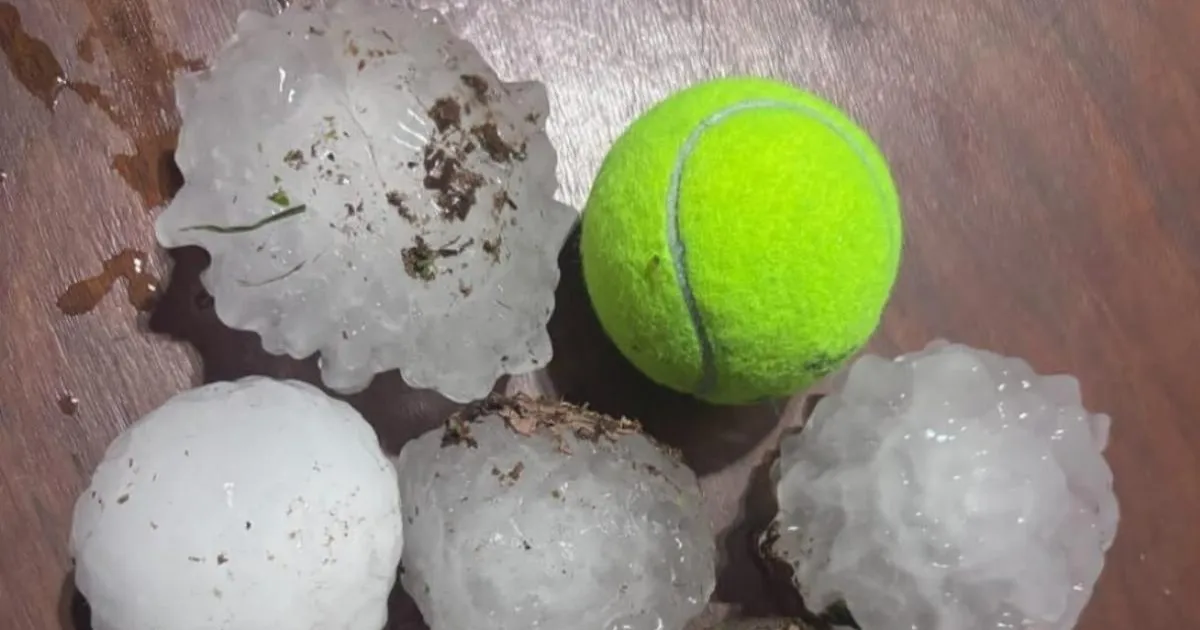
In the aftermath, as the skies cleared and the sun began to peek through the clouds, a strange sort of calm settled over Asunción. People emerged from their hiding places, blinking in the light, and surveyed the damage with a mixture of shock and relief. Some took photos of the hailstones, holding them up next to tennis balls to show just how massive they had been. The comparison was striking: the hailstones were almost exactly the same size as the bright yellow balls used in the sport, and in some cases even larger. These photos spread quickly online, because they made the impossible feel tangible. It was hard to believe that something so heavy and so destructive could fall from the sky on a warm weekend afternoon. Social media became a space for collective processing, with people sharing their own videos and stories. One person wrote, “What happened was unbelievable,” and another added, “I’ve never seen such a violent storm.” These simple words captured what many were feeling: a sense that the world is changing, and that the weather we once took for granted is no longer predictable. There was also a dark humor in some of the posts, a way of coping with fear by making jokes about the absurdity of it all. But beneath the laughter was a genuine anxiety. People who had lived in Asunción for decades said they had never witnessed anything like it. The storm was a warning, a glimpse of a future in which extreme weather events become more frequent and more intense. And as the sun dried the streets and the hail melted away, the questions lingered: How do we prepare for a world where the sky itself becomes a threat? And what happens when the storms keep getting worse?
The freak weather phenomenon did not arrive in a vacuum. Just days before the hailstorm, climate scientists had issued urgent warnings about this year’s El Niño, describing it as potentially the worst in recorded history. El Niño is a natural climate pattern that warms the surface of the Pacific Ocean and affects weather around the globe, but its effects are being amplified by human-caused climate change. Warmer oceans mean more energy in the atmosphere, which means more extreme weather events: stronger storms, heavier rains, more intense heat waves, and yes, even massive hailstones. The connection may not seem obvious at first, but the science is clear. A warmer atmosphere can hold more moisture, and that moisture fuels the powerful updrafts that create severe thunderstorms. When those updrafts are strong enough, they can carry hailstones high into the sky, where they grow larger and larger before finally falling to earth. The result is what Paraguay experienced on Saturday: ice the size of tennis balls crashing down from a sky that, just hours earlier, had seemed peaceful. The same report that warned about El Niño also predicted a devastating human toll, with as many as 451,000 additional heat-related deaths between June and the end of February next year. That number is almost too large to comprehend, but it puts the hailstorm in perspective. Extreme weather is not just a series of isolated incidents; it is part of a larger pattern that is already affecting millions of people. For the residents of Asunción, the storm was a direct, personal encounter with that pattern. It was a reminder that climate change is not a distant problem for future generations. It is happening here, now, in the form of shattered windscreens and frightened dogs and neighborhoods without power.
Perhaps the most human response to such a storm is the impulse to reach out and connect with others. In the hours after the hail stopped, social media was filled with videos and photos and messages, not just from Paraguay but from people all over the world who had seen the footage and felt a pang of sympathy. Strangers offered prayers and words of support. Friends and family members checked on each other, making sure everyone was safe. Neighbors helped each other cover broken windows and clear debris from the streets. This is what resilience looks like: not the absence of fear, but the determination to keep going despite it. The man with the umbrella and his dog became a symbol of that resilience, a small story of vulnerability and survival in the middle of a much larger disaster. And the people who posed for photos with the hailstones were not being flippant; they were trying to make sense of something that felt unreal. Holding a piece of ice that could have killed someone, placing it next to a tennis ball, and sharing it with the world was a way of saying, “Look at this. This really happened. We are still here.” In the end, the storm will fade from the news cycle, and life in Asunción will slowly return to normal. But the memory will stay with those who lived through it, and the lessons should stay with all of us. Nature is powerful, unpredictable, and increasingly dangerous. We cannot control the weather, but we can control how we prepare for it, how we respond to it, and how we treat each other when it strikes. The hailstorm in Paraguay was a warning, but it was also a reminder of the human spirit’s ability to endure, to adapt, and to find light even after the darkest clouds have passed. As the ice melts and the repairs begin, the people of Asunción will rebuild, as people always do. And the rest of us would be wise to pay attention, because the sky that brought them to their knees could one day bring us there too.