


Daria Shipilova was only twenty-eight years old, a young researcher with her whole life ahead of her, working at the Irkutsk Anti-Plague Research Institute in Siberia, a facility dedicated to studying some of the most dangerous bacterial and viral infections known to humanity. On October 1, she died. Russian health authorities initially described her death as caused by a “pneumonia of unknown origin,” a phrase that immediately set alarm bells ringing across the world. The story that emerged in the following days was straight out of a thriller: a lab worker infected with an unidentified pathogen after allegedly dropping a test tube, a hospital in the town of Shelekhov placed under partial lockdown, and nearly two hundred people who had come into contact with her placed under strict medical observation. The media quickly dubbed it the “Russian plague,” conjuring images of medieval pandemics and zombie films. But behind the sensational headlines was a deeply human tragedy. Shipilova was not just a cautionary tale; she was a person who spent her days trying to protect others from invisible threats, and she died doing exactly that. As the world watched, the question on everyone’s mind was not just whether this was the beginning of a new outbreak, but whether her death could have been prevented, and whether the rest of us should be afraid. The answer, according to infectious disease experts, is far more nuanced than the headlines suggest. While the situation is serious and warrants close monitoring, it is also a reminder that scientists, laboratories, and public health systems exist precisely to catch such threats before they spiral out of control.
What exactly happened to Daria Shipilova remains unclear, and the conflicting reports only add to the unease. Russian outlet People of Baikal reported that she broke a test tube in the lab, potentially exposing herself to a pathogen she was handling. Yet inspections reportedly found none of the known pathogens that researchers work with in her body. Another Telegram channel, Baza, claimed she became ill while returning from Buryatia, where an outbreak of plague had erupted among squirrels, but local officials denied this too. What is certain is that Shipilova was treated at Shelekhov Hospital for two days, and parts of the hospital were quarantined after her death. Nearly two hundred people who had come into contact with her were placed under medical observation, and, for now, none have shown signs of illness. This dramatic response may seem excessive, but infectious disease experts say it is exactly what should happen in such situations. Professor Malick Gibani, an infectious diseases expert at Imperial College London, told reporters that it was not clear whether this was a confirmed case of plague or whether there were any suspected secondary cases. He expressed hope that more information would emerge over time. In other words, the quarantine was a precaution, not proof that a plague outbreak was underway. It reflected the reality that when a researcher at an anti-plague institute dies of a mysterious respiratory illness, public health officials cannot afford to take chances. The stakes are simply too high. Until tests confirm exactly what killed Shipilova, the world is left with speculation, fear, and the agonizing uncertainty that accompanies any unknown pathogen.
To understand why this story has captured global attention, it helps to understand the disease at the centre of it: pneumonic plague. Unlike the more famous bubonic plague, which caused the Black Death in the Middle Ages and is transmitted by fleas from infected rats, pneumonic plague infects the lungs and is spread through respiratory droplets. When an infected person coughs or sneezes, the bacteria, Yersinia pestis, can be passed to others through the air. This makes pneumonic plague the rarest but most infectious of the three main forms of plague, which also include bubonic and septicemic plague. The symptoms are terrifying: high fevers, shortness of breath, shaking chills, headaches, chest pain, pneumonia, and the production of bloody or watery mucus. Death can occur quickly, often within days of the first symptoms, which is why pneumonic plague has a mortality rate of nearly one hundred percent if left untreated. The bubonic form, by contrast, causes painful swelling of the lymph nodes, known as buboes, and has a mortality rate of around sixty percent when untreated. Septicemic plague, which occurs when the infection spreads to the bloodstream, is just as deadly as the pneumonic form. The word “plague” itself carries centuries of historical trauma, evoking images of mass graves, quarantined cities, and the collapse of societies. It is no wonder that the mere mention of a plague case sends chills down the collective spine. But modern medicine has changed the equation. While the disease remains endemic in parts of the world, including the western United States, it is no longer the unstoppable killer it once was, provided it is caught early and treated properly.
So, does pneumonic plague pose a pandemic risk? According to experts, the short answer is no, at least not on the same scale as COVID-19. Professor Brendan Wren, co-director of the Vaccine Centre at the London School of Hygiene and Tropical Medicine, put it bluntly: “Not really but we need to monitor.” Yersinia pestis is not nearly as transmissible as SARS-CoV-2, the virus behind the global pandemic that changed our lives in 2020. The plague bacterium spreads poorly between humans, which is why outbreaks tend to be localized rather than global. Professor Gibani echoed this view, noting that while plague is the archetypal bacterial pandemic pathogen, we are now living in a completely different era. In the past, plague pandemics swept through populations with no understanding of germ theory, no antibiotics, and no coordinated public health response. Today, we have effective treatments, rapid diagnostics, and even vaccines in development. The current situation in Russia is being monitored by global health authorities, including the UK Health Security Agency, but there is no indication that this is the start of a new Black Death. Instead, experts see this as a reminder that plague is still with us, lurking in animal reservoirs and occasionally spilling over into humans. The key is surveillance and rapid response, exactly what we have seen in Shelekhov. The fact that nearly two hundred contacts are being monitored and none have fallen ill is a good sign, not a cause for panic. It shows that the system is working, and that the lessons of the past have not been forgotten.
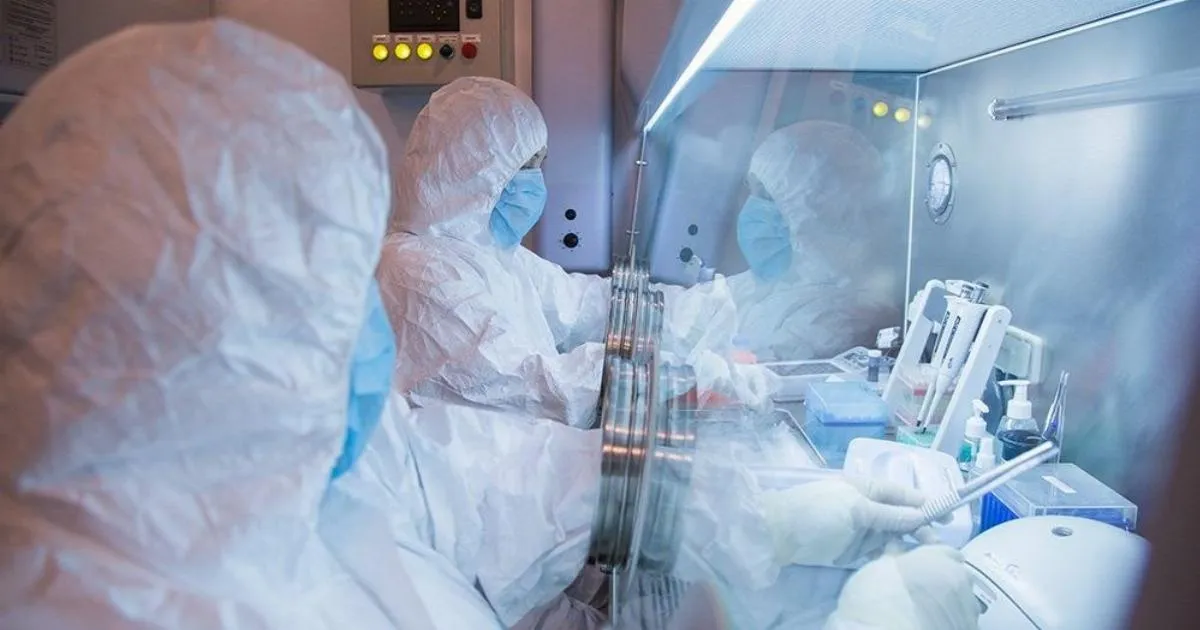
If there is any comfort to be found in this story, it is that plague is treatable. Antibiotics, the drugs that kill or slow the growth of bacteria, are highly effective against Yersinia pestis if administered early. Early treatment can be the difference between life and death, which is why anti-plague laboratories like the one where Shipilova worked are so vital. These labs are not just training grounds for future scientists; they are frontline defenses against some of the most dangerous pathogens on Earth. They study high-risk infections, develop new treatments and cures, and work to understand how these diseases evolve and spread. Professor Wren emphasized that such labs are essential for making improved vaccines that could be used in regions where plague is endemic. But there is a growing concern: some plague strains are starting to develop resistance to antibiotics. If Shipilova was exposed to a resistant strain, her treatment options would have been severely limited, and that may explain the tragic outcome. This is a sobering thought, but it is also a call to action. It means that investing in research, diagnostics, and new antimicrobial therapies is more important than ever. It also means that the work of researchers like Shipilova, who handled these dangerous pathogens daily, must not be taken for granted. They are the unsung heroes of public health, often working in obscurity, risking their lives so that the rest of us can sleep safely. Her death is a reminder of the courage it takes to fight invisible enemies, and of the sacrifices that are made in the name of science.
As the world waits for more information about what killed Daria Shipilova, the most important thing is not to give in to fear but to honor her memory by demanding transparency, supporting scientific research, and trusting the public health systems that exist to protect us. The story has all the elements of a Hollywood horror film: a mysterious pathogen, a quarantined hospital, a dead scientist, and unanswered questions. But real life is not a movie. There is no alien zombie horde waiting to break out of Siberia. There are just bacteria, humans, and the fragile systems we have built to keep each other safe. The experts are clear: the risk of a global plague pandemic is low, and the actions taken in Shelekhov are exactly what should happen when an unknown illness appears. Nearly two hundred people have been monitored, and none have shown symptoms of pneumonic plague. That is a testament to the effectiveness of modern epidemiology. It is also a reminder that we cannot become complacent. Antibiotic resistance is a growing threat, and pathogens like Yersinia pestis will continue to evolve. The best way to honor Daria Shipilova is to learn from her death, to ask the difficult questions, and to ensure that the next time a lab worker falls ill, we are better prepared, more informed, and less afraid. Her life and work mattered. Her death should not be forgotten, but it should also not be used as a reason for panic. Instead, let it be a call for vigilance, empathy, and a renewed commitment to the scientists who stand guard against the invisible dangers that we hope never to face.