
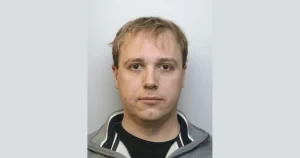

Benjamin Braithwaite was a 35-year-old man from Leeds, and like so many British travelers, he had gone looking for something in the warm, ancient landscape of Sicily. The island is a place that has drawn visitors for centuries with its mix of sweeping coastline, olive groves, and mountain villages, but Benjamin’s journey took a turn far from the typical tourist trail. Instead of the sun-soaked port streets that thousands of visitors pass through each year, he ended up at a remote mountain farmhouse near the small village of Canicattini Bagni, in the province of Siracusa. There, last month, his body was discovered in a makeshift tent. The initial reports were strange, unsettling, and easy to read as a sensational headline: a British tourist dead at a gathering organized by a group described as a “faerie cult.” But behind those words was a man whose life was far more complicated than a news story can capture. Benjamin had reportedly adopted the pseudonyms “river” and “wasp” during his time at the farmhouse, names that suggest a person trying on a new identity, perhaps searching for a different way of being in the world. He had also been estranged from his mother, Angelique Wildbore, since he was around eighteen years old, a rift that lasted nearly two decades and meant that, in some ways, he was already living apart from his family long before he arrived in Italy. His mother has declined to comment on his death, a silence that may speak to decades of pain and the shock of losing a child in circumstances no parent could have imagined.
The group Benjamin had joined is known as the “radical faeries,” a loosely organized queer nomadic community that has existed for decades in various forms. It is not a single, formal organization but rather a network of people who are drawn to alternative ways of living, often outside the boundaries of mainstream society. The gathering he attended was described by Eurofaeries, one of the groups involved, as “a radically inclusive gathering of queer people coming together to celebrate the autumn equinox.” For many participants, these events are a chance to feel a sense of belonging that they may not have found elsewhere, especially for LGBTQ+ people who have experienced rejection, isolation, or discrimination in their everyday lives. The radical faerie movement grew out of a desire to create spaces where people could explore identity, spirituality, and community without being forced to fit into conventional roles or expectations. They often meet in rural places, embrace nature, create rituals, and lay down temporary rules that feel freer and more expressive than the outside world. But the freedom comes with risks, and in this case, those risks appear to have proven fatal. The farmhouse setting was a world away from the cities and towns where most of the attendees likely lived ordinary lives. There, participants engaged in what have been described as unusual rituals, including the use of drugs. What might have been intended as a space for liberation and self-discovery became something far darker for Benjamin. Exactly what happened in his final hours remains unclear, and the investigation is still open, but the circumstances surrounding his death have raised difficult questions about the line between spiritual exploration, sexual freedom, and harm.
A whistleblower who was once part of the community has spoken about the darker side of the scene, suggesting that groups like this can attract people at their most vulnerable moments. He said that while “90%” of the activities at such gatherings are harmless, there is a “malevolent” undertone to certain groups and rituals that veer “close to the edge.” He specifically suggested that Benjamin could have been the victim of rape while under the influence of drugs, or that he might have been pressured into a dangerous “choking sex” game. It is important to note that these are allegations and possibilities raised by one former insider, not established facts, and the authorities have not confirmed or denied them. Still, the claims point to a worrying pattern: people who are searching for connection, meaning, or escape can sometimes find themselves in situations where their boundaries are blurred or ignored, especially when substances are involved. The whistleblower’s comments should not be dismissed, but they also need to be handled with care. He admitted that most of what happens at faerie gatherings is benign, even beautiful, but he described an undercurrent that can turn toxic in certain groups. His words paint a picture of a community that is not monolithic, a mix of sincere seekers and more troubling figures, all brought together in spaces that are intentionally unregulated and outside the usual safeguards of society. For someone like Benjamin, who had already been disconnected from his family for many years, the pull of a group that promised radical acceptance and freedom may have been especially strong. And that same acceptance, without limits or protections, may have left him exposed to dangers he did not see coming.
The scene that detectives discovered when they found Benjamin’s body was one that can only be described as jarring. Alongside his body, there were various injuries, drugs, and ritualistic objects, including what was described as a slab depicting a half man, half goat. The image is unsettling, and it is easy to imagine how such details could dominate the news coverage, with all the shock value that comes with secrets in the Sicilian hills. But for those who loved Benjamin, the evidence is not a horror story; it is the painful remnant of his final moments. Every object, every mark, every unanswered question is part of the tragedy of a life lost too soon. The Carabinieri, Italy’s military police, are keeping an open mind about the case. They have declined to call the death a murder, which suggests that the investigation has not yet reached a firm conclusion about what happened. It may be that Benjamin died from an overdose, from an accident, or from violence, or from some combination of circumstances. The uncertainty is perhaps the hardest part for anyone left behind. His mother has chosen not to speak publicly, and that choice deserves respect. Grief in such strange and public circumstances must be extraordinarily difficult, and the pressure of media attention can only make it worse. Benjamin was more than a collection of headlines. He was a man who traveled to a beautiful place, who took on new names, who lived at the margins, and who died far from his roots. Whatever the investigation ultimately reveals, the loss is real, and the people who remember him are left to carry the weight of what happened in a makeshift tent at a farmhouse in Sicily.
The local reaction to Benjamin’s death offers another layer of complexity. The residents of Canicattini Bagni and the surrounding area have spoken about the group they call the “flower children,” a phrase that sounds almost gentle compared to the darker descriptions in the news. Giuseppe, a 38-year-old local, called the case “very strange affair” and said that the group usually “kept themselves to themselves.” The town’s mayor, Paolo Amenta, said he was shocked by the news, and he described the nomads as people who had never caused any trouble and were usually just “seeking a freer life.” He said that when he had the chance to speak with them, they always conveyed a strong sense of serenity, which made the tragedy all the more sad and surprising. These local voices matter because they remind us that the media portrait of a sinister cult does not necessarily match the everyday reality experienced by people who lived alongside the group. To the villagers, the faeries were not a threat; they were an occasional presence, perhaps unusual, perhaps even a little puzzling, but not dangerous. This does not mean the whistleblower’s concerns are untrue, but it shows how a single event can be interpreted differently depending on perspective. The same gathering that felt like a peaceful expression of freedom to some participants and neighbors may have contained hidden currents of risk. It also serves as a reminder that human beings are not easily categorized. The group was made up of individuals, some probably seeking lightness and connection, others perhaps carrying unresolved pain. The tragedy of Benjamin’s death is that it took place in a community that was supposed to be safe, a place where people went to escape the judgment of the outside world, and yet something went terribly wrong.
Looking ahead, the radical faeries are set to return to Featherstone Castle in Northumberland next month, a Grade I-listed building that will be transformed into a “sex positive” space where guests are free to wander around the castle naked and may witness “faeries connecting with one another sexually.” The event is part of a broader pattern of gatherings that have at times taken a turn for the worse, including previous meet-ups in Northumberland and eastern France. It would be easy to call for these events to be banned, but the truth is more complicated. People have the right to gather, to explore their identities, and to create communities that feel meaningful to them. The challenge is how to protect vulnerable people without stripping away the very freedom that makes such spaces valuable. Benjamin Braithwaite’s death is a tragedy that should provoke reflection, not just about one group, but about how we care for the people who feel like outsiders, who seek belonging in places that may not always be safe. The story is not a simple moral lesson. It is a reminder that the search for acceptance can lead people into beautiful and dangerous places at the same time. Benjamin may have been looking for a freer life, as the mayor said, but freedom without safety can become its own kind of trap. As the investigation continues, what remains is a human story: a son, a traveler, a man who called himself “river” and “wasp,” found alone in the Sicilian mountains. His death will be studied, debated, and turned into lessons and warnings, but none of that will bring him back. Perhaps the most honest response is to hold the complexity without rushing to judgment, to remember that the people involved were not caricatures, and to hope that any other vulnerable person looking for connection will find support before it is too late.