


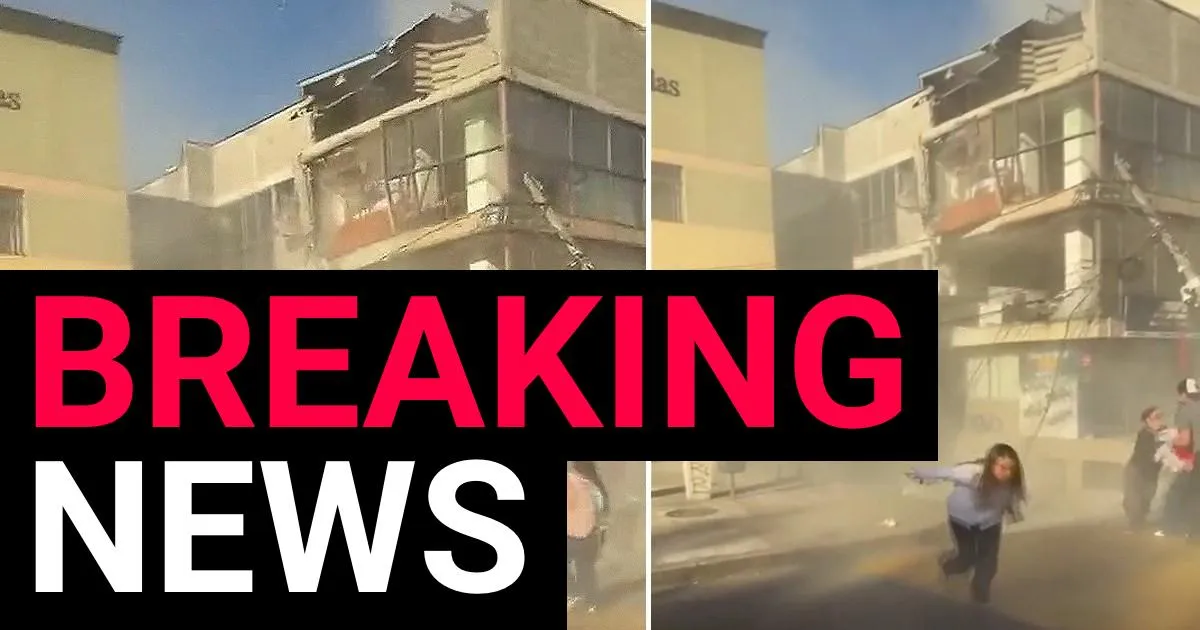
The earth shook with terrifying force across Colombia today as a powerful 7.4-magnitude earthquake tore through the Chocó province. Centered near the town of San José del Palmar at a depth of 79 kilometers, the quake sent shockwaves rippling across the nation’s Pacific coast, leaving a trail of destruction in its wake. For those living in the region, the morning began with the harrowing sound of structural failure as buildings groaned and crumbled. Footage captured by terrified witnesses shows frantic scenes of people sprinting for safety, desperately dodging falling concrete as homes and offices disintegrated around them.
The provincial capital of Quibdó appears to have borne the brunt of the disaster, with local authorities reporting multiple injuries and the grim reality of citizens trapped beneath massive slabs of debris. Governor Nubia Carolina Córdoba-Curi addressed the chaos via social media, expressing deep concern regarding the inevitability of aftershocks. As emergency teams scramble to reach those pinned under wreckage, the focus remains on damage assessments, though the visual evidence of ruined infrastructure suggests that the path to recovery for these communities will be long and arduous.
The impact was far-reaching, turning ordinary mornings into nightmares in cities far from the epicenter. In Cali, the mayor reported at least 20 building collapses, with debris showering parked cars and streets. Meanwhile, in the capital city of Bogotá, families were forced to abandon their breakfast tables, fleeing their homes in their sleepwear as the ground buckled beneath them. Reports of structural integrity issues have surfaced as far away as Manizales, where the historic Cathedral Basilica of Our Lady of Rosary sustained enough damage to raise fears of a potential collapse, while the coastal city of Medellín initiated emergency evacuations.
This seismic event is a painful reminder of the volatility inherent to the region’s geography. Colombia sits at a dangerous intersection where the Nazca, Caribbean, and South American tectonic plates meet, creating a perpetually restless landscape prone to major tremors. Scientists classify earthquakes above a 6.0 magnitude as strong, and a 7.4 magnitude event is considered a major catastrophe capable of leveling dense urban centers. The violence of these tremors was so profound that they were even felt across the border, sending vibrations all the way to Quito, Ecuador.
Coming so soon after the devastating seismic activity that struck Venezuela in late June, this disaster has hit a region already weary from loss. The memory of the Venezuelan quakes—which claimed over 6,100 lives and left tens of thousands of families shattered—remains fresh, highlighting the terrifying speed with which life can be upended in this part of the world. As rescuers continue their grueling work to locate survivors in the rubble, the international community watches with heavy hearts, hoping for miracles amidst the concrete and dust.
For the people of Colombia, the days ahead will be defined by an agonizing wait for news of missing loved ones and the daunting task of rebuilding shattered neighborhoods. The resilience of these communities will be tested as they grapple not only with the physical destruction of their homes but with the lingering trauma of a day where the very ground they stand on turned against them. For now, the priority remains life-saving intervention, as families hold their breath, hoping the earth will remain still while the long process of healing begins.