

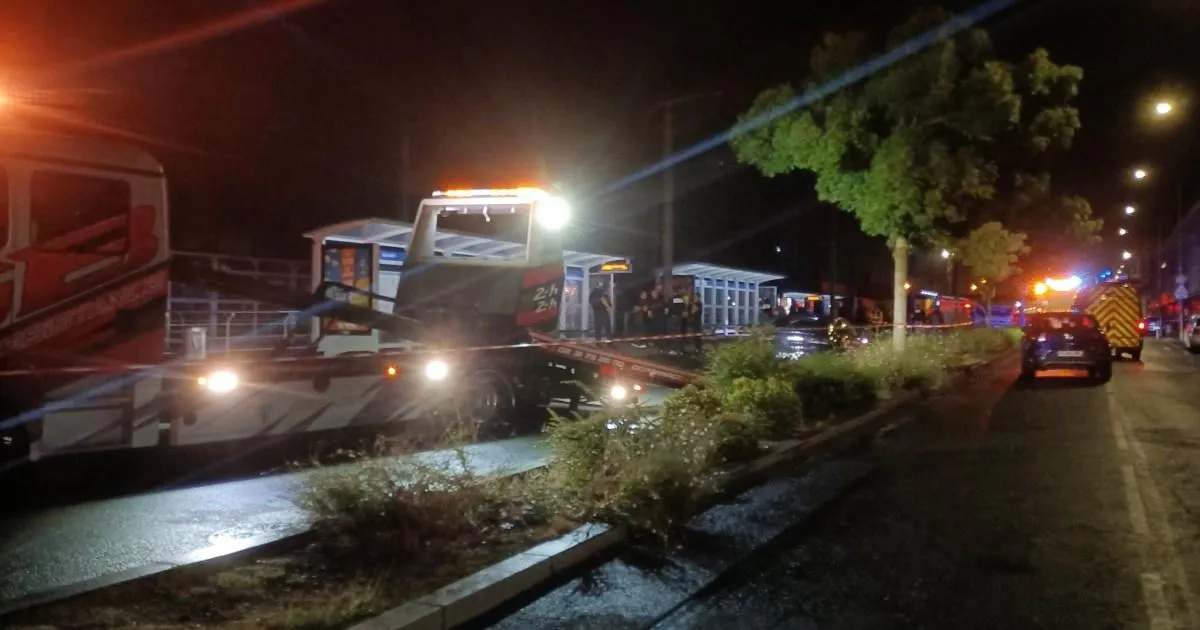
The quiet evening in Caen, a historic hub of Normandy known for its cobbled streets and serene abbey, shattered at approximately 10 PM when a vehicle tore through the fabric of an ordinary night. Outside a local bar near the train station, a crowd had gathered, the remnants of a bar fight still hanging in the air. The low murmur of conversation, the clinking of glasses, and the laughter of young men expecting a routine evening vanished in a screech of overturned metal and the horrifying thud of a car driving into a pack of bodies. The result was a scene of absolute carnage—sirens piercing the night sky, frantic shouts, and the unmistakable red and blue lights of emergency vehicles painting a devastating picture across the pavement. The initial toll was staggering: one person dead, several left in critical condition, with three more injured, all male between the ages of 17 and 40. The street opposite the station became a battlefield of ambulances as paramedics scrambled to stabilize the victims. Bruno Coutanceau, a top security official, was quick to manage the panic, stating that terrorist motive is not currently on the table, but that didn’t stop a chilling shockwave from rippling through this city and the entire nation, which has been haunted by such deliberate acts of violence.
Behind the dry statistics of official counts lies a more haunting human tragedy—a group of individuals who were far more than black numbers on a police report. The victims, all men between the age of 17 and 40, were part of the vibrant social life of the city, their ordinariness hollowing the blow. For the family of the deceased, this was a father, a son, or a brother who stepped out for an evening, missing his return home, only to be met by silence and the crackling voice on the phone telling them to rush to the hospital. The seven men fighting for their lives in the intensive care units represent a whole spectrum of shared futures—one was a university student, perhaps thinking about exams, another a tradesman planning a weekend—each liable to be denied the mundane miracle of tomorrow. For hours, the hospital hallways became temples of fear, where families clinging to the paperwork of admission, tears sliding down cheeks, exchanging glances with strangers in the same situation—knowing that the same machine is keeping their loved one alive. Meanwhile, the three men with minor injuries shuffled through the chaos in a daze, the bruise on their body overshadowed by the psychological scars of seeing their friends fall, their own laughter trapped in the spectacle of twisted metal.
The unidentified male suspect, a 26-year-old native of Russia, was arrested roughly twenty kilometers away in the coastal port of Ouistreham, shedding light on the chilling, surreal dichotomy between action and detection. To the law enforcement officials frantically tracking him through the night, the search now turned from emergency containment to the mosaic of a motive. Prefect David Claviere revealed that this was a deliberate act—the car intentionally targeting those pedestrians—which dispels any hope of a tragic accident. Yet, the contradictions remain starkly perplexing: the man had no prior criminal history, no record of radicalization, and no links to a terrorism network, with police files only marking minor traffic offenses. This middle-ground profile is perhaps the most unnerving for the detectives from the Specialised Crime Division, who is now charged with piecing together what drove a seemingly ordinary individual to stake his blood with such violence. Was this a terrible exacerbation of an earlier bar fight reported at the scene, where anger spilled into the streets? Or was it an inexplicable, spontaneous explosion of rage? As the suspect sits in exclusive custody, his silence becomes a formidable adversary, while the nation holds its breath for the investigation to distill a motive from the confused whispers of human grief.
Across the city, the swirling chaos of the event was confirmed by a volume of visual evidence streamed on social media, turning every smartphone owner into a reluctant witness of dark, auditory night. Videos captured the frantic throng of pedestrians desperately hoping barriers around police cars, the crumpled body of a car left like a wrecked doll on the road, and the thick cordon of caution tape stretched around a theater of the bed. Residents flooded the local stations, asking, ‘Is anyone hugging me? Is it a terrorist attack?’ as they were told to avoid the area around the station entirely. The incident, a stark reminder of Europe’s twisted history with vehicular ramming, reigniting the deepest scars of terror attacks in Nice and Paris. Unlike those, however, the early assessments lean towards a more disordered, personal aggression rather than a collective ideological plot; yet the mental impact is identical. A city that closed its doors hides behind patched windows, and the speculation catches wind in the air between jars news coverage. The temporary hospitalization of thousands of routines—people unable to reach trains, business owners padlocking up early—mirrors the casualty list, but in a broader, communal scale of shock.
This tragedy in Caen compels us to confront another, parallel story—the oddly disconcerting echo of a similar event occurring on a rainy Saturday night in March near the Bishop Blaise pub in Friar Gate, Derbyshire, UK. There, a car mounted the pavement outside the pub, crashing into a crowd and injuring seven people, some seriously. The quiet violence of the vehicle becomes a global motif weaving through social nights. In the English case, the precedent shaped by concrete judicial anger: 36-year-old Sandhu Ponnachan was arrested, waving the bladed metal, and subsequently charged with a litany of horrifying attacks: dangerous driving, six counts of causing grievous bodily harm with intent, and one count of possession of a bladed article. While authorities in Derbyshire announced no fatalities, the pending trial date on September 28th stands as a chilling reminder that the perpetrators of such violence are not always remote but ordinary men with neighbors. In both cases, the randomness of the hour and the fragility of human assembly yards are stark; we see patterns of human fragility, the obscured line between a calm pub night and a mass casualty event, leaving chaplaincy, trauma, and legal consequences in its wake.
Humanity’s story is often written in the chaos of such tragic edges, deprived of grandeur, yet demanded of us. As the sun rises over Caen, it shines on a town in mourning, but also on a community forging integrity out of terror. The investigation will take months, the prosecutions will drag along years, but the courses of several lives will forever march on the pavement. The sudden act of violence forces a stark examination of our built environments, our bars, our transport stations, and our evening hours, along with the need for public safety against the unexpected surges of rage. Political figures and security officials will look for warnings, implement security measures, and demand tighter policing, but nothing promised will return the life of one, or restore the deep calm of the survivors. Yet in the smallest acts of resilience—a neighbor holding a crying stranger, a visitor bringing flowers to the station—the true countryside is found. In the besting shadow of Caen and Derbyshire, we are reminded that the point is not simply to ask “who did this”, but to hold the banner of human dignity, to embrace the injured, to comfort the lonely, and to ensure that even when the vehicle carries its fury , the community collects its grief and turns it toward the sacred hope of healing. The ride goes on, but the rest of the roadway to requires that we walk, perhaps more cautiously, but more collectively than ever before.