

Here is a summary and humanized retelling of the story, structured into six paragraphs as requested.
—
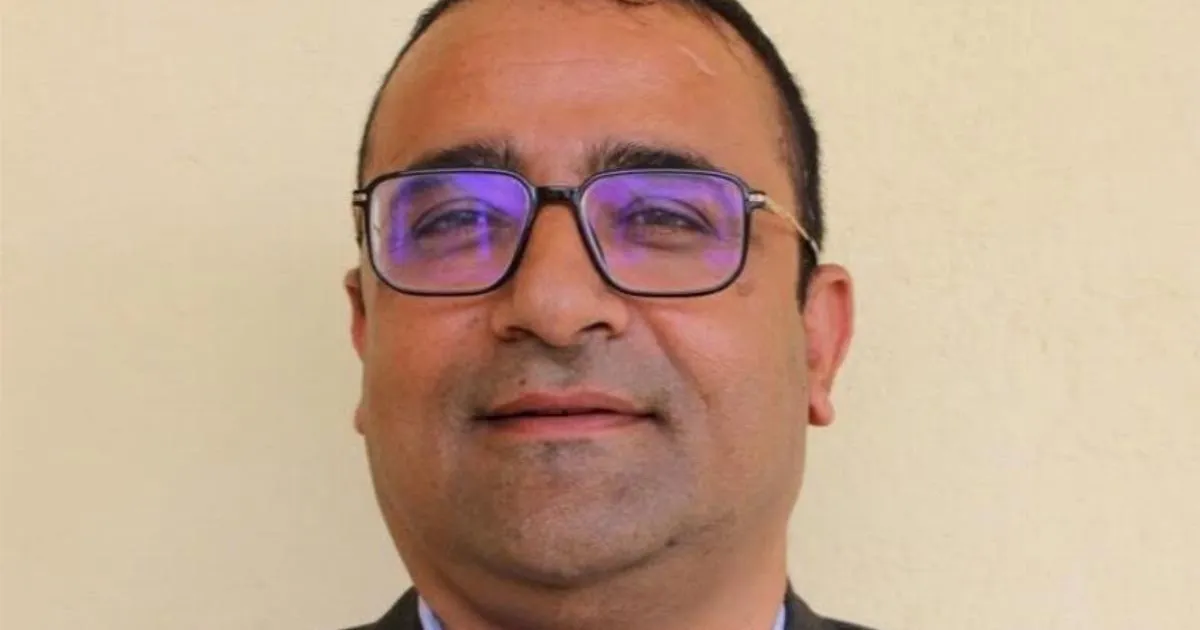
In the quiet, pre-dawn hours of a Tuesday morning in Nepal, Rajendra Dawadi was beginning what he thought would be a typical school day. As the head teacher of the Tribhuvan Trishuli Secondary School in the rural district of Nuwakot, his responsibilities were already weighing on him. The school had around 1,600 students, and the early shift was just getting underway. About 900 pupils were already inside the classrooms, settling in for their lessons, while another 700 were making their way to the school gates—some on foot along the winding mountain paths, others packed into local buses. The morning air was heavy with the humid stillness that often precedes a storm, but there was no immediate sign of danger. Then, his phone rang. A parent on the other end of the line was frantic, describing water rising rapidly in a nearby river and a menacing wall of mud and debris surging downstream. The message was urgent, but the source was just a single, worried voice. For Rajendra, it was a moment of immense uncertainty—a split-second decision that could mean the difference between life and death for hundreds of children.
Standing at the precipice of that critical choice, Rajendra felt the crushing weight of responsibility. Was this a false alarm, a panicked overreaction that would disrupt the school day for nothing? Or was it the first whisper of a catastrophic event? The parent’s words echoed in his ears: the water was rising, and it was rising fast. He knew the geography of his village intimately; he knew how the river could swell with astonishing speed during heavy rains. The risk of doing nothing and being wrong was unthinkable. But so was the risk of acting and being wrong. In that tense, terrifying moment, he reasoned that the cost of a false alarm—a few lost classroom hours, some confused children, perhaps a bit of logistical chaos—was far less than the cost of ignoring a real threat. He looked out at the school buildings, filled with young lives, and made his decision. He would not wait for official confirmation. He would not hesitate. He grabbed the school bell and began to ring it with a frantic, insistent urgency that shattered the morning calm, signaling an immediate and total evacuation.
The sharp, clanging sound of the bell echoed across the schoolyard, a signal that every teacher and student recognized as a call for extreme action. There was no time for lengthy explanations; the urgency in the bell’s rhythm was enough. Teachers sprang into action, ushering children out of their classrooms and directing them toward higher ground, away from the river that snaked alongside the village. The students, initially confused, quickly grasped the gravity of the situation as they saw their teachers’ faces etched with fear and determination. Rajendra, meanwhile, was not just evacuating the students already present; his mind raced to the 700 still en route. He began making desperate phone calls to the drivers of the buses that carried many of the children. He managed to reach a bus driver and with a voice strained by anxiety, he pleaded with him to stop the vehicle, to turn around, to not cross the bridge that lay ahead on the route. The driver, trusting the principal’s authority, slammed on the brakes and managed to get his bus to a safe location, just moments before the full fury of the flood was unleashed.
What followed was a scene of primal terror and astonishing heroism. A colossal wall of water, mud, and boulders came thundering down the valley, a force of nature with the power to destroy everything in its path. The raging torrent, packed with debris, slammed into the bridge that Rajendra’s students had just avoided crossing. It did not just damage the bridge; it obliterated it, collapsing its structure and swallowing the road entirely. The bus that had heeded Rajendra’s warning was safe on the near side, its passengers watching in horror as the structure they were about to cross vanished into the churning abyss. One of his students, a 16-year-old girl named Yunisha, later recalled the sheer disbelief of the moment. She and her friends had been on that very bus, heading to school. She described the terrifying sight of the bridge disappearing, realizing that if they had been just ten seconds earlier, their bus would have been swept into the maelstrom. “We survived by just 10 seconds,” she said, her words a chilling testament to the razor-thin margin between tragedy and survival.
As the initial shockwave of the destruction subsided, the community was left to survey the immense scale of the disaster. The flood had not only destroyed the bridge; it had ripped through villages, flattening homes and sweeping away entire buildings. Rajendra’s school, which had been evacuated only moments before, was not spared. The rushing water and landslides tore through the campus, destroying the building that had housed hundreds of students just minutes earlier. In a stark reminder of the disaster’s reach, a 97-year-old woman was later pulled from the rubble of a nearby care home that had been destroyed. Her great-nephew, Dipak Bohara, described her remarkable rescue, saying that even in her exhaustion and trauma, she had a smile on her face, a look of a warrior who had survived an impossible battle. Her survival was a small, defiant spark of hope amidst the widespread ruin.
In the aftermath, the true scale of the catastrophe began to emerge across Nepal. The flash floods, triggered by heavy rains and the collapse of a glacial lake, had unleashed devastation across the Himalayan nation. As rescue workers and emergency teams sifted through the mud and debris, the official counts grew grim. The Nepalese police reported that more than 1,900 people had lost their lives in the disaster, with over 400 still unaccounted for, a number that tragically continued to rise. The international community looked on in shock, with the tragedy hitting close to home for many, as it was confirmed that more than a dozen British nationals were still missing. In the middle of this overwhelming sorrow and loss, the story of Rajendra Dawadi stands as a profound testament to the power of human instinct and courage. His split-second decision, made under immense pressure and with no guarantee of being right, saved the lives of more than a thousand children. In a time of devasting darkness, his single, courageous act became a beacon of hope—a reminder that amid the fury of nature, the bravery and quick thinking of an individual can shine brilliantly, defying the odds and giving a community a future.