


Here is a summarized and humanized version of the content, expanded into six paragraphs to create a compelling narrative.
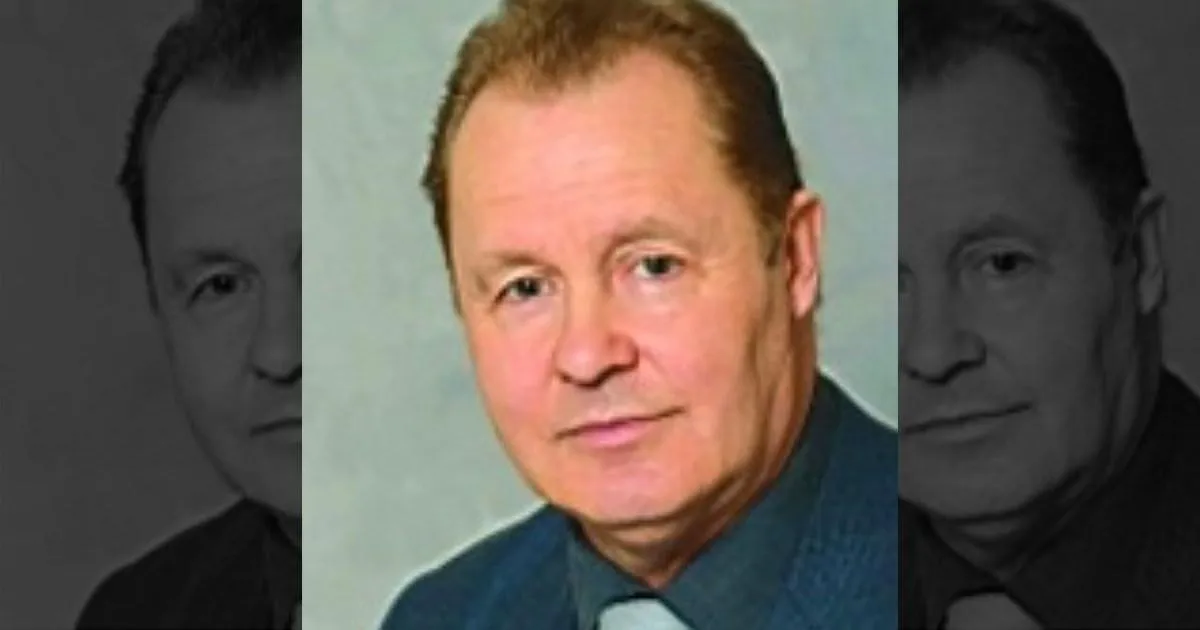
The discovery of Major-General Igor Laptev’s body in his Moscow apartment sent a quiet tremor through the city’s closed intelligence circles, a story that would never dominate front pages but would be whispered about in hushed tones. It was August 20th, a date that marks the end of summer’s last tender days, and the 83-year-old was found in the study of his home on Verkhnyaya Krasnoselskaya Street. For a man who had dedicated his life to the most secretive corridors of Soviet and Russian power, the scene was starkly simple: a single gunshot wound to the head, a pistol lying nearby, and the heavy, suffocating silence of a life abruptly concluded. The official narrative, as relayed through the pro-Kremlin newspaper Moskovsky Komsomolets, pointed to suicide, a grim and personal act made all the more shocking given the man’s esteemed and decorated past. The family had been the ones to find him, turning a cold report into a human tragedy that left more questions than answers.
To understand the weight of this death, one must understand the man who inhabited the body. Laptev was not a figure from a distant Cold War spy novel; he was a living, breathing library of secrets, a man whose very career was built on the delicate, invisible architecture of trust between the state and its most sensitive information. He joined the Soviet KGB in 1971, a time when the Soviet Union was still a counterbalance to the West, and his journey took him from the back rooms of the agency to the front lines of the Afghan war. That conflict, a brutal and demoralizing chapter in Soviet history, forged a particular type of officer—one hardened by the realities of asymmetric warfare and political fragility. After returning, he specialized in the esoteric yet critical field of information security, seeking to protect the state’s communication arteries, long before it became the tech-hinged obsession it is today. He seamlessly transitioned from the KGB to its successor, the FSB, a re-branding that signified a continuation of institutional power rather than a break, and from there he moved into other sensitive domains including the Federal Tax Police.
His career culminated in his role as chairman of Informtekhnika, a company that held Russia’s most sensitive data in its hands, developing the secure communications systems meant to transmit state secrets, including those vital to the Defense and Interior Ministries. This meant Laptev was intimately involved in the digital and hardware infrastructure that keeps the Russian state itself functioning and, crucially, thwarting foreign intelligence and internal vulnerabilities. His position wasn’t just a businesslike; it was a literal gatekeeper of secrets, sitting in the room where the state’s most delicate conversations were supposed to be unbreakable. Laptev also served as Russia’s deputy minister for taxes and levies during the Yeltsin years, a period of chaotic economic privatization and volatility. This portfolio would have positioned him at the intersection of finance and power, where the scent of leverage and corruption was often thick in the air. At the time of his death, his company was reportedly involved in a legal dispute with the Defense Ministry over alleged delays to military communications contracts, including a £62,600 claim filed in May 2026, a small sum for a minister-level contract, yet it reveals a web of potential friction and grudge. His accolades—12 medals, the Soviet Order of the Badge of Honour, and Russia’s Order of Honour—spoke to a lifetime of service that had been formally recognized, yet which ended with a solitary bullet in a residential study.
Laptev’s death does not exist in a vacuum. It becomes another line in a disturbing, quietly unfolding ledger of Russian military and intelligence figures found dead since Vladimir Putin launched his full-scale invasion of Ukraine. The pattern is as persistent as it is troubling. In June 2022, the body of retired SVR foreign intelligence Major-General Lev Sotskov, 90, was discovered in his apartment, a pistol beside him that he had reportedly received as an award—a poetic, dark irony. A month later, retired FSB Major-General Yevgeny Lobachev, 76, was found dead on the landing of his Moscow apartment building, with law enforcement attributing the death to suicide. These are not mere spate of deaths; they are a pattern of figures in the intelligence community meeting sudden, violent ends, often in their own homes. In February 2023, Major-General Vladimir Makarov, a former senior Interior Ministry anti-extremism official, was killed by a gunshot wound at his home just weeks after being dismissed by Putin. Former transport minister Roman Starovoit, shot in July 2025, was another example, hours after falling from favor, with investigators examining suicide but dark rumors of torture and murder swirling in the shadows. The sheer volume of events—at least 19 generals are confirmed lost as of January 2026, plus many more business people—has created a narrative of a state in a state, where the pressures of opaque politics, personal failures, and unspoken threats can coalesce into a single, violent finale.
For Igor Laptev, the verdict of suicide felt both too neat and too murky. The circumstances, from the gunshot to the silence, nestled perfectly within the tragic, scripted pattern that has become too reminiscent of the Soviet era’s fortress architecture—a final, dramatic, and also convenient solution to an inconvenient problem. The man was 83, had a lifetime of service, yet was dying only eight days before his 84th birthday, still active in a position high clearance, which suggests he was not mentally or physically diminished in his final years. He was not a man who had slipped from the public eye; he was still in the game. The deceased silence of his life—a blip in the news cycle, contained by the state media scoop, a press release that confirms a death but does not explain—creates an aura of unresolved ambiguity. The family found him; the investigators confirm the gun; the pro-Kremlin press states the conclusion suicide without any accompanying context or motivation. What we are left with is a still life of a man at the nexus of power, whose death interrogates the very nature of the world he operated in, where the line between suicide and targeted elimination is as thin as a razor’s edge.
Perhaps, looking at the wider world, the true fate of Igor Laptev is a footnote to a larger, more savage war. The Kremlin has lost thousands of soldiers and continues to fracture its own top tiers. Laptev’s death is both a random and a symbolic event, a final punctuation mark in a life that had become a chapter in a longer, more complex history of a state built on paranoia, loyalty, and control. It is a story of a man who spent his working years guarding the mechanisms of state secrecy, only to become himself a secret—a quiet note in the archives, his death a spark of questions that will never be fully answered. The pistol was an echo of a tool of service, a grim instrument of the state he had dedicated his entire being to. That lack of clarity is a mark of the society in which Laptev lived and moved, a world muffled by the weight of official silence. The finality is here; the meaning is not. It remains a haunting story of a man who dedicated his life to protecting the secrets of others, and in the end, the biggest secret remains his own story—one that rests in the cold, quiet apartment in Moscow, left for the official investigators and the whispers of an entire nation to fill in the blanks.