


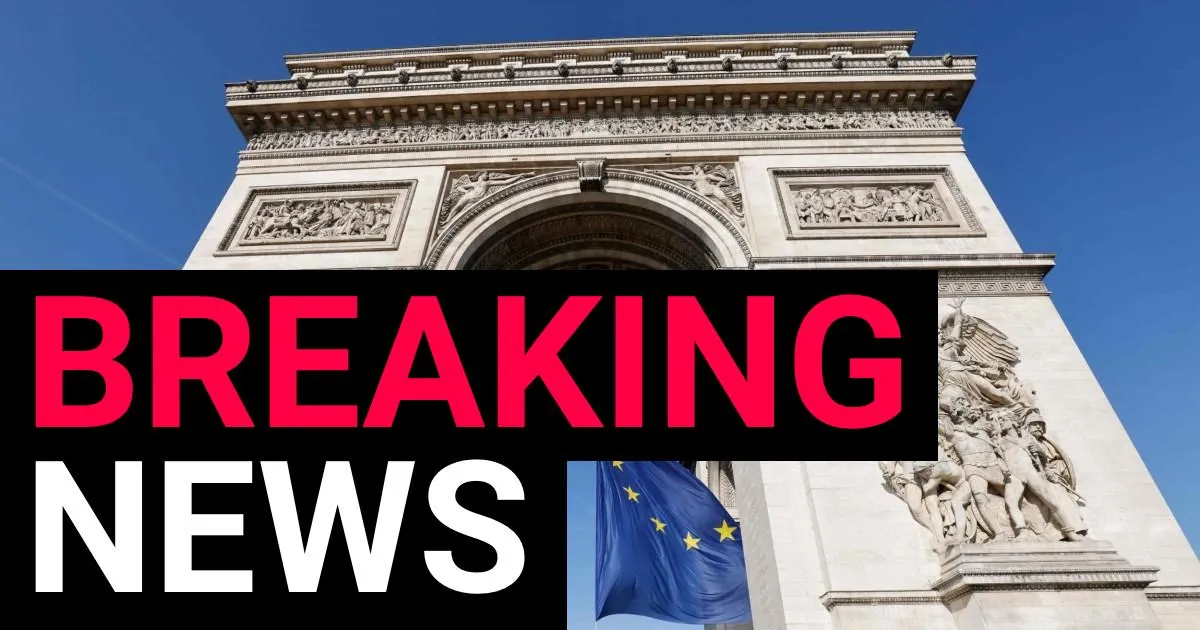
Mid-afternoon in Paris, at one of the most recognisable landmarks in the world, a young man’s life came to a sudden and devastating end. The Arc de Triomphe, a monument built to honour those who fought and died for France, was transformed, in a heartbeat, from a symbol of national memory into the site of fresh, heartbreaking loss. At around 3pm, in the 8th arrondissement at the top of the Champs-Élysées, a 22-year-old man fell roughly fifty metres from the monument, landing in full view of several witnesses. For those people, standing nearby perhaps on a casual afternoon visit, the experience must have been utterly traumatic—one ordinary moment filled with sightseeing and conversation, the next overtaken by horror and helplessness. Emergency services, including firefighters, were on the scene quickly, but there was nothing anyone could do. The man was pronounced dead where he lay. He was so young, with a life still taking shape—likely with dreams, plans, people who loved him, and a future that stretched out before him. No one knows yet what led him to that high, exposed place or what burdens he was carrying. At this stage, the details remain painfully incomplete. What is known is that a family somewhere has just received the kind of phone call that changes everything, and a community of friends and loved ones is beginning to grapple with a loss that makes no sense. Paris, a city that often seems to move too fast and feel too busy, was forced to pause and acknowledge that beneath the beauty and the bustle, human vulnerability is never far away.
As investigators began piecing together the circumstances surrounding the young man’s death, their early assessment pointed toward suicide. It is a word that carries enormous weight, and officials were careful to say that this is still the leading hypothesis rather than a confirmed conclusion. At such an early stage, there are always questions: Was there a note? Had someone seen him acting strangely? Were there signs missed by those closest to him? Investigators will examine his final hours, his digital footprint, his relationships, and any testimony from people who may have encountered him that day. Importantly, they have indicated that the tragedy is not thought to be linked to the protests that had flooded the streets of Paris on the same day. That distinction matters because the two events, though occurring within hours of each other, should not be casually merged into a single narrative of chaos. This was not a political statement or an act of confrontation; it was a personal, private catastrophe that happened to take place in a public, monumental setting. In the aftermath, the focus must be on compassion rather than sensationalism. A young man died, and his dignity deserves protection. His death also serves as a reminder, however painful, that suicide can touch anyone, at any age, in any place. People can appear fine to the outside world while struggling silently inside. When something like this happens, it leaves behind not only grief but a deep sense of unease, as we wonder how someone so young could have reached a point of such despair that the top of a great monument seemed like the only way out. Whatever the investigation reveals, the loss is real, and the need for empathy and mental health awareness is greater than ever.
The tragedy at the Arc de Triomphe unfolded against a backdrop of another kind of upheaval, a day of nationwide protest that had already brought Paris to a state of tension and alert. In different parts of the city, law enforcement clashed with demonstrators, firing tear gas and water cannons into crowds and making hundreds of arrests. Around the Place de la République, a traditional gathering point for political expression, the atmosphere was charged and volatile. Some protesters, wearing hoods and face coverings, launched fireworks and other objects at riot police, turning the demonstration into an angry and dangerous confrontation. Windows were broken at the offices of CNews and Europe 1, and reports from those locations described projectiles being thrown at the buildings. The violence created an environment of fear and uncertainty, and local authorities responded by closing metro stations and dispersing gatherings that formed near government buildings. For ordinary Parisians, the day must have felt overwhelming: the sirens, the smoke, the shouting, the sight of young people running through streets that are usually filled with tourists and commuters. The city seemed to be holding its breath, not knowing what would happen next. Yet even amid the clashes, there was a deeper story unfolding. This was not just random destruction or aimless anger. The protests were rooted in real grievances, and the people involved included not only activists and students but also teachers, parents, nurses, human rights lawyers, and emergency service workers who had chosen to stand in solidarity with a younger generation demanding something better.
To understand why so many people were in the streets, you have to look at the weeks of student-led demonstrations that preceded this moment. Young people across France had been protesting over funding for education and the conduct of police, issues that strike at the very heart of their daily lives and their hopes for the future. They were demanding a fairer system, one that did not leave them feeling ignored, marginalised, or trapped by circumstances beyond their control. When they spoke about education funding, they were talking about overcrowded classrooms, underpaid teachers, crumbling buildings, and the increasing cost of simply getting a degree. When they spoke about police conduct, they were talking about a sense of being targeted, harassed, or treated with suspicion simply for being young and vocal. These are not abstract political theories; they are lived experiences. The protests were joined by hundreds of thousands of people, most of them young, but also by older generations who recognised the importance of standing alongside them. The CGT, one of France’s major labour unions, lent its support and echoed the demand for higher wages, better pensions, lower prices, and the protection of public services that people rely on every day. By midday, the Interior Ministry had recorded around 140 protest actions outside the Paris region, with more than 32,000 people involved in those gatherings alone. This was a widespread movement, not a small fringe group. It was the voice of a society telling its leaders that people are tired, worried, and looking for meaningful change.
Predictably, the protests put enormous pressure on President Emmanuel Macron’s government, especially with the next presidential election looming in April. Macron, who first took office in 2017, found himself once again at the centre of a national confrontation over inequality, justice, and the direction of the country. His response to the demonstrators was firm, even stern, as he insisted that there is no place for violence in the Republic. He promised that those who had vandalised and attacked would be prosecuted and punished, drawing a clear line between peaceful protest and criminal behaviour. French Prime Minister Sébastien Lecornu echoed that message, acknowledging the right to protest peacefully while condemning arson, looting, and attacks with equal force. It is a difficult balancing act. On the one hand, no healthy democracy can allow violence, destruction of property, or intimidation to become acceptable tools of political expression. On the other hand, the anger that filled the streets did not appear out of nowhere. It emerged from real frustrations, real hardship, and a feeling among many people that the system is not working for them. The government’s challenge is to address those grievances without appearing to capitulate to violence, and to respond to the protests in a way that recognises their legitimacy while maintaining public safety. For Macron, this is more than just a test of policy; it is a test of leadership. The coming months will determine whether he can heal the divisions that have grown so visible in French society, or whether the gap between those in power and those on the streets will continue to widen.
On the same day, in the same city, two very different stories unfolded: one of private despair, the other of public anger. Yet both speak to something essential about the human condition. At the Arc de Triomphe, a young man lost his life, and his death should remind us of the importance of looking out for one another, of checking in on the people we love, and of taking mental health seriously. Suicide is not a statistic; it is a tragedy that ripples outward, touching friends, family, and even strangers who happened to be nearby. In the streets of Paris, thousands of people raised their voices for a better future, for fairness, for dignity, and for a society that listens. Even those who disagree with their methods must recognise the desperation and hope that motivated them. We live in a world where pressures are mounting, where young people feel uncertain about their futures, and where the gap between expectation and reality can be painful. The best response to both tragedies is compassion: compassion for the man who fell, compassion for his family, compassion for the witnesses who will never forget what they saw, and compassion for the protesters who believe they have no other way to be heard. Paris, the City of Light, has always been a place of passion, contradiction, and intensity. On this day, it held both grief and anger in its streets. What remains now is the hope that something good can come from such pain—that a life lost will not be forgotten, that a movement’s demands will not be ignored, and that the human beings behind both stories will be treated with the empathy they deserve.