
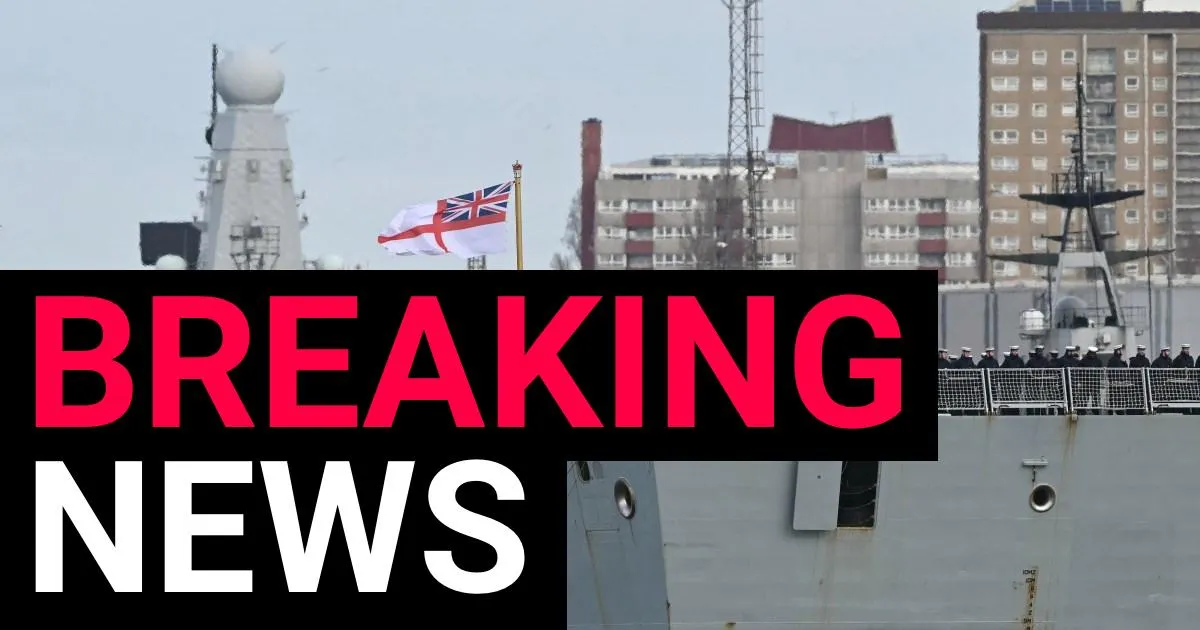
In an extraordinary diplomatic escalation that underscores just how quickly the Middle East conflict is spreading far beyond its immediate battlefields, Iran has formally designated the Royal Air Force and the Royal Navy as terrorist organisations. Tehran’s Foreign Ministry has also classified MI6, the United Kingdom’s secret intelligence service, as a hostile group, warning that the British government will “bear responsibility for their consequences.” Behind the sharp, official language lies a moment of deep peril. For generations, Iran and the United Kingdom have maintained a wary but functioning relationship, punctuated by ruptures, negotiations, and moments of quiet cooperation. But to label the armed services of a NATO member state as terrorists is not a mere diplomatic insult. It is a deliberate, calculated provocation intended to reshape the way the conflict is perceived, to mobilise support in the Islamic world, and to put a target on every British service member who operates in the region. The decision was announced as retaliation for Britain’s own move in July, when the Home Secretary designated Iran’s Islamic Revolutionary Guard Corps as a threat to national security under the State Threats Act. Yet the announcement did not happen in a vacuum. British pilots have been intercepting Iranian-made drones for months, Royal Navy crews have been escorting merchant vessels through dangerous waters, and United States bombers have launched missions from RAF Fairford in Gloucestershire to strike Iranian targets. For the ordinary men and women who serve in these forces, the label feels simultaneously surreal and dangerous. They did not join the military to be redefined as terrorists by a foreign power. They joined to protect lives, defend values, and keep sea lanes open. Now, a quiet evening in a barracks or a base in Cyprus can be interrupted by the news that a state with global reach has effectively placed their institution in the crosshairs. It affects morale, operational security, and the daily calculations of commanders who must now assume that every deployment could be treated as a legitimate target by Iran or its aligned groups.
The immediate trigger for Iran’s move is Britain’s own hardline stance, taken in July, when Home Secretary Shabana Mahmood announced new powers to ban support for the IRGC. The Islamic Revolutionary Guard Corps is not simply a branch of the Iranian military; it is a powerful and parallel institution with deep influence over Iran’s economy, intelligence operations, and foreign policy. For years, it has been linked to death threats, assassination plots, and intimidation on British soil, operating through shadowy networks that stretch into communities across the United Kingdom. The British government’s decision to place the IRGC under the State Threats Act was framed as a necessary tightening of national security after years of worrying intelligence reports. It was also a moral statement, declaring that a group responsible for so much suffering abroad and so much fear at home would no longer be treated as a normal state actor. Tehran, predictably, saw it as a direct assault on the regime’s very identity. By responding in kind, Iran is using the same language of classification, transforming what was once a tool of legal governance into a weapon of symbolic warfare. This is also a deeply human story. For British-Iranian residents, many of whom came to the UK to escape the oppression the IRGC represents, the news is a source of dread. They worry that their community will be caught between two governments trading accusations, that family visits to Iran will become impossible, and that the atmosphere of mistrust will spill into their everyday lives. There are quieter consequences too: British diplomats in Tehran, already a minimal presence, will face even greater difficulty, and consular staff will find it harder to visit detained nationals. Every normal connection between the two countries, from academic exchange to business travel, now bears the weight of this political rupture. It is easy to speak of state policies and legal designations, but the human cost is measured in cancelled flights, separated families, anxious phone calls, and the growing sense that ordinary people on both sides have been made hostages to a confrontation they did not choose.
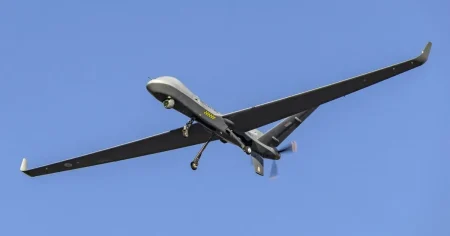
The military dimension of this conflict has been intensifying for months, well before the latest diplomatic rhetoric. Since the outbreak of war in the Middle East earlier this year, Britain’s armed forces have been directly engaged. The RAF has shot down more than 100 unmanned aircraft targeting British forces and coalition bases, an extraordinary number that illustrates how much the nature of modern warfare has changed. These are not distant dogfights between fighter jets. They are high-stakes intercepts of drones whirring toward runways, barracks, and command centres, often at low altitudes and with only seconds to decide. Iranian missiles have also been fired at British military bases at Diego Garcia in the Indian Ocean and at RAF Akrotiri in Cyprus, forcing personnel into shelters and transforming bases that were once considered safe rear areas into front lines. In March, the Royal Navy deployed the destroyer HMS Dragon to the Middle East as part of an international mission to safeguard shipping in the Strait of Hormuz, the narrow waterway through which around a fifth of the world’s oil passes. Sailors on HMS Dragon have had to contend with fast attack boats, sea mines, and the constant threat of anti-ship missiles, all while trying to keep commercial and humanitarian traffic moving in treacherous waters. Meanwhile, RAF Fairford in Gloucestershire, a base known for its picturesque Cotswolds surroundings and long association with the United States Air Force, has become a staging point for American bombers striking Iran. The image of heavy bombers roaring over the English countryside is a stark reminder that the United Kingdom is not an innocent bystander but a launchpad for war. For the personnel at Fairford, the mission is exhausting and isolating: long shifts, heightened security, fuel trucks, ground crews in protective gear, and the strange dissonance of returning to charming English villages after a day spent in the middle of a distant conflict. The base’s neighbours have been jolted by the reality of war, with protests, road closures, and increased police patrols becoming part of the local landscape. Everyone involved knows that the drones and missiles they face are not abstract. They are directed by a state that has now publicly branded them terrorists, and that label changes the psychological terrain. Every alarm, every intercept, every briefing now carries an added layer of personal risk, not just from incoming fire but from the very designation that seeks to dehumanise them.
The broader danger is that Iran’s designation will be interpreted by proxy networks and affiliated groups as a green light to strike British interests around the world. UK counter-terrorism specialist Roger Macmillan warned that the move could “legitimise and encourage” attacks against British defence infrastructure and military sites. His warning is not merely professional analysis; it is a grim recognition of how terrorism function. When a state officially labels another state’s armed forces as terrorists, it does more than express anger. It creates a narrative, a justification, and a tactical opening for those willing to take violent action. Someone in a basement in a distant country, or in a cramped apartment in a European city, may now feel that attacking a British military facility is not simply an act of violence but an act of sacred duty. That is the insidious power of such designations. Macmillan also spoke to the psychological impact, saying: “This can induce a state of fear in people, because of what they think may or may not happen. Terror is not just about the acts, it’s about the fear.” He is right. The human experience of this crisis is not confined to those who dodge missiles or fly intercepts. It extends to the families who lie awake wondering whether a loved one will return from deployment, to the maintenance workers at RAF bases who see a suspicious vehicle and report it, to the counter-intelligence officers tracking Iranian handlers in quiet suburbs. There is also the fear of the unknown. After two British men were reportedly ordered by an Iranian handler called Ali to deliver a fake bomb to RAF Fairford, communities and security services alike were reminded that the threat can take strange and unpredictable forms. The incident may have been a test, a warning, or a clumsy plot, but it demonstrates how the conflict is seeping into everyday life in Britain. The fear is not always visible. It lives in the tightening of security procedures, the extra identity checks, the quiet conversations in car parks. Terror, as Macmillan says, feeds on possibility. And Iran’s designation, however absurd it may seem to British officials, feeds that possibility in the minds of people who might otherwise never consider violence.
The official British response has been one of defiance and calm resolve. A Ministry of Defence spokesperson said: “We utterly reject this designation. The UK Armed Forces will continue to defend our people, personnel and interests, working closely with our allies and partners.” That is the kind of statement designed to reassure a nervous public. But behind it lies a military and intelligence community that is already stretched thin and now must adapt to a new legal and psychological dimension of conflict. In practice, the designation may change little operationally, since the RAF and Royal Navy were not going to stop flying or sailing because of Tehran’s words. Yet it complicates every aspect of international protocol, from diplomatic contacts to the sharing of intelligence with third countries. It also plays into a wider game of escalation. The United Kingdom and France recently carried out their first-ever joint nuclear drills, a decisive milestone that signals how seriously Western governments view the current global security situation. At the same time, Britain has deployed drones to track Russian vessels in the English Channel for the first time, a response to a growing shadow war in European waters. These are separate issues, but they are part of the same broader mosaic of anxiety. The UK is simultaneously confronting Russian naval activity, Iranian proxy threats, and the aftermath of a Middle East war that shows no sign of ending. For the people tasked with managing all of this, there is no room for hysteria, only long hours, careful analysis, and moments of black humour in the mess halls. The MoD’s blunt rejection of Iran’s designation is also a signal to the British public, saying in effect that this is not a declaration of defeat but a badge of honour. Yet the human reality is more complicated. The RAF pilot who intercepted a drone over the desert may now wonder whether his wife’s commuting route in London is being watched. The sailor on HMS Dragon may scroll through photographs and see his ship described as a terrorist asset in a language he cannot understand. The MI6 officer, whose career depends on silence, must now imagine that his name is on a list in Tehran. For them, the government’s bold words are necessary, but they do not erase the quiet worry that comes with being officially declared an enemy.
As this dangerous spiral continues, it is difficult to see a quick way out. Iran’s Foreign Ministry has wrapped its decision in the language of international law, speaking of reciprocity and warning that the British government “shall bear responsibility for their consequences.” The UK, for its part, has made clear that it will not be intimidated. But between these two unyielding positions are millions of ordinary lives. In the UK, the crisis has already changed how people experience security: more police around military bases, longer waits at airport security, news alerts about drones and missiles. In Iran, ordinary citizens who have no control over their government’s decisions face the consequences of a leadership that sees enemies everywhere and uses them to justify oppression at home. The designation of the RAF and Royal Navy as terrorist organisations is not just a diplomatic insult; it is a symptom of a world in which the language of coexistence is being replaced by the language of enmity. Yet history teaches that even the deepest ruptures can eventually be repaired. There was a time when Iran and the West cooperated, and there will be a time after this war, when the shouting subsides and the dead are counted, when someone will have to find a way to talk again. The people who make that happen will not be anonymous governments. They will be diplomats who still believe in negotiation, soldiers who understand the cost of conflict, and ordinary citizens who refuse to see the other side as monsters. For now, the RAF and Royal Navy will continue their missions, not because they enjoy war, but because they have sworn an oath to protect lives. They will do so under the unnerving shadow of a nation that has officially called them terrorists, a word that is itself a weapon. In the end, the outcome will depend less on labels than on human choices: the choice to retaliate or restrain, to escalate or negotiate, to dehumanise or to recognise the shared fragility of life. If the fear that Roger Macmillan describes is ever to be overcome, it will require more than missile defences and robust statements. It will require a willingness to see beyond flags and uniforms, beyond diplomatic statements and military briefings, to the people underneath. The world is holding its breath, and the officers of the RAF and Royal Navy are, once again, standing at the very edge of that breath, waiting to see whether the storm will pass or whether the next chapter of this crisis will be written in fire.