

The morning of 28 October began like any other for the hundreds of passengers boarding Spain’s high-speed rail network, a system that had long been a source of national pride and modern efficiency. Travellers on the Madrid–Seville route settled into their seats, some sipping coffee, others opening laptops or gazing out at the dry plains of central Spain, unaware that within minutes their ordinary journey would become a national tragedy. Near the small towns of Los Yébenes and Urda, not far from the historic city of Toledo, a Renfe high-speed train slammed into the rear of a stationary Iryo service at full speed. The impact was catastrophic, tearing through carriages and scattering debris across the tracks. The toll was immediate and devastating: at least 69 people were killed, and scores more were rushed to hospitals in Madrid and surrounding towns, many fighting for their lives. Spain woke to scenes of wreckage that recalled the very worst moments of its modern history. Emergency workers, firefighters and medical teams worked through the day beneath a pale autumn sky, trying to reach survivors trapped in the twisted metal. As news spread, families gathered anxiously outside hospitals, their faces etched with fear and disbelief. It was the deadliest rail disaster in Spain since 2013, and the shock was felt across the country and far beyond its borders. In the hours that followed, a portrait began to emerge of the lives lost, each one a universe of relationships, ambitions and love, none more heartbreaking than that of a brilliant Cambridge professor and mother of two, whose name would soon be whispered with sorrow around the world.
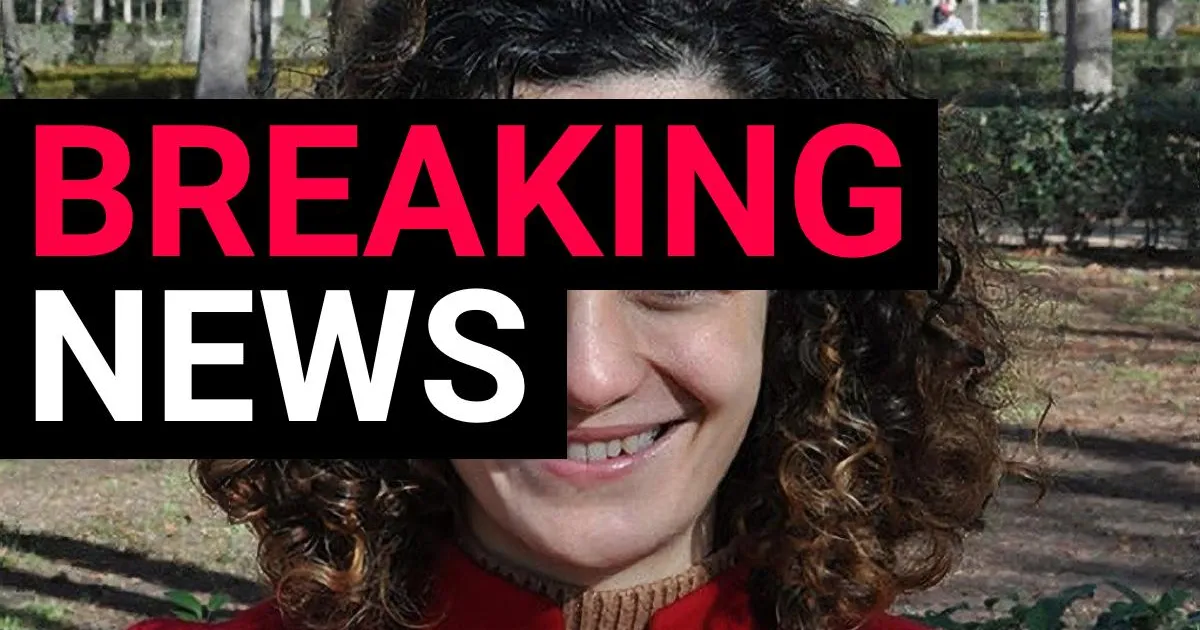
Among the victims was Dr Marta Shahbazi, a 41-year-old professor at Cambridge University, a woman whose work in molecular biology and stem cell research had placed her among the most promising scientists of her generation. Marta was travelling in the front carriage of the Renfe train, the part of the train that absorbed the full force of the collision, according to reports. She was Spanish by birth, raised in a country she loved and still called home, but she had built her adult life and career in Cambridge, where she lived with her husband and two young children. Her professional identity was closely tied to the MRC Laboratory of Molecular Biology, one of the most prestigious research institutions in the world, and to the Cambridge Stem Cell Institute, where she served as an Affiliate Associate Professor and group leader. Her research focused on the earliest stages of human development, exploring how embryos form and implant, work that carried profound implications for understanding infertility, birth defects and regenerative medicine. Colleagues described her as a brilliant young researcher, not only intellectually formidable but generous, curious and deeply committed to mentoring the next generation of scientists. She was the kind of person who asked the hardest questions and then worked with tireless humility to find answers, someone who believed science could make life better for everyone. But to her family, she was simply Marta, a daughter, a niece, a wife and a mother, a woman who somehow balanced the demands of the laboratory with the beautiful chaos of raising two children aged three and seven. Her life, in every sense, was still unfolding, filled with promise, purpose and the quiet joy of watching her children grow.
Marta’s death was confirmed yesterday evening by the CiMUS molecular medicine research institute in Spain, a centre connected to her aunt, Professor María José Alonso, a highly respected scientist in her own right. In a carefully worded statement, the institute expressed its sorrow and extended deepest sympathies to María José and her family, as well as to Marta’s colleagues and collaborators around the world. The statement found words for what seemed unspeakable: “Marta was a brilliant young researcher, Group Leader at the MRC Laboratory of Molecular Biology and Affiliate Associate Professor at the Cambridge Stem Cell Institute, University of Cambridge. At this difficult time, we extend our heartfelt condolences to María José and her family, as well as to Marta Shahbazi’s colleagues and collaborators. Our thoughts are with them all, and we wish them strength and comfort as they come to terms with this profound loss.” Those words, though formal, carried the weight of a community in shock. For the scientists who knew Marta, the loss was not only personal but also intellectual, a future suddenly erased. For her aunt, who had helped shape her path and watched her niece rise to international recognition, the grief must have been unbearable. The scientific community is a small world in many ways, and the news moved quickly through laboratories and university corridors in Cambridge and across Europe, leaving behind a trail of disbelief. Tributes began to appear on social media, memories of Marta’s warmth, the sharpness of her insight, the way she lit up a room during a seminar or celebrated a colleague’s success. But behind all the professional praise was a human story of love and loss, of a family in Spain receiving the worst kind of news, and of two children in Cambridge who would grow up without their mother.
Marta had reportedly been travelling to receive an award for her work when the tragedy struck, a detail that only deepens the cruel irony of the disaster. She was not merely passing through; she was on her way to be publicly honoured for contributions to her field, a moment of recognition that should have been joyful, a milestone in a career already marked by extraordinary achievement. Instead, that journey became her last. Born in Spain, Marta had chosen to live in Cambridge with her family, but the bonds with her homeland remained strong. Her aunt’s deep connection to the CiMUS institute in Spain suggests a family steeped in academic excellence and a shared passion for medicine and discovery. Those ties meant everything to her, and she maintained close connections with Spanish researchers and institutions even while working abroad. Her children, aged just three and seven, are now left to navigate a world without her presence, a thought too painful for words. They will know her through photographs, through the stories told by colleagues and loved ones, through the published papers that bear her name, and through the memory of her voice, her laugh, and the way she held them close. The scientific discoveries she made will endure, and they may one day change lives in ways she could never have imagined. But no discovery can replace a mother’s love, no citation can comfort a child on a sleepless night, and no award can compensate for the years that will now pass in silence. Her death, like all deaths in this terrible accident, is an intimate grief hidden behind a national tragedy.
As Spain mourns, investigators and political leaders have begun to ask how such a disaster could have been allowed to happen, and the early answers are deeply troubling. Spain’s transport minister, Oscar Puente, has attributed the crash to a computer failure and human error, a combination that turned a technical malfunction into a catastrophe. According to the minister, a computer glitch on Wednesday morning had stopped six trains on the tracks, including the ill-fated Renfe and Iryo services. The control centre responsible for managing the rail network then decided to resume operations, allowing trains to run again, but without reimposing the speed restrictions that should have been in place. Puente described this decision as having been made “under inexplicable circumstances,” a phrase that hints at a deeper failure of judgement, communication or protocol. The result was that the Renfe train was moving at full speed when it approached the stationary Iryo service, leaving no time to stop and no chance for the driver to avoid the collision. For the families of the victims, these details only make the grief more anguishing, because they suggest the disaster was not merely a random accident but a sequence of decisions that should have been questioned, checked and overruled. The investigation will now delve into every layer of the rail system, from the software that failed to the human operators who made their choices under pressure, and it may take months to understand exactly what went wrong. But no explanation will bring back the dead, and for the survivors injured in the crash, nor for the loved ones waiting at hospitals, the search for accountability is only beginning.
In the days and years ahead, the memory of Dr Marta Shahbazi will remain a guiding light for those who knew her and for all who benefit from her work. Her research into the earliest moments of human life will continue to inspire scientists studying development and disease, and her name will appear in textbooks and lectures long after the headlines fade. But on the railway tracks near Toledo, her story became part of a larger story of loss, one that includes at least 68 other people, each with their own dreams, families and futures. Spain has declared a period of mourning, flags have been lowered to half-mast, and vigils have been held outside train stations and hospitals. The nation is united in sorrow, but also in a demand for answers, a determination to understand how a modern, supposedly safe rail network could fail so terribly. For the Cambridge community, and for the many scientists who saw Marta as a friend and mentor, the grief is raw and personal. Yet perhaps there is some comfort in knowing that her life mattered, that her work touched the edge of the unknown and pushed it back a little, and that her children will grow up hearing of a mother who was brilliant, kind and brave. The crash is a reminder, heartbreakingly sharp, of how fragile life is, and how quickly everything can change on an ordinary morning. In remembering Marta, and all the victims, we honour not only the dead but also the precious, fragile gift of being alive, and we promise to hold our loved ones a little closer in the shadow of this great sorrow.