

1. The Journey That Became a Nightmare
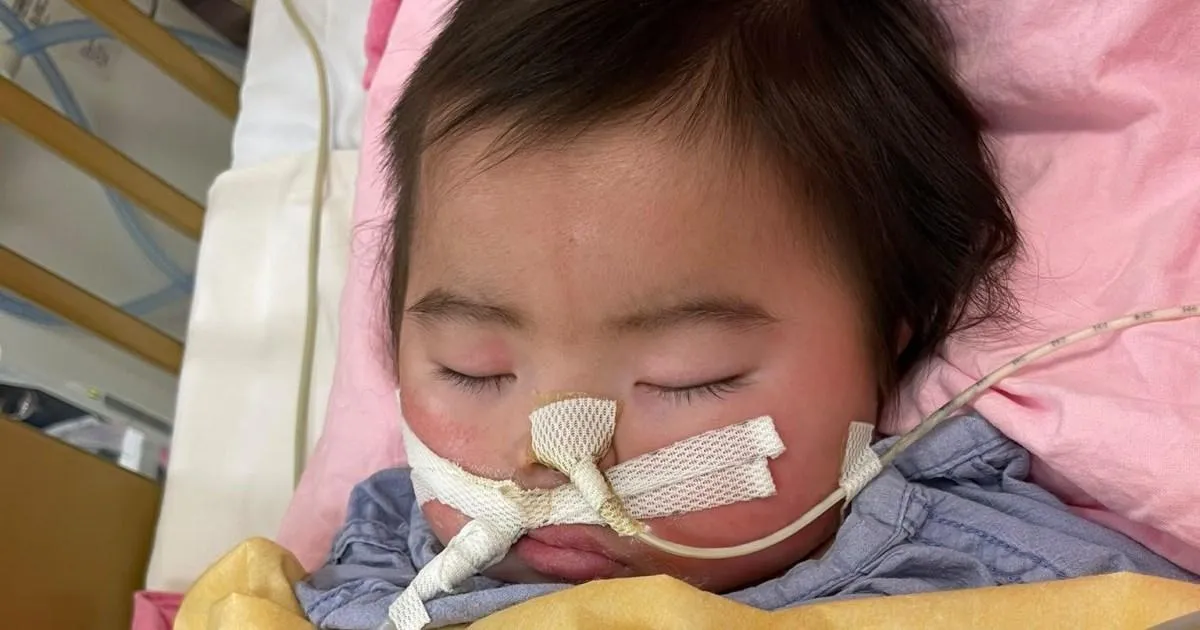
There are moments in a parent’s life that feel safe, ordinary, even sacred. For Sophia Lee, that moment was a holiday with her nine-month-old son, Matthew, and her own mother, traveling from their home in Nottinghamshire to Hong Kong. It was meant to be a joyful trip, a chance for little Matthew to meet his extended family, to be cradled in the arms of relatives who had only seen him through screens. The tickets were booked, the plans were made, and at home in England, Matthew’s father stayed behind, because work does not pause, and bills do not wait. They left with a healthy, smiling baby, the sort of bright-eyed boy whose photograph radiates warmth and promise. But a holiday can fracture in a single breath. While in Hong Kong, Matthew suddenly fell ill with influenza A, an infection that, in a cruel twist of fate, overwhelmed his tiny body. What began as a respiratory issue escalated into three catastrophic cardiac arrests. His brain was deprived of oxygen for a devastating forty-seven minutes. In the span of days, a happy family trip became a hospital vigil in a foreign country, and Matthew—now critically ill, ventilated, and fighting for his life—spent his first birthday not at home with cake and candles, but in a sterile hospital ward, surrounded by machines that beeped and pulsed, far from the father who could not be there. For his mother and grandmother, the world contracted to the size of a hospital room. And the impossible question loomed: how do you bring a critically ill baby home when every door appears to be closed?
2. A Family Stranded Between Two Worlds
The answer, it turns out, is not simple, and it is not kind. Matthew and his family had return tickets to the UK, but those tickets have become meaningless. After his cardiac arrests and the resulting brain injury, Matthew requires continuous ventilation and intensive medical care. He is stable, but only within the fragile condition he is in. The doctors in Hong Kong agree that he needs to be moved to the UK—not just for the NHS’s world-class treatment, but to be with his family, to be within the reach of the community that loves him. Yet commercial airlines, even those equipped to carry seriously ill adults, refuse to take a ventilated baby. The risks are too great, the logistics too demanding, and the liability too terrifying. His family’s travel insurance, they discovered, had a small-print exclusion for repatriation—a detail that now feels like a cruel betrayal. The only remaining option is a private air ambulance flight from Hong Kong to the UK, a journey that carries a price tag of up to £200,000. That is a sum far beyond anything the family can afford, and equally beyond the means of Lia’s Wings, the small UK charity that is the only organization of its kind in Britain dedicated to providing hospital air transfers for sick children. Charlotte Young, the charity’s chief operating officer, has been upfront about the scale of the ask. This is not an everyday medical escort; it is a life-or-death mission. “We don’t ask unless it is life or death,” she said. And for Matthew, it is exactly that.
3. The Cruel Randomness of a Virus
What makes this story so devastating is not just the severity of Matthew’s illness, but the cruel randomness of it. This was not a wild accident, not a reckless adventure, not a family taking an outrageous risk. As Charlotte Young put it, “They are a British family who went on a holiday. It was an influenza infection, it wasn’t a wild accident. Very quickly their lives changed—they left with a healthy nine-month-old and are coming back with a critically ill one-year-old. They have not done anything crazy and have walked a path a lot of people do.” That is the quiet heartbreak of this situation: it could happen to anyone. A common virus, the kind that sweeps through schools and workplaces every winter, somehow turned against a baby’s body, triggering cardiac arrests and leaving his brain without oxygen for nearly an hour. Sophia Lee’s own words are simple and raw: “What was meant to be a joyful family trip turned into a complete nightmare. Dad stayed at home because he needed to work. We had tickets there and tickets back, but he suffered an influenza A infection and respiratory issues, which led to cardiac arrest.” Her words do not need embellishment. They carry the weight of a mother who has watched her child slip to the edge of existence and is now fighting, with every ounce of her strength, to get him back to the country he belongs to. Meanwhile, his father remains in Nottinghamshire, separated from his son by thousands of miles, able to do nothing but wait for phone updates and pray for a solution.
4. The Impossible Transfer and the Charity’s Plea
Lia’s Wings has spent months working behind the scenes with the family, exhausting every possible avenue. The charity has a team ready to deploy: two consultants and a pediatric nurse, specially trained to manage the complexities of moving a critically ill child. They have the equipment to transform a private, long-haul jet into a miniature intensive care unit, capable of supporting a ventilated baby for the long flight from Hong Kong to the UK. But the aircraft itself must be donated. This is the first time in the charity’s history that it has had to make such a request, and the plea is directed at the aviation community—the same community that has helped Lia’s Wings in the past. Charlotte explained why commercial airlines, which would have been a more financially viable option at one-fifth of the cost, are no longer on the table. “Commercial airlines are very used to adults, but babies bring a whole new level of concern for them. We tried to have that as a first option, because it would have made everything more financially viable, a fifth of the cost, but it is not an option although we tried our hardest.” So the charity is asking for a miracle in the form of a private jet and a pilot willing to help. Without this repatriation, Charlotte warned, “medical decline would happen over a period of time.” The consequence of inaction is not an abstract concept; it is a tragedy waiting to unfold. As she poignantly put it, without this transfer, Matthew risks becoming “a tragedy, a British baby left somewhere where he wasn’t within the reach of help of the community where he belongs to.”
5. A Mother’s Vigil, A Community’s Fear
One can only imagine the scene in that Hong Kong hospital room. A tiny child, his chest rising and falling with the rhythm of a ventilator, his mother and grandmother nearby, their faces etched with exhaustion and terror. There are no simple moments of play, no giggles, no crawling across the floor. Instead, there are monitors and medications, and the ache of a first birthday spent in a place that smells of antiseptic rather than home. For Sophia, every day is a negotiation with hope and fear. She watches her son fight, and she knows that the longer he remains in Hong Kong, the more his chances of recovery may erode. The doctors in both Hong Kong and England have agreed on the plan to move him; they know that the specialist care and tests he needs are on the other side of the world. But the gap between knowing and doing is a chasm of money and logistics. Lia’s Wings has helped more than three hundred children and families since 2010, and in the past twelve months alone, it has supported sixty-eight children. Demand for urgent medical transfers for children from abroad has skyrocketed. In just the first six months of this year, the charity has helped more children than in all of last year. Yet each case is personal, each child is irreplaceable, and each family is hanging by a thread. For Matthew’s family, the thread is tightening. They are not asking for a handout in the usual sense; they are asking for a ride—a private, long-haul flight that most of us equate with celebrities and luxury, but which for them is simply a hospital room with wings. The irony is not lost: a mode of transport often associated with excess is now the only thing standing between a baby and his home.
6. A Call for Hope and Action
This story is not over, and it does not have to end in tragedy. Lia’s Wings is urgently appealing for someone, anywhere, who has access to a private aircraft and the compassion to donate it for a single, crucial flight. The charity is ready to move at a moment’s notice. The medical team is in place. The plan is approved. All that is missing is the plane. It is a big ask, as Charlotte Young admitted, but it is life or death. And if there is any comfort to be found in this bleak landscape, it is that people do rise to these occasions. The charity has worked with the aviation community before, and it is hoping that someone, somewhere, will see Matthew’s face—a smiling baby boy in a photograph taken before the world collapsed—and decide to help. For anyone who cannot provide a plane, there is another way: donations, shared stories, a small gesture that might help cover the monumental cost. Lia’s Wings has set up a way for the public to support the cause, and every contribution brings them one step closer. But beyond the logistics, what this story truly asks of us is empathy. To look at this family and recognize our own vulnerabilities. To understand that a holiday, a virus, a simple twist of fate, can upend everything. And to hold onto the belief that a child belongs with the people who love him, no matter the distance. For Matthew, home is not just a place on a map. It is survival. It is family. It is the start of a long road to recovery, walked with the oxygen of community behind him. He deserves that chance. And with a little help, he can take it.