
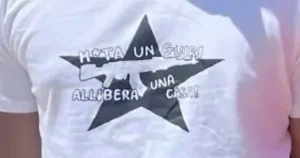

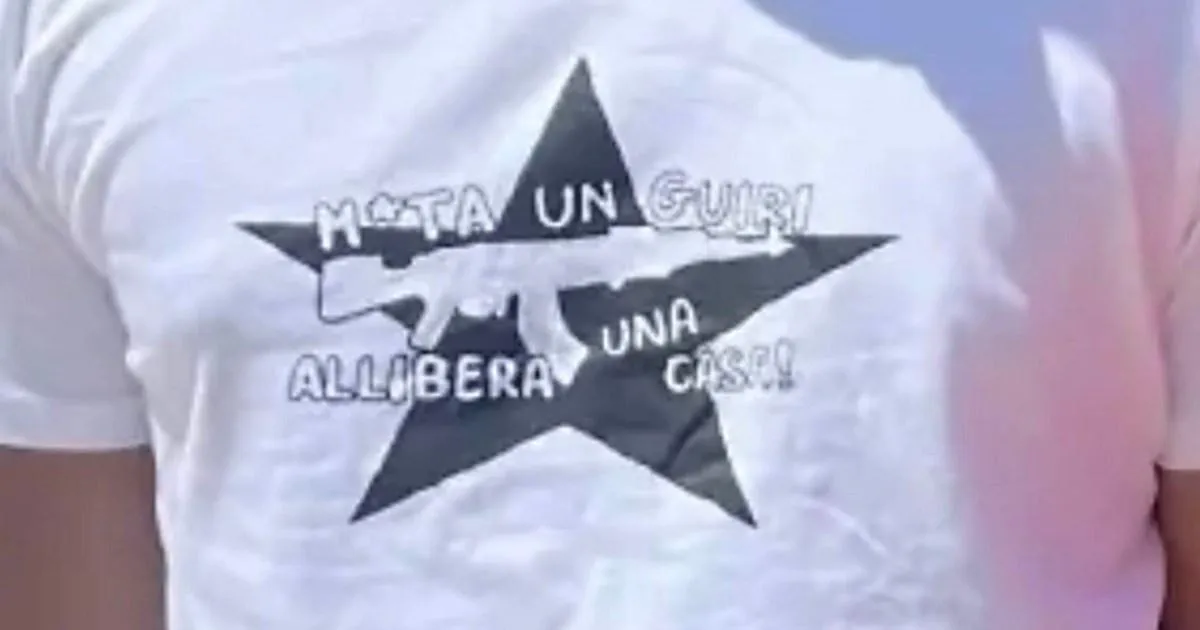
On a quiet afternoon in Sant Climent, a small farming village in Menorca, a group of young people gathered in a neighbourhood hall, the kind of place normally reserved for village festivals and local committees. They were activists, members of Arran, a Marxist youth organisation with roots in Catalan radical politics and a reputation for theatrical protest. The T-shirts they wore were impossible to ignore. Across the chest, in Catalan, ran the words: “M*ta un guiri, allibera una casa.” The asterisk was a pathetic fig leaf. In Spanish, “Mata” means “kill”; “guiri” is the colloquial, dismissive term for the pale northern European tourists who flood Spanish beaches every summer, especially the British holidaymakers who turn Magaluf into a boozy carnival. “Allibera una casa” means “free up a house.” Taken together, the slogan was a blunt, violent provocation: kill a tourist so a local family can find a place to live. The activists later claimed it was satire. But the police, scanning social media for hate crimes, did not laugh. The Instagram post was flagged during routine checks, reported to a local court, and now four of those activists are under official investigation on suspicion of a hate crime. The story of how four T-shirts ended up in a Spanish courtroom is not just a legal curiosity; it is a window into the deepening rage of communities drowning in tourism.
The legal proceedings have moved slowly, but with a strange kind of gravity. The investigating judge on Menorca agreed to admit a police complaint under Article 510 of the Spanish penal code, the provision that punishes hate speech and incitement to discrimination, hostility or violence. Public prosecutors have opposed the activists’ appeal to halt the investigation, meaning the case is alive. The four people being probed have already been questioned; they now live with the threat of prosecution hanging over their heads. Their lawyer, Josep de Luis, has mounted a defence that is both legal and philosophical. Article 510, he argues, was designed to protect vulnerable groups on the grounds of race, religion, sex, nationality, sexual orientation or sexual identity. A “guiri” does not form part of a specially-protected group. Tourists, after all, are not a persecuted minority; they are people with passports and spending power, choosing to visit a country that actively markets itself to them. De Luis concedes that the police were doing their job by investigating the posts, but he insists that taking the case to court goes too far. There is no aggrieved party, he says. No real danger. No incitement to violence. Just a crude, satirical reference to tourism itself, through a campaign against touristification. For the four young activists, the T-shirts were not a call to murder anyone; they were a deliberately shocking way of saying that mass tourism has made the island uninhabitable for ordinary residents. Yet the Spanish legal system is not in the mood for jokes about killing foreigners. In a climate of online radicalisation and far-right violence, authorities are nervous about violent language, even when it comes from the left. The case has become a test of how far freedom of expression can stretch before it breaks.
The Menorcan T-shirt row did not happen in a vacuum. Across Spain, the battle against mass tourism has been escalating for years, and the Balearic Islands and the Canary Islands have been at the forefront. In the Canaries, graffiti left on walls in and around Palm Mar in southern Tenerife in the spring of 2024 included “My misery your paradise” and “Average salary in Canary Islands is 1,200 euros.” The message could not have been clearer: while tourists enjoy the sun, local workers struggle to survive on wages that bear no relation to the cost of living. In an apparent British backlash, someone scrawled a response next to a “Tourists go home” message: “F##k off, we pay your wages.” That crude exchange captures the ugly standoff between visitors and hosts. But the conflict has gone far beyond spray paint. In several parts of Spain, activists have glued shut Airbnb key boxes, making it impossible for property owners to check in guests. Brits have been warned about fake police tape used to cordon off popular beauty spots, including beach access paths, tricking tourists into thinking the areas are closed. These are not random acts of vandalism; they are deliberate tactics designed to disrupt the tourism machine. Critics blame mass tourism for a litany of problems: sea pollution, traffic gridlock, the destruction of natural landscapes, and above all, a catastrophic housing shortage. In places like Barcelona, Malaga, Mallorca and Ibiza, property prices have been pushed up relentlessly by Airbnb-style holiday lets. Landlords can make more money renting to tourists for a week than to residents for a month. Locals are being priced out of their own neighbourhoods. Young people cannot afford to move out of their parents’ homes. Families are being evicted. The T-shirt slogan “free up a house” sounds monstrous, but it was born from a real and desperate housing crisis.
Arran is not a fringe group that emerged overnight. It has a history, and that history helps explain why the authorities are taking the T-shirts so seriously. In July 2017, Arran claimed responsibility for an attack on a tourist bus in Barcelona. Holidaymakers mistook the raid for a terrorist attack. The gang slashed the vehicle’s tyres and daubed graffiti on its windows in a savage protest against mass tourism in the Catalan capital. At the time, a group spokesman said they were acting in legitimate self-defence against a development model that wanted to turn the country into an “amusement park.” That phrase is revealing. It shows a worldview in which tourism is not an industry but a colonial force, and in which activists are not criminals but resistance fighters. Arran’s associates on the mainland have attacked tourist buses before; the Menorcan T-shirts are part of that same political lineage. To the police, the slogan “Kill a foreign tourist, free up a house” is not abstract incitement; it is a direct reference to a violent history. To the activists, it is an ironic provocation designed to shock people into recognising the injustice of a system that prioritises visitors over residents. There is no doubt that the slogan is offensive, ugly and deliberately inflammatory. But is it a hate crime? That is the question now before the Spanish courts. The lawyer’s argument is a powerful one: hate speech laws exist to protect the vulnerable, not to police unpleasant rhetoric against the privileged. A tourist on holiday in Menorca, however annoying, is not an oppressed group. There is no history of systemic persecution against British sunseekers. The phrase “guiri” is mildly offensive, but it is not the same as racial hatred. The case, in other words, is as much about the limits of satire as it is about the dangers of violence.
Behind the legal arguments, there is a human story that is easy to miss. Imagine a hotel worker in Mallorca who serves breakfast to tourists every morning, then returns home to a tiny flat shared with three other workers because he cannot afford anything better. Imagine a young nurse in Ibiza who grew up on the island but has to move back in with her parents because the only available apartments are holiday rentals. Imagine an elderly couple in Sant Climent whose village becomes a ghost town every winter, then overflows with rental cars and sunburnt families every summer. For them, tourism is not a holiday; it is an economic machine that has taken over their lives. The activists who wore the T-shirts are not monsters. They are likely students and young workers, angry and idealistic, using shock tactics to make a point. The problem is that the point gets lost in the hatred of the language. “Kill a foreign tourist” is abhorrent, and it immediately alienates anyone who might otherwise sympathise with the housing crisis. But “free up a house” is a cry that resonates with ordinary people across Spain. The two parts of the slogan cannot be separated. One is a violent fantasy; the other is a genuine demand for justice. The tourists themselves are not the enemy. Many of them are working-class families who saved for a year to sit on a beach for a week. They are not responsible for Airbnb, for property speculation, for global capital. But in the eyes of frustrated activists, they are the visible face of an invisible system. That is why the anger is so personal, and why the conflict is so hard to resolve. It is easier to hate a drunk British man singing in the street than to hate the financial structures that have turned housing into a commodity.
Where does this leave the four young people in Menorca? Their case is now in the hands of the courts, and the outcome is uncertain. Public prosecutors have opposed their appeal, so the investigation will continue. If the case collapses, as the defence hopes, it will be a victory for free speech, but it will not solve the underlying crisis. If the case goes to trial and they are convicted, it will send a clear message that violent language is not tolerated, but it will not make housing any cheaper. The T-shirt controversy has done what all good provocations do: it has forced people to talk. Some will argue that the activists are dangerous extremists who should be punished. Others will argue that they are misguided idealists whose frustration is legitimate. Both sides have a point. But the deeper truth is that the tourist economy has created a deep wound in Spanish society, and a T-shirt cannot heal it. The solution is not to criminalise ugly slogans, but to build affordable homes, regulate holiday rentals, diversify the economy and treat tourism as a guest rather than a master. Until that happens, the resentments will keep surfacing, sometimes as graffiti, sometimes as glue in a key box, sometimes as a T-shirt so offensive that it ends up in a courtroom. The four activists in Menorca are not terrorists. They are symptoms of a disease that Spain has not yet found the courage to treat. The question is whether the country can hear the scream behind the slogan, or whether it will simply try to silence it.