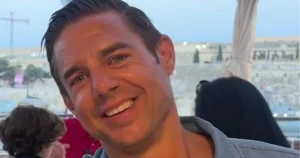



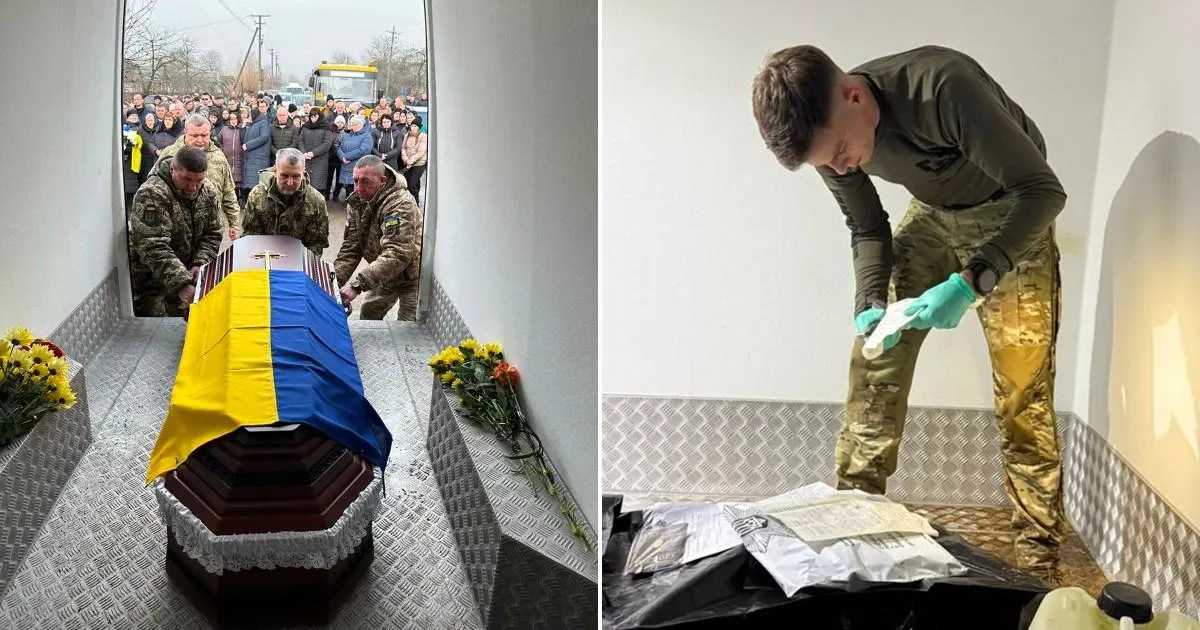
The haunting scent that permeates Mark Zydga’s refrigerator truck is the first grim indicator of its cargo: not ammunition or medical supplies, but the fallen sons and daughters of Ukraine. For the 27-year-old volunteer and his dedicated crew, the battlefield is not a place of glory, but a landscape of “kill zones” where they navigate the perils of drones and artillery to recover the remains of their countrymen. What began as a local effort to assist civilians has evolved into an agonizing mission to ensure that no Ukrainian soldier is left behind to decompose in the dirt, providing them with the dignity of a proper homecoming.
Mark’s journey into this harrowing reality began when his own classmates started falling in the front lines. In the early, chaotic stages of the conflict, the process for repatriating the dead was non-existent, leaving grieving families in a state of indefinite, agonizing limbo. Driven by a deep sense of duty and faith, Mark and his friends from a local baptist church pooled their resources to purchase a refrigerated vehicle. This act of compassion transformed them into a vital, albeit unofficial, link between the brutal front lines of the east and the tear-stained thresholds of homes in the western regions of Luts’k, Rivne, and Zhytomyr.
The logistics of the mission are as dangerous as they are morbid. Mark and his team travel thousands of kilometers, often loading bodies from makeshift morgues, abandoned houses, or salvaged vehicles. Each trip is a gamble against Russian drone strikes, necessitating extreme caution—such as avoiding fuel stops in the east—to ensure they don’t become the very tragedy they are working to prevent. For Mark, the most soul-crushing encounters are the “light packages”: the bags containing only fragments of a life, or the remains of soldiers barely out of their teens, whose futures were erased by the indiscriminate violence of modern warfare.
The emotional toll of this work is etched into Mark’s psyche. He vividly recounts a woman killed beside her husband in a trench, whose partner insisted on following the refrigerated van for 600 kilometers, weeping inconsolably as he escorted his wife to her final resting place. These are not memories that can be easily set aside; they have fundamentally altered the fabric of Mark’s existence, leaving him more reserved and battle-scarred than his age would suggest. Yet, he finds a paradox in the wreckage: while the horrors could easily foster hatred, he feels they have instead made him softer, sharpening his appreciation for the fragile, fleeting nature of human existence.
More than 1,000 bodies have passed through the doors of his truck, yet Mark keeps the specific count private—a tactical necessity in a war where information is a weapon. The gratitude of the families they serve provides a small, desperate solace. These reunions at the end of long, grueling drives form a bond that goes beyond simple delivery; they are acts of communal healing. In a conflict defined by widespread destruction and systemic cruelty, Mark’s team stands as a testament to the idea that even in the face of death, the humanity of a nation can be preserved if there are people willing to do the work that no one else wants to touch.
Ultimately, Mark Zydga represents a silent, grieving front in the war, one that doesn’t capture the headlines of territorial gains or military retreats, but speaks to the profound cost of the conflict on the human spirit. His testimony is a reminder that behind every casualty figure cited in the news, there is a body that needed to be found, a family that needed to say goodbye, and a volunteer who had to find the strength to drive home in the dark. In his own words, this exposure to the end of life has taught him not to be cold, but to cherish the breath in his own lungs, acknowledging that in the shadow of such profound tragedy, gratitude for life is the only rational response.