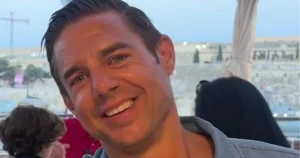


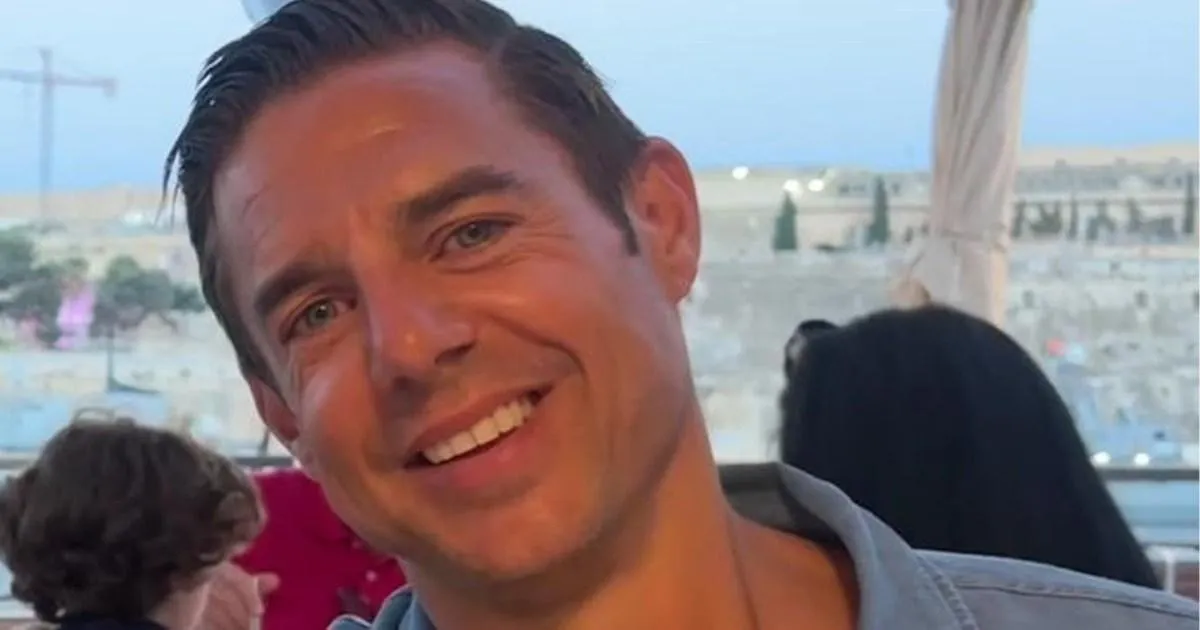
Nicholas Brandram was a man who had already lived several lifetimes by the age of 44. A former banker turned war veteran, he had known discipline, service, and the kind of quiet order that comes from a life built on structure. But in the spring of 2017, his name became entangled with a terrifying and bizarre incident that would change everything. A woman jogging on Putney Bridge was shoved headfirst toward an oncoming bus, and the attacker, dubbed the “Putney pusher,” vanished into the crowd. The attack was caught on CCTV, sparking a wave of public horror and a police appeal that would dominate the news. Years later, in June 2020, Nicholas was arrested on suspicion of being that attacker. He was released while the investigation continued, but the shadow of suspicion had already settled over him. By September, he was dead. At Tuesday’s inquest, his family sat in silence as the coroner described how Nicholas’s brother-in-law, concerned after he failed to appear for a family meal, used a spare key from a neighbor to enter his home on Cranbrook Road in Chiswick. There he found Nicholas in an upstairs room. Paramedics were called, but despite their efforts, Nicholas was pronounced dead at 8.58pm. The coroner, Melanie Lee, opened and then suspended the inquest, offering the family her “sincere condolences.” The raw grief in that courtroom was not just for a life lost, but for a man who, in his family’s eyes, was hounded to his death by pressure he never should have faced alone.
The phrase “Putney pusher” had become a kind of media monster by the time Nicholas was arrested. The original incident occurred on May 5, 2017, when a woman jogging across Putney Bridge was pushed from behind by a man who then ran off, leaving her to stumble dangerously toward the path of an oncoming bus. Fortunately, she was not seriously injured, but the public was stunned by the brazenness of the attack. Police launched an appeal, and still images from CCTV were widely shared. For years, the case appeared to go cold. Then, in June 2020, officers from the Metropolitan Police arrested Nicholas Brandram. He was a former banker with a distinguished military background, a man with no obvious history of violence, and yet suddenly he was being described in headlines as the man suspected of this random and shocking crime. He was questioned and released under investigation, meaning he had not been charged and remained technically innocent, but the stain of suspicion was public. The arrest itself was enough to shadow everything. The family would later say that Nicholas did not match the description of the real attacker, and they questioned why police seemed so eager to make an arrest and to have that arrest reported in the press. They believed that he was being treated as a convenient suspect, a way to show progress in a high-profile case. Meanwhile, his own attempts to clear his name seemed to be met with indifference. The weight of that imbalance, the urgency to accuse versus the absence of urgency to exonerate, was something he could not bear.
The details of his final hours, as heard in the coroner’s court, painted a painfully ordinary picture of tragedy. On the evening of September 15, Nicholas was expected at a family meal, but he never arrived. When his brother-in-law grew worried and went to check on him, the scene that followed was the beginning of every family’s worst nightmare. Gaining entry with a spare key, he searched the house and found Nicholas in an upstairs room. The emergency services were called, but it was already too late. The coroner told the court that the death was not being treated as suspicious and that there was “no evidence of third-party involvement.” A provisional post-mortem examination suggested that Nicholas had died as a result of ligature compression of the neck, a finding that his family have interpreted as suicide. The coroner was careful to remind everyone present that an inquest is not a trial, that no one and no organization is on trial, but those words offered little comfort to the two sisters who sat in the room, Alexia Hicks and Sophie Voelcker. They had already spoken publicly about their belief that Nicholas took his own life after months of immense pressure resulting from the Metropolitan Police investigation. For them, the inquest was not about legal formalities; it was about bearing witness to the slow unravelling of a man who had served his country and then been left to face suspicion alone.
The family’s grief has been compounded by a deep and bitter anger toward the police. In interviews, Alexia Hicks and Sophie Voelcker have insisted that their brother did not fit the description of the Putney pusher. They described a “urgency” within the Met to arrest Nicholas and to have that arrest reported in the press, as if public relations mattered more than justice. At the same time, they said, there was no urgency to help clear his name. They described a man who could not understand why the institution that had ruined his reputation seemed indifferent to his attempts to prove his innocence. The sisters accused the police of failing not just Nicholas but wider society, because by focusing on the wrong man, they allowed the real attacker to remain at large and allowed the public to believe that justice had been served when it had not. Those are grave accusations, and they now sit at the heart of a referral to the Independent Office for Police Conduct. The Metropolitan Police have referred themselves to the IOPC over their contact with Mr Brandram, and the coroner suspended the inquest because of that referral. The criminal investigation into the original Putney Bridge incident remains ongoing, but with the only named suspect dead, the case has taken on a darker and more complicated meaning. It is no longer just a story about a random attack on a bridge; it is a story about what happens when the machinery of justice grinds through a human life.
This case forces a confrontation with uncomfortable truths about the criminal justice system and its human cost. Nicholas Brandram was presumed innocent until proven guilty, but public perception rarely operates on such careful legal principles. An arrest alone, especially one widely reported, can be a form of punishment in itself. The trauma of being investigated, the sleepless nights, the fear of friends and neighbors reading your name in the news, the helplessness of waiting for a decision that could take months, all of that happens before any trial. For someone with a history of service and discipline, the loss of control and the damage to his good name may have been unbearable. The family have described months of immense pressure, and the fact that the inquest has been suspended to allow a police watchdog to examine the contact between the Met and Nicholas suggests that even the authorities recognize that something may have gone terribly wrong. The coroner’s words, that an inquest is not a trial, were meant to reassure, but they also highlighted a painful irony: Nicholas will never have a trial. He will never have the chance to stand in court and deny the accusation, to face his accusers, or to have a jury hear the evidence. That opportunity, the most fundamental protection of a person accused of a crime, was taken from him by his own death. His family are left with a half-finished story, a life suspended in the public imagination as a suspect, with no verdict ever to say otherwise.
What remains, in the end, is a human tragedy. A man who served his country and built a career found himself caught in a media storm that he could not escape. His sisters will spend the rest of their lives wondering what could have been done differently, whether a different approach by police might have kept their brother alive. They have channeled their grief into a demand for accountability, and the referral to the IOPC is a small acknowledgment that this story deserves deeper scrutiny. But no investigation can bring Nicholas back, and no report can undo the months of pressure that led to his final day. His death is a reminder that the people described in police appeals and court reports are not simply suspects; they are fathers, brothers, sons, uncles, men and women with complex lives and fragile mental health. It is a reminder that the rush to solve a notorious crime must never overshadow the need for compassion, for patience, and for the presumption of innocence to mean something real in practice, not just in legal theory. For anyone struggling with despair, help is available. Samaritans are there to listen, day or night, 365 days a year, free on 116 123, or by email at [email protected]. Nicholas Brandram’s family would likely want his story to stand as a warning, a plea for a justice system that does not destroy people in its search for truth, and for a society that remembers that behind every headline is a human life. That life ended too soon, in a quiet room in Chiswick, under a weight that should never have been his to carry alone.